
UI academic turns livestock waste into battery-making material
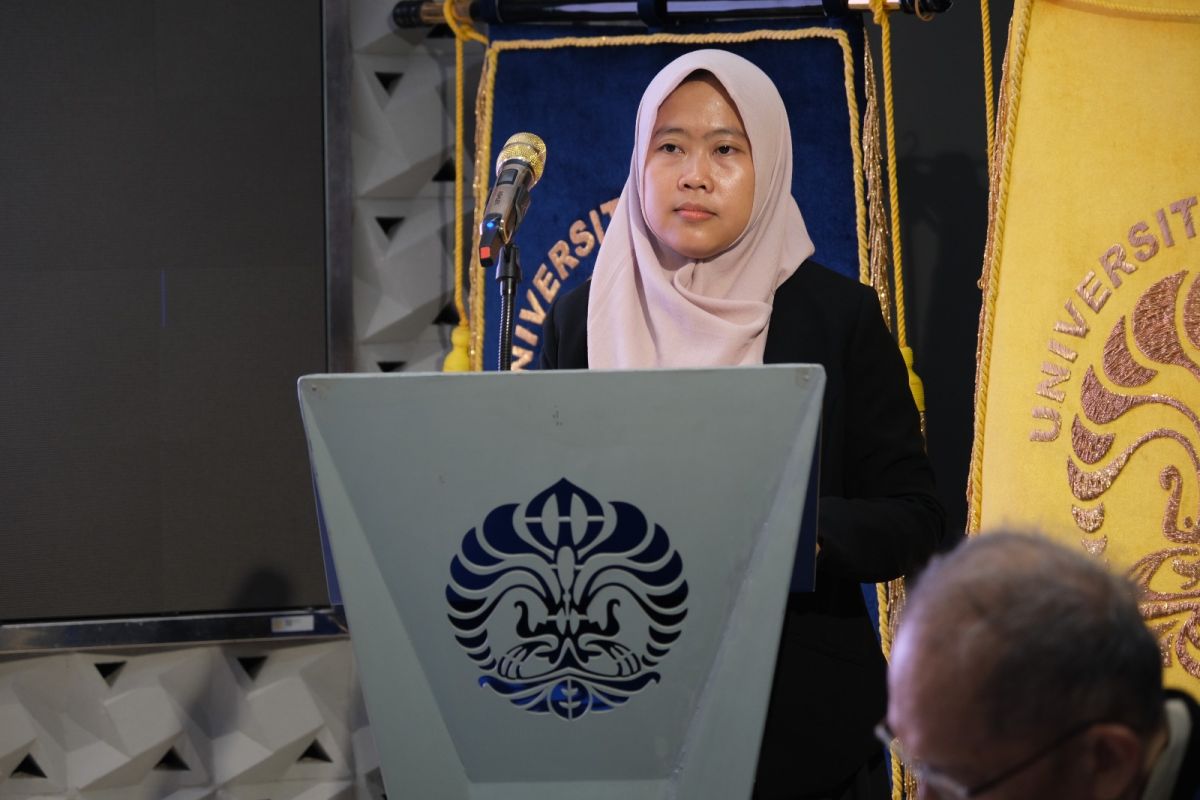
University of Indonesia (UI) academic Dr Illa Rizianiza has developed an intelligent pyrolysis reactor based on artificial intelligence (AI) capable of converting livestock waste into high-quality biochar, an advanced material for manufacturing batteries and future electronic components. “This innovation opens up opportunities for utilising local biomass to support the development of electric vehicle (EV) battery components, supercapacitors, precision sensors, and future environmentally friendly energy storage devices,” Illa Rizianiza said at the UI Campus in Depok, West Java, on Wednesday. For local farmers, sheep manure waste that previously had no value now has the potential to become a new economic commodity supporting the implementation of a circular economy. She said that through this research, her team wanted to demonstrate that livestock waste can not only be addressed as an environmental problem but can also be processed into high-value carbon materials that support the development of future energy and electronic technology. Technically, the research’s advantage lies in the integration of Digital Twin technology, Computational Fluid Dynamics (CFD), and Artificial Neural Networks (ANN) into the intelligent pyrolysis reactor. The AI-based system is capable of monitoring reactor conditions in real time, predicting temperature changes, and automatically controlling the pyrolysis process. As a result, the quality of the biochar obtained remains consistent, the production process becomes far more efficient, and energy consumption can be reduced through waste heat recovery from an internal combustion engine. The research conducted by the UI academic comes as an answer to the high global demand for graphene and advanced carbon materials. Currently, global industry remains heavily dependent on non-renewable mined graphite, which requires high-energy purification processes. Meanwhile, the accumulation of sheep manure waste continues to increase and potentially pollutes the environment if not managed properly. Through a slow pyrolysis method, the carbon structure of sheep manure was successfully converted into biochar with graphene-like carbon characteristics. The development of this innovation has a dual impact on the industrial sector and society. For the industrial sector, this research provides a competitive alternative advanced carbon raw material to reduce dependence on imports. Dean of the UI Faculty of Engineering, Prof Kemas Ridwan Kurniawan, said this research demonstrates how an engineering approach can transform waste into high-value materials. Innovations like this are highly relevant to efforts to strengthen the circular economy, technological independence, and the sustainable utilisation of local resources.