
UGM's Gama Abilawa Innovation: Portable Cattle Restraining Tool for Efficient and Humane Slaughter
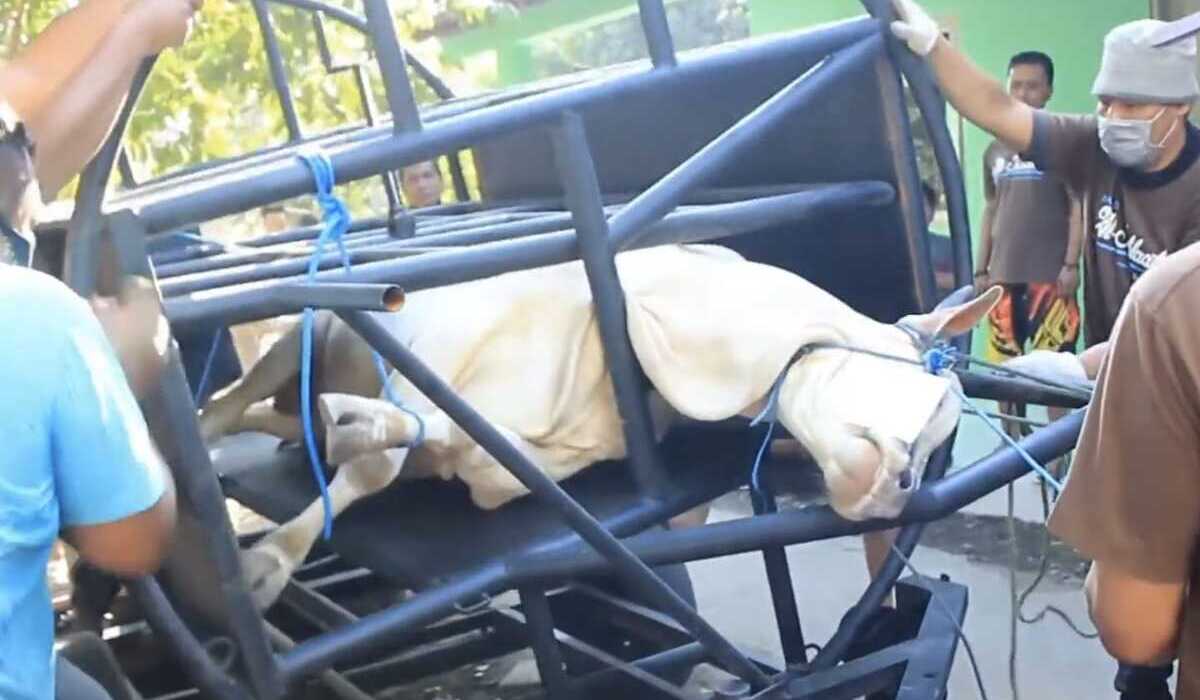
Ahead of the Eid al-Adha celebrations, the issue of animal welfare during ritual slaughter has come under the spotlight. Professor Panjono, a Professor at the Faculty of Animal Science, Gadjah Mada University (Fapet UGM), emphasised the importance of humane slaughter practices to ensure meat quality and the safety of personnel.
According to Professor Panjono, most ritual cattle slaughter in society is still conducted outside of official Slaughterhouses (TPH) with very limited facilities. This often leads to both physical and psychological stress on the livestock. “These conditions cause livestock to experience physical and psychological pressure, increasing the risk of accidents for butchers and lowering meat quality,” stated Professor Panjono during the ‘Fapet Menyapa’ event on Monday (18/5/2026).
To address this challenge, Fapet UGM has introduced an innovation called the Gama Abilawa Portable Restraining Box. This tool is specifically designed to simplify livestock handling, from the herding process to the positioning of the animal before slaughter, without the need for violence. With this device, cattle can be guided into the box more calmly. The mechanism eliminates rough handling practices, such as dragging or forcibly tying the animal’s legs, which often trigger aggressive behaviour in livestock.
Development of this tool has been ongoing since 2019, with continuous refinements based on field evaluations. Research findings indicate that the use of this portable restraining box has a significant impact on the work efficiency of slaughter committees. “The use of this tool can accelerate the slaughter process by up to 52.5 per cent and significantly reduce the number of personnel required,” explained Professor Panjono.
While the process of bringing down a cow typically requires a large number of people and carries high risks, this innovation allows the process to be managed by approximately five personnel. In addition to being more labour-efficient, the risk of injury to both livestock and officers can be minimised. Through this technology, Fapet UGM hopes that the public can transition to more modern slaughtering methods that align with animal welfare principles, while ensuring that the resulting sacrificial meat is hygienic and of high quality.