
UGM Team Says Fire Source at Fia's House Requires Ignition to Combust
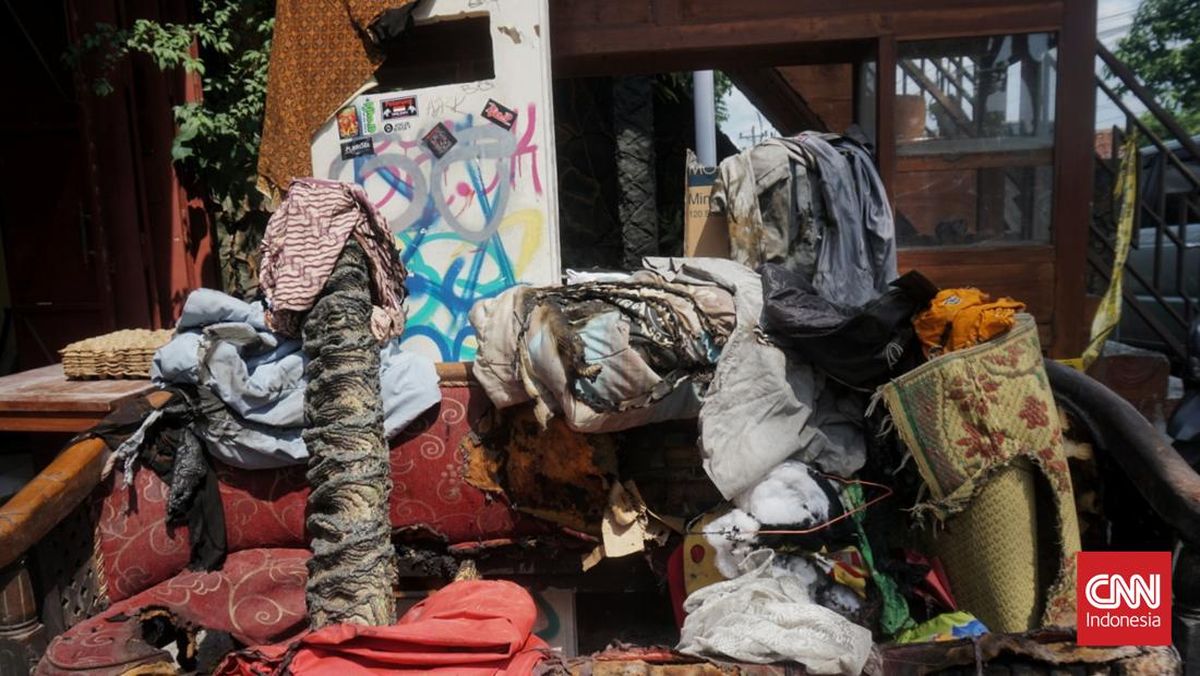
A research team from Universitas Gadjah Mada (UGM) has revealed that the discovery of polyvinyl chloride (PVC) resin content at the residence of Mutfiana, also known as Fia, in Seyegan, Sleman, Special Region of Yogyakarta, indicates the fire phenomenon in the house did not occur spontaneously. The Centre for Entropy Deceleration Studies (PKPE) at UGM’s Faculty of Engineering had previously concluded that the mysterious fire phenomenon at Fia’s house was not associated with natural gases, such as hydrogen gas (H2) or phosphine gas (PH3), but rather with PVC resin content. This PVC resin is highly flammable when it encounters an ignition source. The content was found in fire residue that was uncommonly present on the surface of ceramic walls, wood, or plywood in Fia’s house, identified through the FTIR method.
Sarju Winardi, a lecturer and assistant professor in UGM’s Geological Engineering Department who is part of the PKPE team, stated that the team suspects the PVC resin originated from a solvent mixture. He explained that the polyvinyl residue is likely from a substance that was initially a mixture, with the residue being the remaining solid material. The source of the fire was the solvent mixture, as the solvent was what escaped and produced the fire. According to Sarju, such PVC resin residue is typically found in the combustion remnants of objects containing solvents like glue or paint. However, he stressed that this solvent cannot ignite and start a fire on its own, nor can it undergo self-ignition merely at room temperature. The solvent requires an igniter to burn, but Sarju noted the team did not investigate or conclude what the igniter was or how the fire was ultimately sparked at Fia’s house.
Following this conclusion, PKPE coordinator Alva Edy Tontowi stated that the team’s research into the fire phenomenon is now complete. The team has handed over its research findings to the Sleman Regional Disaster Management Agency (BPBD). Previously, the PKPE team had confirmed that the trigger for the mysterious fire phenomenon was not natural gas, finding insufficient strong evidence that the fire appeared naturally and could ignite via an electromagnetic igniter or through self-ignition principles. Alva explained that based on the team’s research and the fire triangle theory principle, the measured electromagnetic field was at a safe level, meaning it was not an igniter for the flames. The fire source was not from natural gas seepage from beneath the surface, there was no thermal anomaly, and no gas was found that could ignite spontaneously at room temperature. The team discovered further data indicating that the fire burning materials in Fia’s house was likely associated with the presence of PVC resin, which is highly flammable when it meets an ignition source.