
UGM Team Detects Rising Hydrogen Gas Levels in Mutfia's Home During Fires
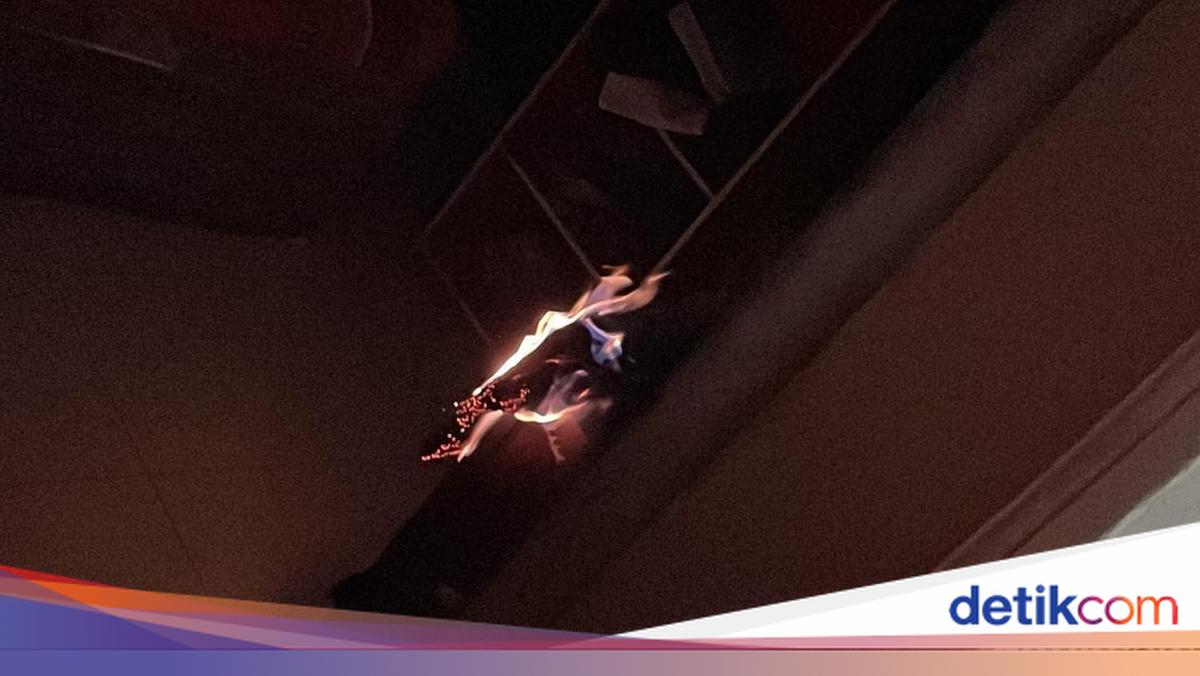
A team of experts from UGM’s Faculty of Engineering has conducted further observations and sample collection at the residence of a resident in Seyegan, Sleman, which has experienced repeated fires. DetikJogja observed that the UGM research team witnessed items catching fire at Mutfia’s home today. At approximately 12:19 WIB, a shirt in the bedroom suddenly ignited. Before the flames spread, the team sprayed a fire extinguisher to put out the fire, but soon after, white smoke began emerging from the shirt. The research team took the shirt outside, where measurements showed a rising temperature and intensifying white smoke. ‘We just witnessed this live—the fire breaking out after being informed by Ms. Mut (Mutfia). This is truly remarkable; we could observe it firsthand,’ said Prof Alva Edy Tontowi, coordinator of UGM’s Entropy Slowdown Study Centre (PKPE) at the Faculty of Engineering, to journalists on Monday (1/6/2026). Prof Alva explained that measurements showed a rising temperature in the burning shirt. Additionally, one of today’s findings was the presence of hydrogen gas (H2) on the burned clothing. He stated that the collected samples will be tested in the lab on Tuesday (2/6) to analyse the cause of the hydrogen gas. In the meantime, he has asked the homeowner to clear the room to reduce potential flammable materials. ‘Because there are fabrics, paper, and other materials that could potentially spread to other areas,’ he said. ‘This explains why the fires keep moving locations—it’s gas. When the gas concentration reaches a certain level, it ignites,’ he added. However, the team has not yet drawn conclusions. The presence of hydrogen, methane, and other hypotheses require further investigation to obtain definitive results. ‘These are currently just hypotheses, but the final conclusions will be based on lab measurements—not just words, but numbers that speak for themselves,’ he said. One of the UGM Engineering Faculty research team members, Prof. Dr. Ir. Agung Harijoko, S.T., M.Eng, IPM., explained that the gas detection equipment used identified methane and hydrogen. Particularly in the room where the fire occurred today, a spike in hydrogen gas concentration was detected. The Professor of Volcanology explained that hydrogen can ignite without a spark, leading to suspicions that it is the cause of the fires at Mutfia’s home. However, they must still determine the source of the hydrogen and the mechanism behind its formation in the house. ‘So the suspected gas is hydrogen, likely. But we need to investigate further: where is the source? What is the mechanism? The formation process of this hydrogen gas requires detailed study,’ he explained. Currently, the team has collected water samples from the well to check for organisms that produce hydrogen. ‘Organic decomposition and decay may be producing the hydrogen, which we need to investigate further,’ he said.