
UGM Team Concludes 'Fire House' Terror in Seyegan Was Not Caused by Natural Gas
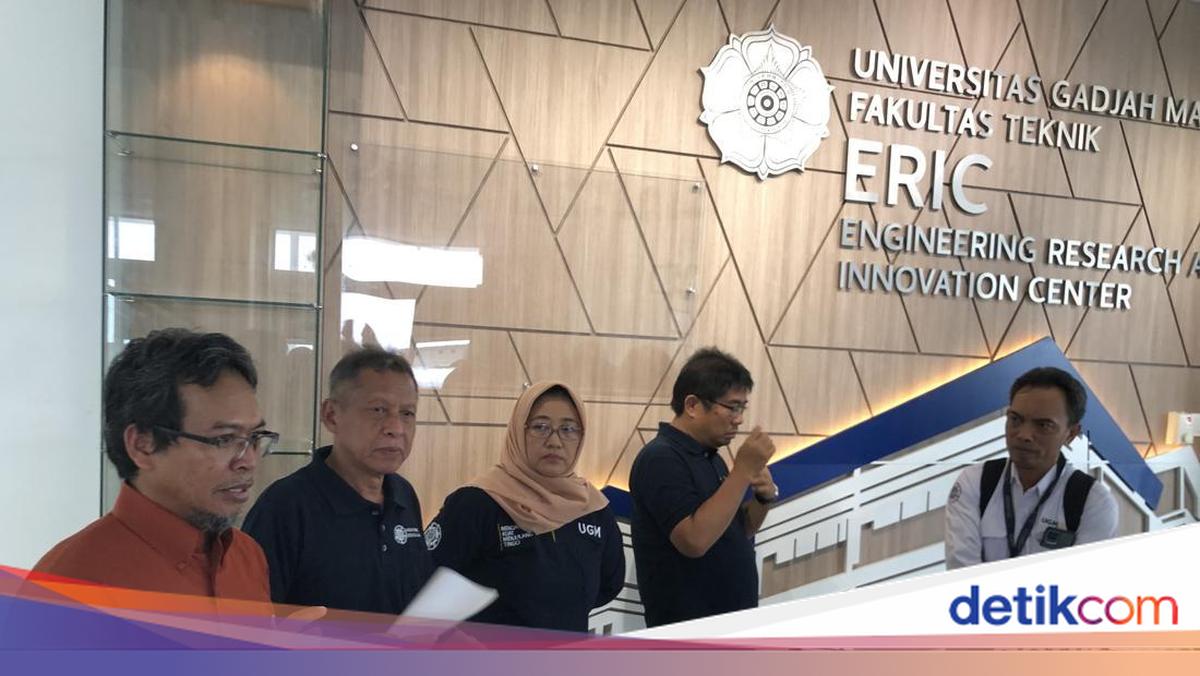
A research team from the Centre for Entropy Dilapidation Studies (PKPE) at Universitas Gadjah Mada’s (UGM) Faculty of Engineering has released its final conclusions regarding the phenomenon of terror fires at a resident’s house in Seyegan, Sleman. Based on a series of observations, UGM found no presence of natural gas at the site.
Head of the UGM PKPE team, Professor Alva Edy Tontowi, explained that based on the research results and with reference to the Fire Triangle Theory Principle, the team concluded that the measured electromagnetic field was at a safe level, meaning it was not a flame igniter. “The fire source was not from natural gas seepage from beneath the surface (the floor), there was no thermal anomaly and no gas was found that could ignite naturally (self-ignition) at room temperature,” Alva told reporters at the UGM Faculty of Engineering on Saturday.
The UGM PKPE team also discovered further data indicating that the fire which burned materials in this case was likely associated with polyvinyl chloride (PVC) resin, which is flammable when it meets an ignition source. “This resin was found in the combustion residues based on FTIR method testing,” Alva explained. “On this occasion, the UGM PKPE Team states that the research on this fire phenomenon has been completed. The team has handed over the updated research results to the Sleman BPBD,” he stressed.
Previously, the UGM team had released a provisional conclusion that the emergence of fire was strongly suspected to be related to the presence of hydrogen gas. Alva mentioned that the hydrogen gas was strongly suspected to originate from chicken slaughter waste. However, spatially, Alva noted that observations of altitude using drone technology and Thermal Infrared sensors conducted in the early hours at the fire locations up to a 200-metre radius surrounding them did not show any thermal anomaly.
Furthermore, measurements of the electromagnetic field, which was suspected as a potential flame igniter, showed that the electric and magnetic fields at the incident location were at normal or still safe levels. “Sub-surface mapping using Georadar and Geoelectrical technology did not find layers beneath the surface as a source of natural gas, and the cracks found were interpreted as not containing natural gas,” he stated.
The team also examined fire residue samples from several fire sites, particularly on wooden walls, plaster and soil, as well as ash from the combustion, which were then analysed using the Headspace GC (Gas Chromatography) method. “The analysis results could only detect the presence of CO2 gas and found no residual hydrocarbon elements or solvents that could be used as fire accelerants,” Alva noted.
On Friday, the team collected more residue samples from ceramic wall surfaces and wood/plywood surfaces, analysing them using the FTIR method. “The FTIR analysis results show that these samples contain polyvinyl chloride (PVC), which is not commonly found on ceramic wall or wood/plywood surfaces,” he concluded.
Items at a resident’s home in Seyegan, Sleman, had been burning mysteriously in recent times, with the phenomenon occurring up to nine times a day. The bomb squad, Gegana, and academics were involved in handling the situation.