
UGM Students Develop BREIT for Breast Cancer Detection
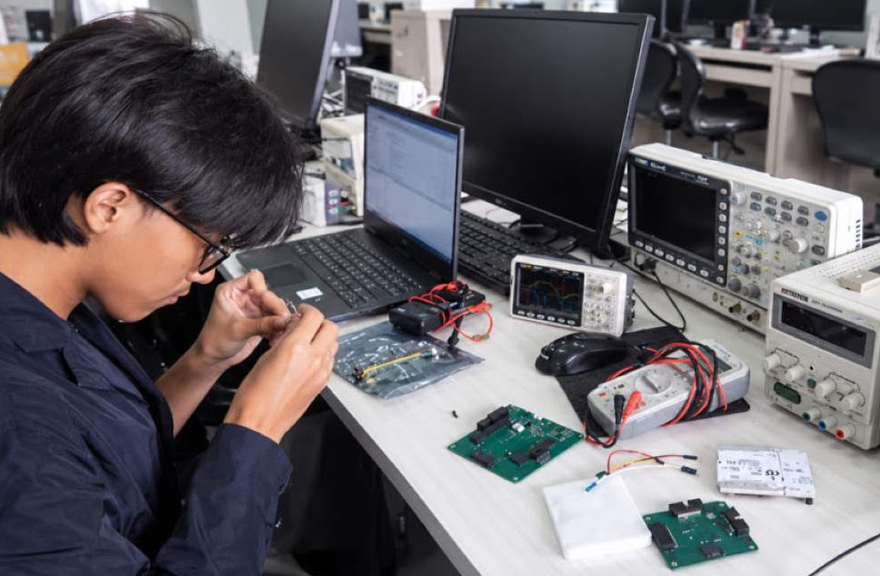
The high number of breast cancer cases in Indonesia presents a serious challenge to the healthcare sector. According to 2022 GLOBOCAN data, there were 66,271 new cases with a mortality rate reaching 22,598 lives. Responding to this urgency, a group of students from Universitas Gadjah Mada (UGM) has introduced a technological breakthrough through BREIT (Breast Cancer Integrated Theranostics). This smart electronic device is designed to map the characteristics of breast tissue while exploring the potential of supporting therapies based on the latest digital technology.
Developed through the 2026 Student Creativity Program-Karsa Cipta (PKM-KC), BREIT is the result of cross-disciplinary collaboration. The team consists of Alfito Putra, Muhammad Nafal, Bryan Alvinnov, and Muhammad Zufar from the Faculty of Engineering, alongside Mirza Evrizqo Timmerman from the Faculty of Medicine, Public Health, and Nursing (FK-KMK). Under the guidance of Ir. Ridwan Wicaksono, S.T., M.Eng., Ph.D., they have combined expertise in hardware, electronics, artificial intelligence (AI), and health sciences.
The core of the BREIT innovation lies in the use of Electrical Impedance Tomography (EIT). Unlike conventional methods such as X-rays, which use ionising radiation, EIT works by reading the electrical characteristics of body tissue. The system delivers very low-intensity electrical stimulation through the skin’s surface and then captures the response generated by the underlying tissue.
“Simply put, EIT allows us to create a sort of map of the electrical characteristics of the tissue. Thus, data that initially exists as electrical signals can be reconstructed into an image of impedance distribution,” explained Mirza Evrizqo Timmerman. The difference in impedance between healthy tissue and potentially cancerous tissue serves as the basis for this mapping.
To increase accuracy, the team has integrated AI into the data processing. AI plays a role in reconstructing images from raw electrical signals into visualisations of tissue distribution that are easier for medical professionals to analyse. Alfito Putra emphasised that the integration of hardware, AI, and web systems is the key to ensuring the project operates holistically.
In addition to its mapping function, BREIT is also equipped with a wearable vest component designed to explore Electro-Capacitive Cancer Therapy (ECCT). This approach utilises electric fields through a wearable device to investigate its potential as a supporting cancer therapy.
However, the team provided an important note regarding this feature. “ECCT in BREIT is not yet positioned as a ready-to-use cancer therapy. We are still in the development and testing phase to see whether the concept can provide a measurable biological effect,” Mirza stated. This demonstrates the team’s commitment to scientific principles and patient safety.
As a healthcare innovation, BREIT is currently still a prototype undergoing continuous refinement. The team recognises that the journey towards clinical implementation is long and requires rigorous validation. The team emphasises that BREIT is not designed to replace existing standard diagnostic methods in hospitals. Instead, BREIT’s position is as a supporting technology whose capabilities are currently being evaluated. Moving forward, broader data collection will be conducted to ensure this technology has a strong scientific foundation before proceeding to wider utilisation.
The BREIT innovation serves as tangible proof of how cross-faculty collaboration at UGM can respond to national health issues with digital technology-based solutions. With the integration of wearable devices and AI, BREIT is expected to become part of the future health technology ecosystem in Indonesia.