
UGM Research Encourages Cultural Heritage Repatriation, Restores Collective Memory of Nias Community
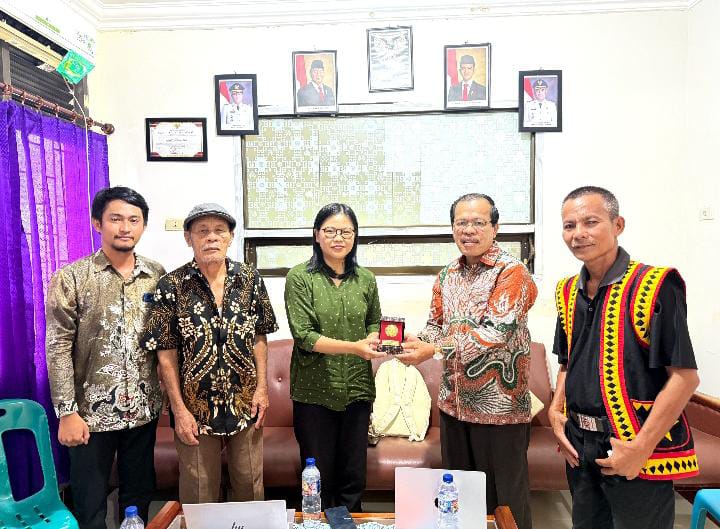
The effort to return Indonesian cultural heritage from abroad is not just about repatriating historical objects, but also an endeavour to restore the identity and collective memory of indigenous communities. This perspective is central to research by Airin Liemanto, a lecturer at the Faculty of Law, Universitas Gadjah Mada (UGM), who studied the repatriation strategy for Nias cultural heritage through the return of hoho oral tradition recordings from the Netherlands. The research, conducted with Ruth Jessieca Margareth Togar and titled ‘From the Dutch Museum Back to Nias: Strategy for Repatriating Cultural Heritage Objects and Their Integration into Identity Narratives’, stems from the fact that thousands of Nias cultural heritage items remain stored in various museums in the Netherlands, while Indonesia lacks a comprehensive legal mechanism to support their return. Unlike approaches that focus solely on legal ownership, this study highlights the social impact of cultural repatriation, particularly how the return of historical archives can revive the community’s emotional connection with its ancestral heritage. As a case study, the team examined the ‘Suara yang Pulang’ (The Returning Voice) project, which brought back around 60 sound archives collected by Jaap Kunst from 12 regions on Nias Island, 50 photographs by Rudolf Bonnet, and an 8-minute silent film recorded by ethnomusicologist Jaap Kunst in 1930. For 95 years, these archives were kept in the Jaap Kunst Collection at the University of Amsterdam before being handed over to the Nias community during the Maniamölö Fest on 15–22 June 2025. According to the research team, this type of digital repatriation practice can serve as a model for developing repatriation policies in Indonesia. In addition to providing community access to long-separated cultural heritage, the return of archives strengthens cultural identity and increases public participation in preservation efforts. To deepen the study, the team interviewed various academics and practitioners with expertise in cultural repatriation. One of them was Doni Kristian Dachi, the initiator of the ‘Suara yang Pulang’ project, who recounted the long journey to locate the archival recordings. ‘I have known about the existence of Jaap Kunst’s recordings in Nias since reading the book Music in Nias in 2013. However, there was no clue at all about the location of the archive storage. A crucial turning point occurred around October 2024 when I accidentally found news on Facebook about the repatriation of Jaap Kunst’s archives in NTT,’ he said. The team also discussed international repatriation practices with Panggah Ardiyansyah from The University of Sheffield, and the decolonisation of ethnographic collections and digital restitution with R Ahmad Ginanjar Purnawibawa from Universitas Pendidikan Ganesha. Field research was conducted on Nias Island from 28 June to 1 July 2026. A touching moment occurred when the team interviewed Teruna Wau, the Head of Bawömataluo Village and a descendant of the hoho poet whose voice was recorded by Jaap Kunst nearly a century ago. ‘I have heard many stories about my grandfather and seen his photos. But when Barbara came to me, it was the first time I could hear my grandfather’s voice directly,’ said Teruna. For the research team, this experience demonstrated that repatriation is not merely about returning archives, but also about restoring intergenerational bonds that were severed during the heritage’s long journey abroad. In South Nias, the research continued with an interview with Anggreani Dachi, Head of the South Nias Culture, Tourism, Youth, and Sports Office, regarding cultural heritage protection policies and the local government’s opportunities to support the repatriation agenda. Discussions were also held with Maniamölö Sub-district Head Rawatan Dachi and hoho maestros Nitehe Dachi, Hasondrorogö Dachi, and Tilik Dachi to explore the meaning of this oral tradition for the identity of the Nias community. According to Rawatan, a hoho verse that reads ‘jeruk manis jeruk pahit’ (sweet orange, bitter orange) teaches that life always presents both sweet and bitter experiences, making the hoho tradition not only a work of art but also a medium for passing down life values. The research team also visited the Hoho Sifalaria Arts and Culture Community and watched a hoho performance to understand its role as a medium for transmitting history, customs, and the collective memory of the Nias people. The research continued in the Bawömataluo Traditional Village by exploring community views on cultural heritage preservation and its potential to support the creative economy and community-based tourism. The team also interviewed the Rector of Nias Raya University, Martiman S Sarumaha, and the Director of the Nias Heritage Museum, Nata’alui Duha, regarding the importance of collaboration between universities, government, museums, and the community in supporting the repatriation process. The research is ongoing, with an interview with Barbara Titus, Associate Professor of Cultural Musicology at the University of Amsterdam and curator of the Jaap Kunst Collection, conducted on 10 July 2026. The results of the research are expected to provide recommendations for the development of legal policies on cultural heritage repatriation in Indonesia. More than just returning cultural objects, the research emphasises that repatriation is a step towards restoring collective memory, strengthening cultural identity, and respecting the rights of indigenous communities over their heritage.
Source: jawawa.id (https://jawawa.id/newsitem/ugm-research-encourages-cultural-heritage-repatriation-restores-collective-memory-of-nias-community-1783605064)
Originally published by Media Indonesia (https://mediaindonesia.com/humaniora/909271/penelitian-ugm-dorong-repatriasi-warisan-budaya-pulihkan-memori-kolektif-masyarakat-nias), translated from Indonesian