
UGM Professor Responds After Her Name Was Used Without Permission in Disputed Journal Article
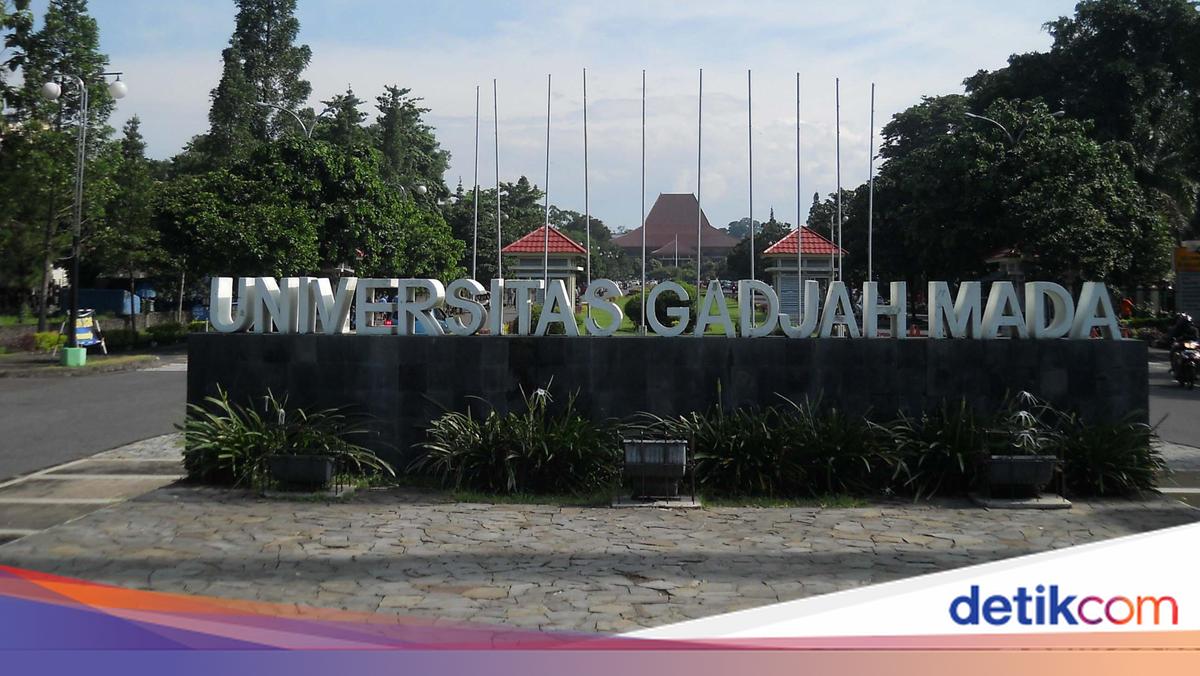
Professor Rini Rachmawati of the Faculty of Geography at Gadjah Mada University (UGM) in Yogyakarta has spoken out after her name was used without permission in a disputed journal article. The case emerged after Professor Ines Mergel of the University of Konstanz in Germany discovered that her name had also been used without her consent in the Indonesian publication.
“My name was included in the article without any prior notification, request or approval from me,” Professor Rini said in a WhatsApp message to detikJogja on Friday (30 October 2026).
“In addition, I was not a co-author of the paper and never took part in writing it,” she added.
Rini declined to comment further when asked what steps she might take over the unauthorised use of her name.
German professor raises objection
As reported by detikEdu on Thursday (29 October), Professor Ines Mergel of the University of Konstanz said her name had been used in an academic publication issued in Indonesia. The professor of public administration stressed that she had no involvement in writing the article, even though her identity, institutional affiliation and ORCID number were listed correctly.
“I had absolutely no knowledge of the article and did not write a single word of it,” she said in an email exchange with detikEdu on Thursday (29 October).
The article, titled “Collinearity and Regularisation in Digital Public Service Models: A Simulation in the Context of Green Government”, appeared in Ekliptika: Journal of Sustainable Technology Innovation, Vol. 7, No. 1, July 2026, pages 17–30.
A copy of the article obtained by detikEdu also listed Muhammad Khafid Ainul Yaqin, affiliated with Yudharta University in Pasuruan. Khafid is listed as a lecturer in the university’s Public Administration programme in the Faculty of Social and Political Sciences.
The other names included were Rini Rachmawati, a professor at UGM’s Faculty of Geography; Yudho Giri Sucahyo, a professor at the Faculty of Computer Science at the University of Indonesia; and Marijn Janssen, a professor of ICT and Governance at Delft University of Technology in the Netherlands.
The article was submitted to Ekliptika on 5 May 2026, revised on 1 June and approved for publication on 7 July. An email address bearing Khafid’s name, khafid@yudharta.ac.id, was listed for the corresponding author.
Mergel said she did not realise her name had been used—an act she described as academic misconduct—until she received a Google Scholar notification asking her to add the article to her academic publications.
“If Google had automatically added the article to my publication list, I might not have noticed it for some time,” she said.
After discovering the article, Mergel emailed the corresponding author and asked for her name to be removed. The reply raised further questions: according to Mergel, the corresponding author said he did not remember writing the article and that its subject was outside his area of expertise.
“He sent the following statement by email: ‘Regarding this matter, I do not remember writing the article in question. In addition, its subject is outside my area of expertise,’” Mergel said.
Mergel later received an apology by email from the corresponding author. She said the change in tone convinced her that he had ultimately acknowledged involvement in writing the article, after initially saying he did not remember it.
“It appears that he now acknowledges being the author of the article after denying it yesterday. I also received an apology from the editor, but the editor did not identify themselves,” Mergel wrote in a post on LinkedIn.
Article initially corrected, co-authors’ names removed
Mergel said the journal’s initial response was to issue a correction to the article’s author list. In the notice, all the co-authors’ names were removed, leaving Muhammad Khafid Ainul Yaqin, the corresponding author, as the sole listed author.
Mergel said she was deeply dissatisfied with the authorship correction, objecting that it could give the impression she had voluntarily chosen not to be listed as an author.
“The notice is completely absurd, as though it were saying that I had changed my mind and no longer wanted to be listed as an author,” she said.
Following the process, Ekliptika’s Editorial Board decided to retract the article in full. According to the retraction notice, updated on 29 October 2026, the decision was based in part on the inclusion in the published article’s author list of individuals who had neither been informed nor given prior consent.
“The journal acknowledges that these inclusions did not meet the proper authorship authorisation requirements,” said a notice issued by Ekliptika Managing Editor Rudi Kurniawan.
The Editorial Board also said the published authorship information did not accurately reflect the scholarly contributions of all the individuals named. The journal stated that those affected had not been legitimate co-authors of the article.
“The subsequent correction of their names and affiliations must not be interpreted as a voluntary withdrawal from an authorship status they had previously accepted,” the notice said.
DetikEdu attempted to contact Muhammad Khafid Ainul Yaqin, listed as the corresponding author, and Ekliptika Managing Editor Rudi Kurniawan for comment on Mergel’s account. They had not responded by the time the report was published.
Source: jawawa.id (https://jawawa.id/newsitem/ugm-professor-responds-after-her-name-was-used-without-permission-in-disputed-journal-article-1793404242)
Originally published by detikJogja (https://www.detik.com/jogja/berita/d-8731856/reaksi-guru-besar-ugm-usai-namanya-dicatut-dalam-jurnal-bermasalah), translated from Indonesian