
UGM Professor: Naming a Suspect Does Not Require Prior Examination
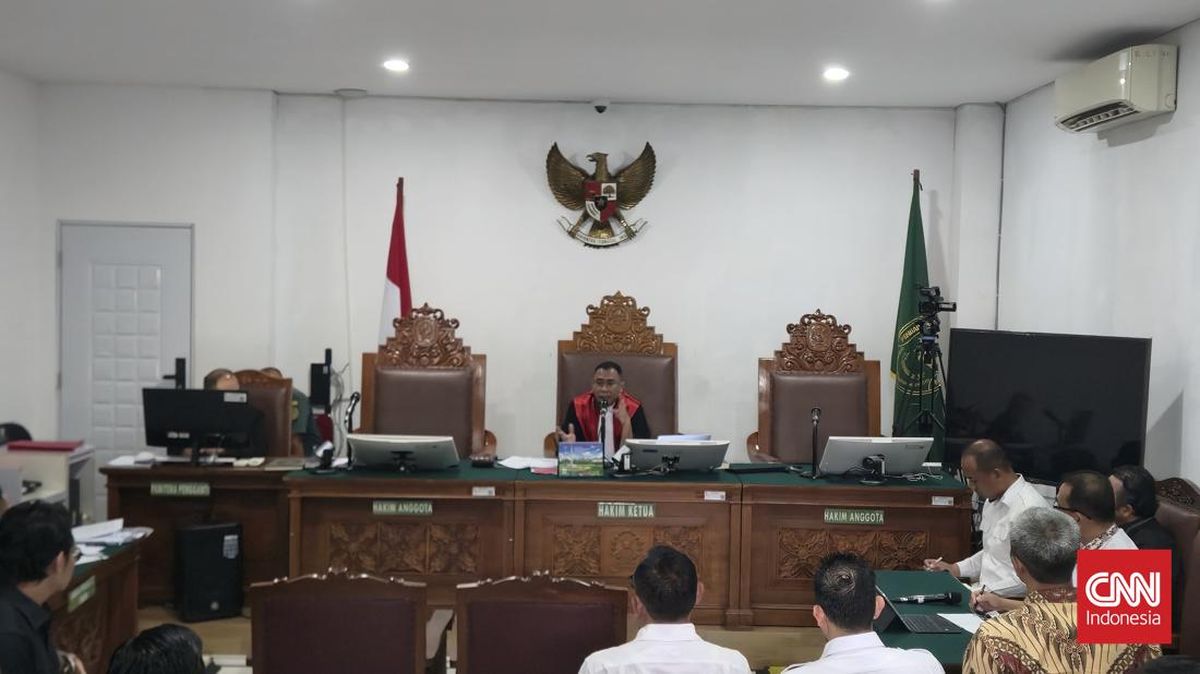
Gadjah Mada University (UGM) criminal law professor Marcus Priyo Gunarto has stated that naming a suspect does not require a prior examination of the person as a prospective suspect.
The opinion was delivered by Marcus when he appeared as an expert witness in the continuation of the pretrial hearing of former Deputy Attorney General for Special Crimes Febrie Adriansyah at the South Jakarta District Court on Friday (21/8).
He explained that under the new Criminal Procedure Code (KUHAP), there is no obligation for law enforcement officials to examine a prospective suspect first.
Marcus said that Article 90 of Law Number 20 of 2025 on the Criminal Procedure Code stipulates that naming a suspect is sufficiently based on two pieces of evidence.
“There is no obligation for law enforcement officials to examine the suspect first,” he said during the hearing.
He stated that this interpretation is further reinforced by the formulation of Article 92 of the Criminal Procedure Code. In that article, he said, it is explained that if a suspect has not been found, investigators may request assistance from the public, the media, and other parties to locate them.
“Because there it says they can request assistance from the public, from the media, regarding the whereabouts of the suspect. The ‘S’ in Suspect there is written with a capital letter. The meaning is that the suspect is the authentic interpretation contained in Article 1, the definition of a suspect,” he explained.
Therefore, Marcus said that in naming a suspect, the person does not necessarily have to be physically examined first. This is because under Article 92 of the Criminal Code, the figure of the Suspect can still be sought by requesting assistance from the public or the media.
Meanwhile, in Article 184 of the Criminal Procedure Code, Marcus explained that it is possible for law enforcement officials to name a suspect without an examination as a prospective suspect due to their absence, or in absentia.
“That means it is not absolute. And this order is included in the ratio decidendi in the judge’s consideration, not embodied, not formulated in the ruling. That is how it should be read,” he explained.
As for the two pieces of evidence that form the basis for naming a suspect, investigators can obtain them from witness testimony to documents.
“There is witness testimony, there is expert testimony, there is documentary evidence, there is the judge’s knowledge. Now it has expanded further: everything obtained by means that do not violate the law. That has expanded even further. The important thing is the two pieces of evidence,” he explained.
Previously, former Deputy Attorney General for Special Crimes Febrie Adriansyah asked the sole judge of the South Jakarta District Court to annul the determination of his suspect status and the search of his Sentul residence.
This was conveyed by Febrie in the petition of the pretrial motion filed with the South Jakarta District Court. Febrie also asked the judge to declare invalid all legal actions, including the issuance of investigation warrants, seizures, and travel bans.
The Attorney General’s Office has named former Deputy Attorney General for Special Crimes Febrie Adriansyah as a suspect in money laundering related to the discovery of 74 kilograms of gold and Rp543 billion in cash at his Sentul residence.
Most recently, the Attorney General’s Office also named private party Nurman Herin and lawyer Don Ritto as suspects for their alleged involvement in the money laundering case together with Febrie.
Chairman of Team 9 and Deputy Attorney General for Supervision Rudi Margono said the alleged money laundering was carried out by Febrie as a prosecutor or structural official during his service at the Attorney General’s Office.