
UGM Professor: Moving Javan Rhinos to Alas Purwo Could Accelerate Their Extinction
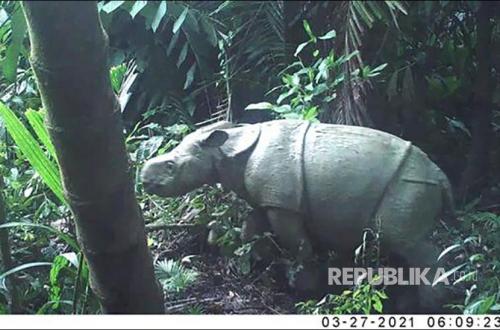
YOGYAKARTA — The government’s plan to relocate some of the Javan rhino population from Ujung Kulon National Park in Banten to Alas Purwo National Park in Banyuwangi, East Java, is considered a high risk to the survival of the endangered species. Rather than serving as a conservation measure, moving the animals to an untested habitat could accelerate their extinction.
Professor Raden Wisnu Nurcahyo of Gadjah Mada University’s Faculty of Veterinary Medicine said the plan to establish a second habitat in Alas Purwo was not yet ready to be implemented. He said a number of ecological, medical and physiological risks needed to be carefully considered before the government made a decision.
The proposed relocation has drawn a range of responses and opposition, including from local residents, Baduy traditional figures and the Pandeglang Regency Government.
Wisnu said Ujung Kulon National Park had long been proven suitable for Javan rhinos. The area provides a range of essential requirements, from undergrowth as a food source and access to water to mud wallows, which help the rhinos regulate their body temperature and keep their skin moist.
The Javan rhino population in Ujung Kulon has even survived major events, including the 1883 eruption of Krakatau. This underlines the importance of considering the suitability of a habitat that has supported the species’ survival for hundreds of years.
“Moving wild animals is not like moving inanimate objects. They are closely bound to their ecosystems, from the availability of natural food to medicinal plants they instinctively consume to heal themselves — a behaviour known as self-medication. Forcing them into a new habitat whose suitability has not been tested could have fatal consequences and lead to their deaths,” Wisnu said in a statement on Monday (23 November 2026).
Wisnu warned that the relocation process could cause severe stress due to capture and anaesthesia. Long-distance transport could also trigger physiological complications that would endanger the rhinos’ health.
Another risk is exposure to pathogens or new diseases through contact with wildlife already living in Alas Purwo, such as banteng, deer, wild boar and leopards. Without strict biosecurity protocols, the move could create a route for disease transmission to which the Ujung Kulon Javan rhino population had not previously been exposed.
He cited the death of a Javan rhino named Mustofa in November 2025, following a relocation within Ujung Kulon itself. The animal died from complications related to chronic disease in its internal organs.
Wisnu said the incident should prompt serious evaluation. If a move within the same area carries significant health risks, relocating rhinos to another area with different ecological conditions would require much more thorough preparation.
The risks are particularly concerning given the Javan rhino population’s critical condition. The Ministry of Forestry recorded fewer than 100 animals in 2025, while the IUCN’s Asian Rhino Specialist Group estimated in 2026 that fewer than 50 individuals remained.
If the government still wishes to examine the possibility of a second habitat as a long-term option, Wisnu said it would need a comprehensive, multidisciplinary assessment covering the habitat’s capacity throughout the year, the suitability of food-plant subspecies, strict biosecurity protocols and support from local communities. He added that limited research into the biology and health of Javan rhinos in the wild posed a further challenge. Knowledge of their physiological condition, dietary needs and vulnerability to disease still needs to be strengthened.
“Research specifically into the biology and health of Javan rhinos in the wild remains very limited, while their gestation period is 15 to 16 months, making their reproductive rate slow. Alas Purwo cannot therefore be considered ready as a second habitat until all ecological and medical requirements have been confirmed as safe,” he said.
Source: jawawa.id (https://jawawa.id/newsitem/ugm-professor-moving-javan-rhinos-to-alas-purwo-could-accelerate-their-extinction-1795571551)
Originally published by Republika (https://rejogja.republika.co.id/berita/tp1a0w282/guru-besar-ugm-pemindahan-badak-jawa-ke-alas-purwo-bisa-mempercepat-kepunahan), translated from Indonesian