
UGM Professor Highlights Weak Institutional Oversight in Febrie Adriansyah Corruption Case
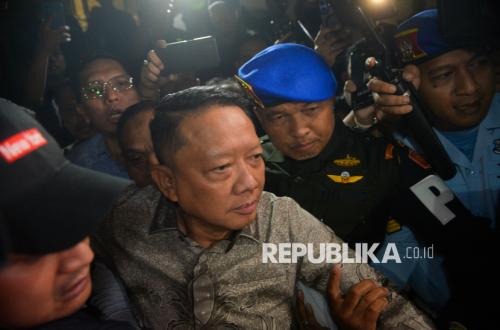
SLEMAN — The corruption case implicating former Deputy Attorney General for Special Crimes (Jampidsus), Febrie Adriansyah, has been described as a reflection of the weak oversight mechanisms between institutions and the lack of public control within Indonesia’s law enforcement system. Professor Dr Phil. Gabriel Lele, of the Department of Management and Public Policy at Universitas Gadjah Mada (UGM), said the considerable authority held by law enforcement officials must be matched by strong oversight mechanisms so as not to open the door to abuse of power.
The case came to light after investigators from the National Police’s Corruption Eradication Corps (Kortastipidkor) seized evidence including 74.01 kilogrammes of gold bullion and hundreds of billions of rupiah in cash in various foreign denominations from several locations raided. According to Gabriel, the sheer value of the evidence underscores the importance of overseeing institutions that hold great authority in law enforcement and corruption eradication.
“We are talking about an institution entrusted with the authority to eradicate corruption, yet it finds itself at the epicentre of corruption. When authority accumulates within a single institution without adequate control from other bodies, particularly from the public, that authority can very easily be misused,” he said on Tuesday (21/7/2026).
According to Gabriel, institutions such as Jampidsus hold substantial authority in handling large-scale corruption cases, or grand corruption. That authority, he said, should therefore be accompanied by effective oversight mechanisms.
“The principle of mutual control is extremely important. Such control should not only be exercised between government institutions, but it must also be ensured that the public has room to carry out oversight,” he said.
In his view, the alleged corruption case shows that oversight cannot rely solely on internal institutional mechanisms. Inter-institutional oversight and public participation are also needed to ensure that law enforcement proceeds transparently and accountably.
Gabriel also highlighted reports that the case might be transferred to the Attorney General’s Office for handling. He argued that such a step risked creating psychological and institutional problems, as the case involves a senior official from the very same institution.
“The way I see it, it could be described as merely a cooling-down strategy. But at the same time, it becomes a hot potato for the prosecution. How can they resolve a case involving one of their own senior officials?” he asked.
Gabriel added that such a situation could undermine public confidence in how the case is handled. For that reason, he considered delegating the case to the Corruption Eradication Commission (KPK) to be the more appropriate option for safeguarding investigative independence.
“The most ideal solution would be to hand the case over to the KPK. If the prosecution handles it, there are psychological constraints and institutional constraints, and I believe the public would not really trust that the case could be thoroughly investigated by the prosecution,” he said.