
UGM Professor Highlights Two Issues if TNI Soldiers Are Tried in Military Courts
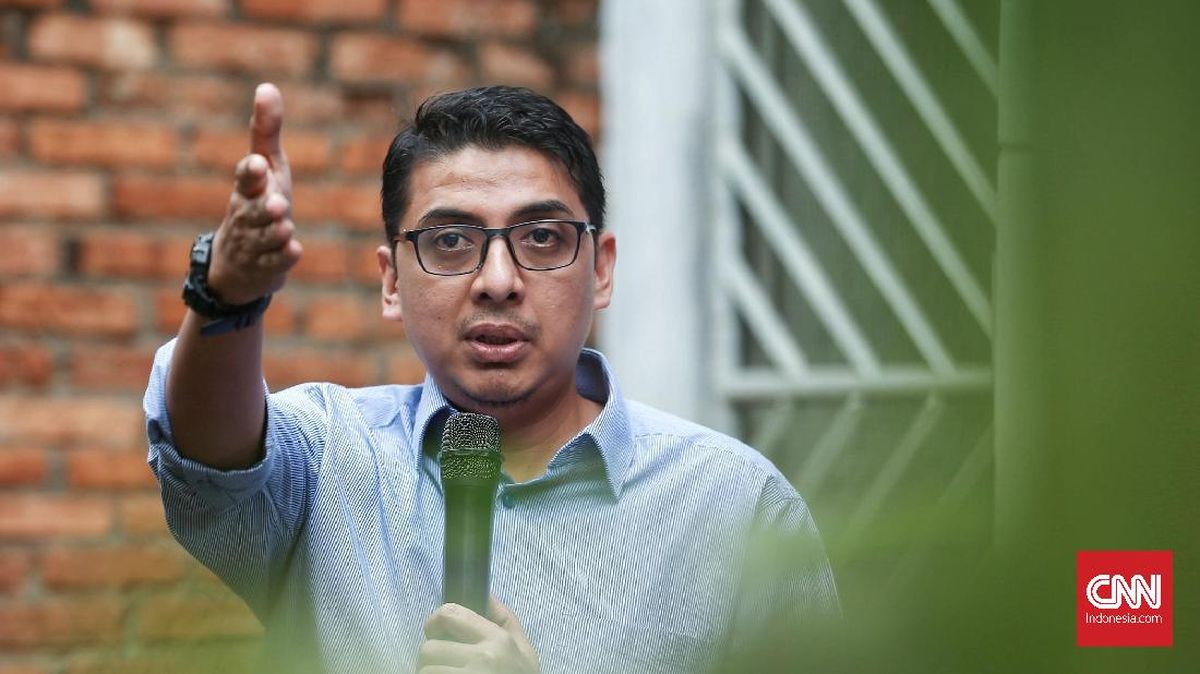
Professor Zainal Arifin Mochtar from the Constitutional Law Department at the Faculty of Law, Universitas Gadjah Mada (UGM), has revealed two constitutional issues arising if TNI soldiers who commit general criminal offences are tried in military courts.
This was stated by Uceng, as he is affectionately known, when presented as an expert witness in case number 260/PUU-XXIII/2025 concerning the material review of Law Number 31 of 1997 on Military Justice at the Constitutional Court (MK), on Tuesday (14/4).
“We are talking about equality before the law. If military personnel who commit criminal offences (general) are allowed to be tried in military courts, then two issues of constitutionality regarding inequality will arise,” Uceng said in his presentation at the MK.
The first concerns inequality among perpetrators of criminal offences, namely when a civilian who commits a criminal offence is tried in a general court, while a military member committing the same offence is tried in a different judicial system.
The second creates inequality for civilian victims. Uceng stated that in cases involving civilian victims, the military court process has the potential to raise doubts about independence and impartiality.
“I think this potential is no longer just potential; in many cases, it has become actual. I think there are victims and victims’ families who can recount this at length. So, it’s no longer just that,” he said.
Uceng grouped the discussion into four concepts: the concept of a rule-of-law state, equality before the law, the right to legal certainty, and the independence of judicial power.
He used textual, systematic, theological methods, and some philosophical analyses of constitutional law to deliver his testimony as an expert before the constitutional judges.
Uceng concluded that there is a tangled or chaotic situation in the current military justice system.
“I think it’s more than enough for us to say there is a tangled mess in military justice, in our concept of building a military justice system,” said Uceng.
Military courts during wartime
In addition to Uceng, another expert who provided testimony in this material review case was Al-Araf, Chairman of the Central Initiative Management Board.
One point highlighted by Al-Araf is that international law has affirmed that the jurisdiction of military courts should be limited to military offences committed by military personnel.
In Europe, he explained, there is a strengthening trend to integrate or even abolish specialised military courts, especially in peacetime.
“Countries like Denmark, Slovakia, Czech Republic, Portugal, France, Sweden apply a pure civilian model where all cases, including those involving the military, are handled by civilian courts,” said Al-Araf.
“In addition to those countries, there are states that do not even have military courts in peacetime. Military courts only exist during wartime,” he continued.
Al-Araf then exemplified Germany, which does not maintain military courts in peacetime and hands over criminal offence handling to civilian courts, while disciplinary violations are addressed through administrative mechanisms.
“The same applies to the Netherlands. Why is that? Because military courts are truly needed in relation to military interests in war duties and functions. So, they exist during wartime,” said Al-Araf.
In the first hearing at the MK on Thursday, 8 January 2025, the Applicants, represented by their attorney Ibnu Syamsul Hidayat, emphasised that impunity for soldiers contradicts the principles of a rule-of-law state and equality before the law.
The Applicants also highlighted broader consequences, namely the weakening of civilian supremacy in the democratic governance system.
The dominance of military court jurisdiction over general courts is deemed contrary to the principles of a constitutional democracy that places civilian power above military power.
According to the Applicants, this dual jurisdiction stems from the provisions of Article 9 paragraph 1 of the Military Justice Law, which gives special status to active TNI soldiers to be tried exclusively in military courts, even for general criminal offences.
This regulation is considered potentially to breed impunity and violate the principle of equality before the law.
“The phrase ‘trying criminal offences’ in Article 9 paragraph 1 of Law Number 31 of 1997 opens up opportunities and a broad basis for interpretation of the authority of military courts, not only to try soldiers or those equivalent to soldiers who commit military offences and military disciplinary violations, but also to handle other criminal cases such as corruption, traffic, domestic violence, narcotics, psychotropics, and child protection,” said Ibnu, quoted from the MK website.
Source: jawawa.id (https://jawawa.id/newsitem/ugm-professor-highlights-two-issues-if-tni-soldiers-are-tried-in-military-courts-1776160263)
Originally published by CNN Indonesia (https://www.cnnindonesia.com/nasional/20260414150003-12-1347844/profesor-ugm-ungkap-2-persoalan-jika-prajurit-tni-di-pengadilan-milter), translated from Indonesian