
UGM Professor: Forest and Land Fires a Serious Threat, Urges Gotong Royong Forest Stewardship
Data from the National Disaster Management Agency (BNPB) up to 9 August 2026 recorded that the area of land burned in six priority provinces had reached approximately 48,889.69 hectares. Kalimantan is the main focus, with the largest burned area in West Kalimantan (28,680.47 hectares), followed by Central Kalimantan (3,069.52 hectares) and South Kalimantan (383.07 hectares). This condition confirms that Indonesia’s forest and land fire (karhutla) management system requires more sustainable strengthening.
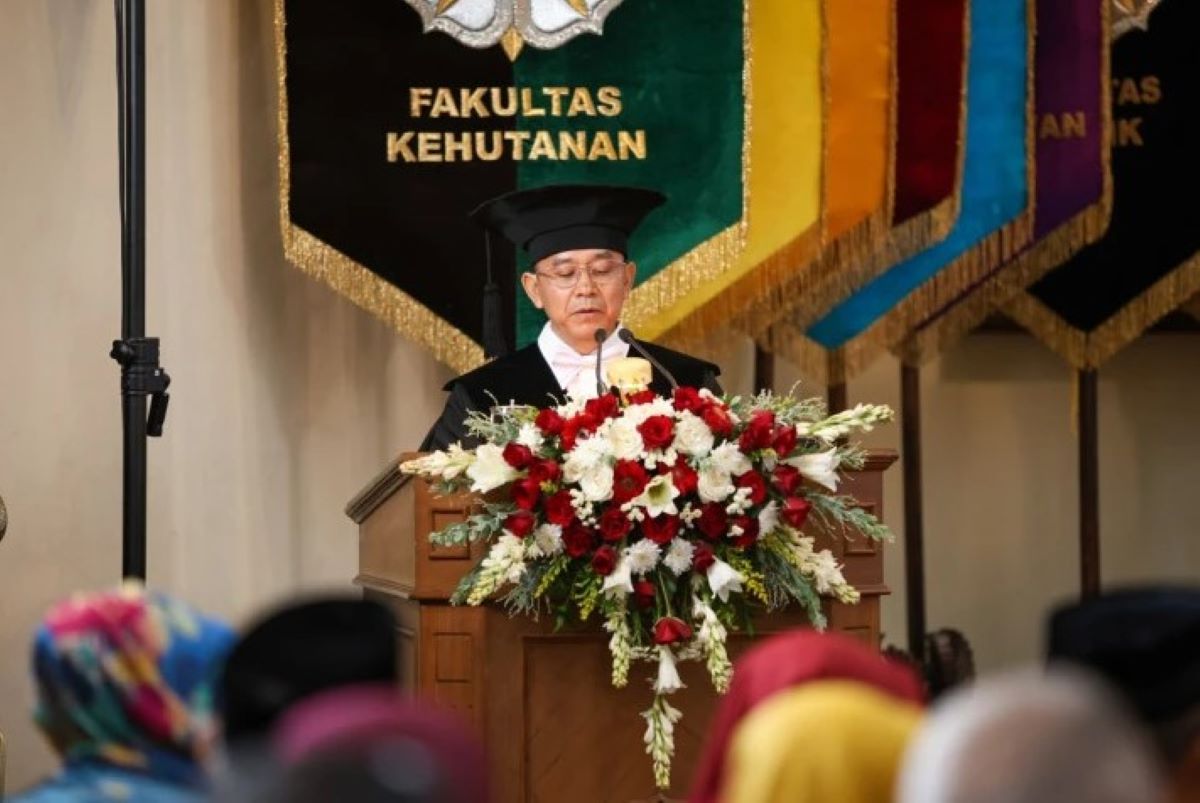
Professor of the Faculty of Forestry at Gadjah Mada University (UGM), Prof. Priyono Suryanto, S.Hut., M.P., Ph.D., stated that Indonesia actually possesses very strong institutional capacity in dealing with forest and land fires. The synergy between the TNI, Polri, ministries, BNPB, regional governments, Manggala Agni, as well as the business community and the public, constitutes extraordinary social capital.
However, Prof. Priyono offered a critical note that this gotong royong strength remains reactive in nature. “Indonesia’s gotong royong is strong as a response, but not yet strong enough as a stewardship structure. Institutional solidarity reaches its peak when fires occur, but does not always endure with the same strength when the forest is not burning,” he said in a written statement on Saturday (22/8).
According to the Chairman of the Indonesian Agroforestry Society (MAFI), the weak point in forest and land fire management lies not in the absence of prevention programmes, but in the durability of those programmes after the emergency period ends. He stressed that fire risk never disappears because it is influenced by peatland conditions, economic dynamics, land-use change, and climate factors.
He encouraged a paradigm shift from “crisis gotong royong” to “forest stewardship gotong royong”. In a stewardship ecosystem, all actors remain connected to monitor the landscape and carry out early intervention even when fires are not raging.
Prof. Priyono also highlighted the importance of preserving the knowledge assets of the Peatland and Mangrove Restoration Agency (BRGM). Field experience regarding peatland rewetting, community empowerment, and paludiculture practices must be managed as a national strategic memory.
Furthermore, Prof. Priyono asserted that a nation’s resilience in facing forest and land fires should not be measured solely by the scale of firefighting operations it can mount. On the contrary, the highest success is achieved when large-scale firefighting operations are no longer necessary.
“The measure of success in forest and land fire management is ultimately not the increasing scale of firefighting operations that can be carried out. The highest success is achieved when large-scale firefighting operations are needed less and less frequently because the landscape has been protected before the fire arrives,” he concluded.
Source: jawawa.id (https://jawawa.id/newsitem/ugm-professor-forest-and-land-fires-a-serious-threat-urges-gotong-royong-forest-stewardship-1787478696)
Originally published by Media Indonesia (https://mediaindonesia.com/nusantara/925006/guru-besar-ugm-karhutla-ancaman-serius-dorong-gotong-royong-penjagaan-hutan), translated from Indonesian