
UGM Lecturers Introduce Mobile Screening House and Radiography Services
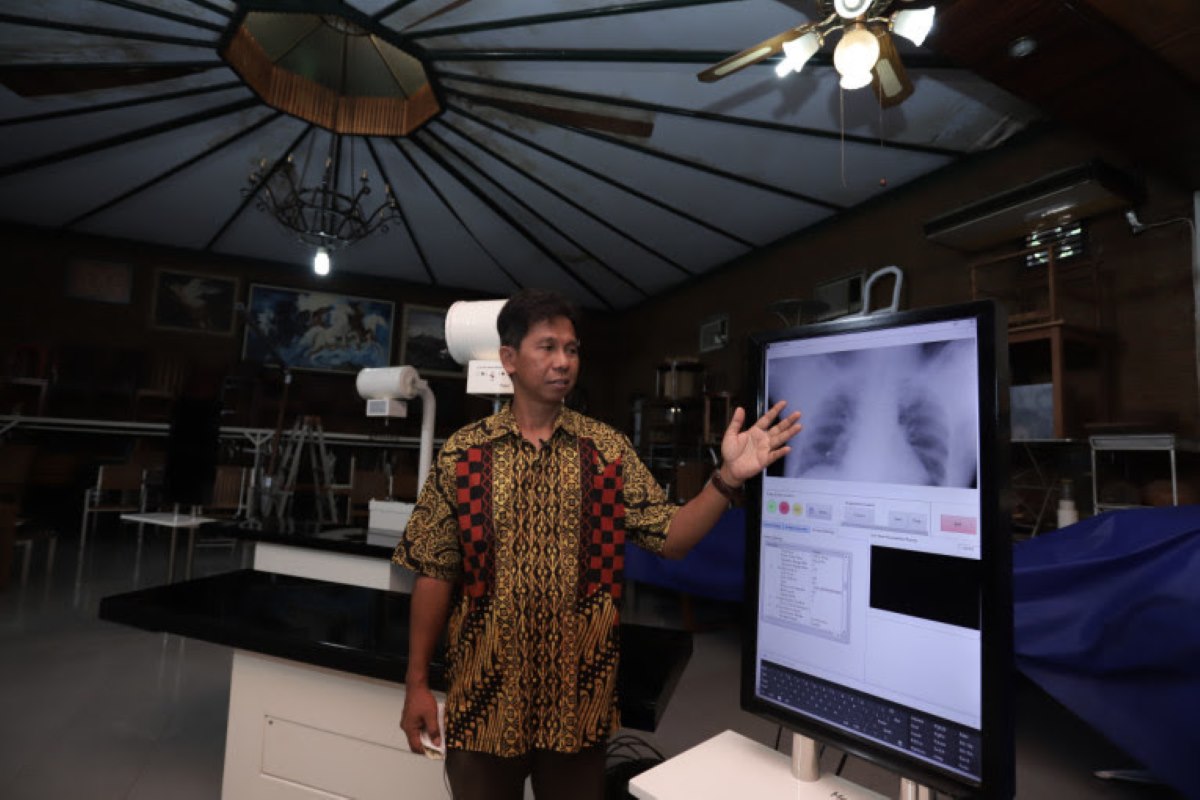
A research team from Universitas Gadjah Mada (UGM) has begun implementing digital X-ray radiography technology for community-based health screening services. The research, titled ‘Mobile Digital X-ray Radiography Tool for Tuberculosis Screening and Medical Check-Up Services’, is part of the 2025–2026 Synergy Research Programme under the Ministry of Higher Education, Science, and Technology.
The research findings have been developed into ‘Rumah Skrining’ (Screening House), which integrates digital radiography technology with a health service management system. The service was initially operational from 27–28 August 2026, at the CV Prestige Furniture premises in Yogyakarta.
The research was led by Prof. Drs. Gede Bayu Suparta, M.Si., Ph.D. from the UGM Faculty of Mathematics and Natural Sciences, and was developed through a synergy with PT Madeena Karya Indonesia, CV Prestige Furniture, and RSKIA Permaud Bunda Yogyakarta.
Rumah Skrining is designed to bring advanced radiography technology closer to the community. This model aims to expand access to health examinations, particularly services requiring radiological imaging. “Rumah Skrining is a start-up aimed at providing community-based radiological health screening services,” said Bayu on Saturday (29/8).
In its development, Rumah Skrining does not operate as a radiology facility separate from the healthcare system. The service is guided by healthcare facilities such as clinics or hospitals, while utilising radiology equipment managed through the Madeena Health Care System (MHCS) or Madeena Solution.
The platform includes DICOM data management, PACS, teleradiology, and radiological image reading with the assistance of AI. “The presence of Rumah Skrining is expected to help the Government accelerate the achievement of the 2030 TB Elimination Programme and expand public accessibility to health check-ups plus X-ray radiography,” Bayu added.
Bayu explained that the radiography technology used features low-radiation doses for body and chest examinations. The resulting images can be analysed using AI software, with the entire process from examination to result reading taking approximately 15 minutes per patient. Patient health information can also be integrated into the government-managed SatuSehat platform.
Future development aims to deploy Rumah Skrining in various environments, including universities, industrial areas, Islamic boarding schools, schools, primary hospitals, and community health centres (Puskesmas). Bayu noted that expanding service points is expected to create opportunities for community involvement in health screening facilities.
Furthermore, radiography technology continues to evolve with devices becoming lighter, more energy-efficient, and capable of using rechargeable batteries. “X-ray technology is becoming increasingly advanced, sophisticated, safe, lightweight, energy-efficient, and rechargeable,” he stated.
The Operational Director of Rumah Skrining, Annisa Fitriana, S.Ant., explained that service management utilises a technological ecosystem prepared to support radiological examinations. Rumah Skrining can manage radiology devices from PT Madeena Karya Indonesia as well as imported radiology tools already installed in Indonesian hospitals. The system allows data management and radiology services to be connected via a single platform. “MHCS, also known as Madeena Solution, is equipped with DICOM data management, PACS, Teleradiology, and radiological image reading using Artificial Intelligence (AI),” explained Annisa.
The initial implementation took place at CV Prestige Furniture, a production partner for the DDR Madeena radiography tool. The leader of CV Prestige Furniture, Wahyudi Ganda Wijaya, expressed the company’s commitment to monitoring the health of its 40 employees through the Rumah Skrining facility. The facility is also expected to benefit employees’ families and the surrounding community, providing access to affordable formal radiology services.
The inaugural service lasted two days, focusing on thorax radiography. On Thursday (27/8), 35 people underwent examinations, while on Friday (28/8), 42 participants were recorded. This implementation serves as the initial stage of applying a community-based radiology service model developed through collaboration between universities, industry, and healthcare facilities.
Beyond location-based services, the development of Rumah Skrining is directed towards mobile radiography placed on light commercial trucks. These vehicles are designed to reach narrow residential areas or difficult terrains, ensuring examinations are not limited to healthcare facilities.
This concept combines mobile radiography with teleradiology and AI reading via the Madeena Health Care System to support the ‘Active Case Finding’ TB programme alongside primary healthcare facilities and Puskesmas. The approach is summarised by the concept: “Serve everywhere, Read from Anywhere”.
Bayu hopes the development of this technology will be supported by the formation of a digital X-ray radiography ecosystem involving the government, healthcare facilities, industry, universities, and the community. He also encouraged regulations that provide space for the utilisation of radiography technology for healthcare needs.