
UGM Highlights Indonesia’s Economic and Political Crisis, Urges President to Set Aside Pride and Correct Policies
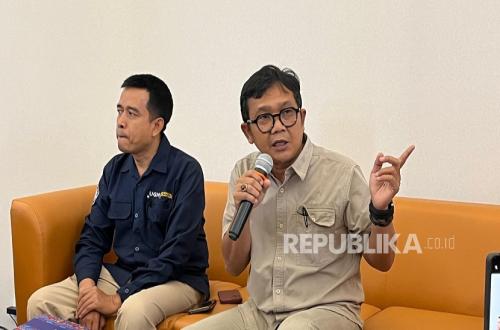
SLEMAN — Arie Sujito, UGM’s Vice-Rector for Student Affairs, Community Service and Alumni, has highlighted what he considers to be Indonesia’s economic and political crisis. He said President Prabowo Subianto had yet to respond seriously to mounting public discontent.
Problems including unemployment, inequality, public distrust and legal issues point to conditions that the government needs to address urgently.
“We have to acknowledge that Indonesia is currently experiencing an economic crisis and a political crisis. Public criticism and many aspects of public discontent do not appear to be receiving a serious response from the President,” Arie said when met at UGM on Thursday (8 October 2026).
Arie said that, without a timely response, the situation could develop into broader social tensions. He urged President Prabowo to stop defending policies that have attracted widespread criticism.
“In my view, this is no longer the time for pride. Instead, the fundamental weaknesses in those policies must be addressed immediately,” he said.
Arie cited the Free Nutritious Meals (MBG) programme, saying the many complaints about its implementation should inform a government review. He called for improvements to its governance and management so it can genuinely address nutritional needs, particularly among poorer groups.
He also referred to the Red-and-White Village/Sub-district Cooperatives (KDMP) policy. Criticism of the initiative, he said, should be treated as input for the government to make improvements.
Arie said ministers and other presidential aides had an important role in conveying the realities on the ground to the President. He was concerned that information about public discontent might not be reaching him in full.
“I worry that accounts of reality are not reaching the President, or perhaps he simply lacks sensitivity to these issues,” he said.
Arie also criticised some presidential speeches, which he said sometimes caused controversy because they appeared disconnected from people’s lived experience. He urged ministers to offer advice based on data, public discussion and conditions on the ground.
“If ministers provide input that reflects reality, and that leads to policy improvements, the situation will not deteriorate further and could instead improve,” he said.
Arie said Indonesian democracy was also facing problems, including ineffective checks and balances.
He said parliament had not demonstrated a strong role in balancing power. In recent years, he added, it had not adequately fulfilled its functions of aggregating and articulating public interests, or overseeing the conduct of government.
“That means parliament also bears responsibility when government policies worsen, because it can prevent that and issue warnings,” he said.
“If parliament does not effectively balance the exercise of power, the public’s trust in it will continue to fall — and that is dangerous,” he added.
Arie said declining public confidence in parliament could harm democracy. Parliamentary oversight is essential, he said, to alert the government when policies are considered problematic.
“If people or the public do not trust parliament, that is also a death knell for democracy,” he said.
He further noted the lack of a developing opposition within the current government. While acknowledging that political parties face various problems, including oligarchy, Arie said there must nonetheless be a commitment to improving parliament’s role in the democratic system.
Public criticism should not be met with restrictions
Arie also raised concerns about the space available for civil society to voice criticism. Academics, students, journalists and non-governmental organisations are an important part of democracy, he said. He said he had observed signs of restrictions, intimidation and criminalisation targeting critics, warning that these could make the situation worse.
“If criticism is met with restrictions, intimidation, criminalisation and the like, the situation will not improve; it will deteriorate further,” he said.
Student demonstrations should be viewed as a way of expressing criticism of government policy, Arie said. He also cautioned against turning students against the public. Universities, he added, have a moral responsibility to help protect democratic space and alert the public to the risks that arise when checks on power weaken.
“Universities need to do more to alert the public to the grave threat of democracy collapsing in Indonesia,” he said.
Arie said the government still had time to make corrections. But the longer criticism and problems were left unaddressed, he warned, the greater the risk of public distrust in the government.
He also urged the government not to treat groups voicing criticism as enemies.
“The reality of this crisis cannot be concealed, and I am saddened by it. I urge the government not to make enemies of the people, students or experts. Respond with good policies. The criticism being offered can, in fact, help make Indonesia better,” he said.