
UGM: Freight Transport Emissions in Java–Bali Concentrated in Three Provinces
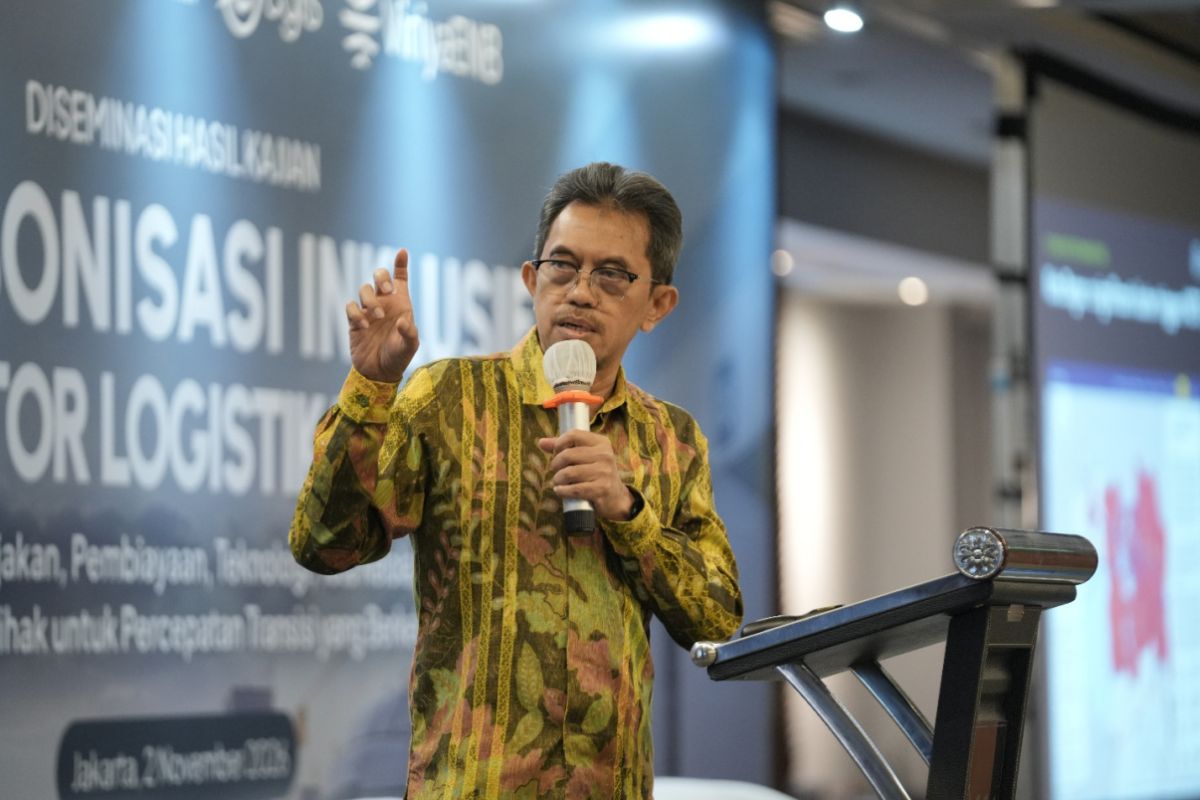
Yogyakarta (ANTARA) - A study by the Centre for Transportation and Logistics Studies at Universitas Gadjah Mada (Pustral UGM) and PT Egis International Indonesia found that 79% of road freight emissions along the Java–Bali corridor are concentrated in three provinces: West Java, Central Java and East Java.
Febriani Astari of PT Egis International Indonesia said road freight emissions along the corridor would reach 19.72 million tonnes of CO₂ in 2026 and, without intervention, rise by 51% to 29.80 million tonnes by 2035.
“West Java accounts for 31%, Central Java 26% and East Java 22%. Medium two-axle lorries and three-axle lorries contribute 59% of emissions,” Febriani said in a statement in Yogyakarta on Thursday.
Assuming a carbon price of US$50 per tonne, the emissions would have an economic value of around Rp220 trillion cumulatively by 2035, she said.
“The problem turns out to be more concentrated and more manageable. More than three-quarters of emissions come from three provinces, and more than a quarter come from ten regencies and cities, so we can start at those hotspots,” Febriani said.
Arif Wismadi, head of the study team at Pustral UGM, said 14 in-depth interviews and focus group discussions in Jakarta, Surabaya and Bali involving 185 institutions identified charging infrastructure and the price of electric lorries as the leading barriers.
A survey of 50 small and medium-sized freight transport businesses found that only 8% were willing to switch under current credit terms. That figure rose to 56% if the terms included a 15% down payment, zero interest and a vehicle registration certificate (BPKB) as the only collateral for an electric lorry.
The study has therefore designed three financing prototypes: contract-based green loans involving cargo owners, fleet leasing with no down payment, and battery subscriptions, Arif said.
“Electric lorries will not move from brochures to the road until the numbers make sense for operators,” he said.
Arif added that one of the study’s main outputs was EQLAS for EV, a web application designed to support systematic planning to address gaps in charging infrastructure, both geographically and socially.
At present, 36% of public electric vehicle charging stations (SPKLU) in Java–Bali are located in five cities in Jakarta, even though the area accounts for only 4.8% of lorry emissions.
“While dedicated charging stations for lorries have yet to be built, planning must be systematic so that they are distributed along the Java–Bali corridor, rather than clustered in western Java as is the case with passenger electric vehicles,” Arif said.
He said the electrification of logistics was also more equitable because its benefits would be felt across all segments of society, unlike subsidies for passenger electric cars, which are enjoyed mainly by more affluent groups.
Source: jawawa.id (https://jawawa.id/newsitem/ugm-freight-transport-emissions-in-java-bali-concentrated-in-three-provinces-1793865285)
Originally published by Antara (Indonesian) (https://www.antaranews.com/berita/5833619/ugm-emisi-angkutan-barang-jawa-bali-terkonsentrasi-di-tiga-provinsi), translated from Indonesian