
UGM Expert Warns of Two Key Concepts for Jogja Riverbank Stilt House Proposal
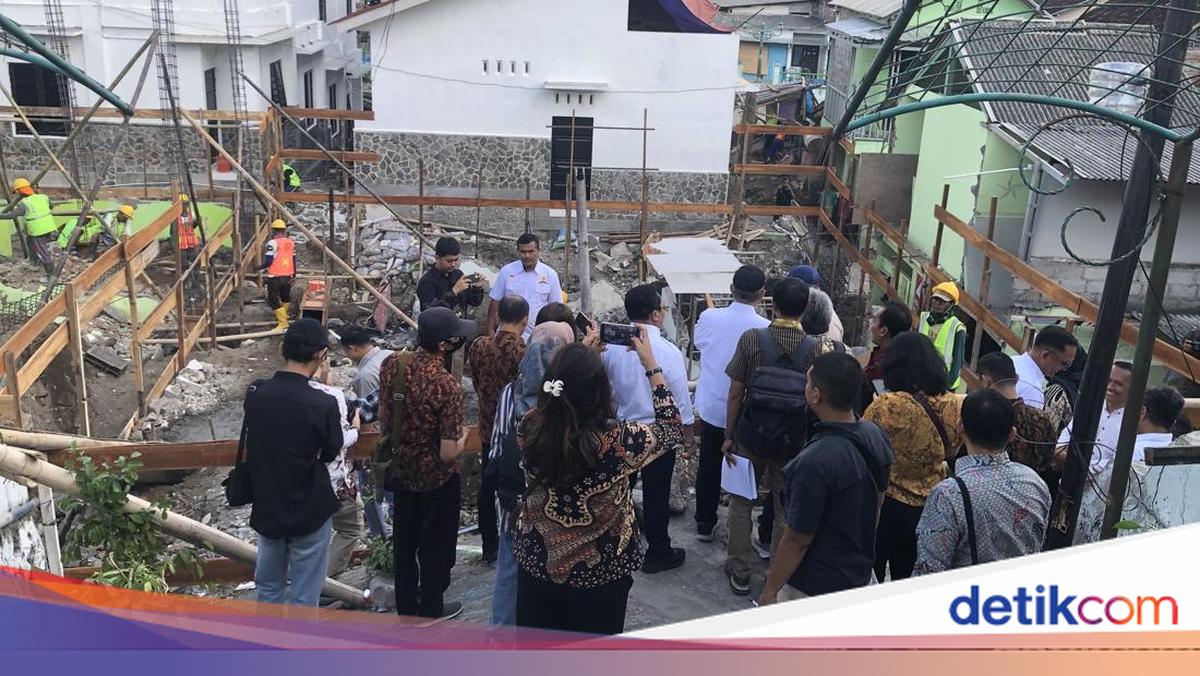
Deputy Minister of Housing and Settlement Areas Fahri Hamzah has proposed building stilt houses in Jogja’s riverbank settlements. In response, a UGM urban planning expert has highlighted two fundamental concepts that must underpin the planning of the Code River area.
Professor Sudaryono, a Professor of Regional and City Planning at UGM’s Faculty of Engineering, stated that the Code River must be viewed as a unified system rather than a single location for housing. He noted that the river’s characteristics differ from others, with varying widths and bends that complicate flood prediction.
“When discussing development, whether housing or settlements, it cannot be seen as a single point. It must be viewed as a system. The interconnections of Code’s settlements are complex,” he said on Saturday, 30 May 2026.
Sudaryono explained that the first aspect to consider is the Code River’s hydrological system, as it winds through the city with irregular widths and curves.
“Code has upstream and downstream sections and runs through the city centre. Its morphology varies in width, is not straight, with sections narrowing and widening repeatedly. This makes predicting medium to large-scale flood cycles difficult,” he said.
Beyond the river aspect, Sudaryono believes the Code River area’s planning must integrate with Jogja’s overall spatial layout. Current development approaches have been partial, he noted.
“If we develop Code, it must be part of the city’s overall development model. Malioboro’s development must cover Code, and Code’s development must consider Malioboro. So far, the concept has been partial, yet Code is a system,” he explained.
Sudaryono identified two key concepts for Code River planning: ‘flow’ and ‘space’. Flow relates to the river’s fluctuating and unpredictable current, while space positions the river not just as a waterway but as part of urban life.
“Code is not just a river, but a space. These two concepts have never been fully understood at the philosophical, conceptual, or technical levels,” Sudaryono said.
Thus, he argues that stilt houses alone are insufficient to resolve riverbank issues. Planning must connect with broader policies, such as land consolidation or land sharing schemes.
“In my view, resolving it solely with stilt houses is not comprehensive. It must be linked to a wider system,” he said.
“At minimum, land consolidation or, if involving Sultan Ground, land sharing. Our experience is extensive, having applied these concepts since the 1980s,” he added.
In a previous report, Deputy Minister Fahri Hamzah suggested stilt houses for Jogja’s riverbank settlements, citing rising urbanisation necessitating vertical growth to accommodate population. He stated narrow land availability risks slums, especially along rivers, and called for well-organised public spaces to ensure clean, orderly environments.
“My proposal is for all houses to return to the stilt house concept, Indonesia’s original housing style,” Fahri said after inspecting settlements along the Code Riverbank in Kotabaru, Gondokusuman, Jogja, on Friday, 29 May 2026.
“The ground floor serves as public space, with elevated platforms for gatherings, children’s play, and community activities, as public spaces are vital for public mental health,” he added.
Fahri noted that vertical housing will increasingly dominate, especially in densely populated cities like Jogja. By 2045, 80% of Indonesians will live in urban areas, he said, stressing the need for innovative vertical housing solutions.
“The stilt house concept is essentially vertical housing. Previously, it was to avoid floods and wild animals, but now we must live vertically due to limited land,” Fahri explained.
He added that subsidy housing programmes should adopt vertical designs, as current subsidies use distant land to cut costs, causing uncontrolled urban sprawl.
“Subsidy housing creates urban sprawl because it’s only landed. Landed houses can’t be built in city centres, so they spread out without facilities, infrastructure, or amenities,” Fahri said.
This results in flooding…