
UGM Expert Warns Bitter Jamu Cannot Be Consumed Carelessly, Here's Why
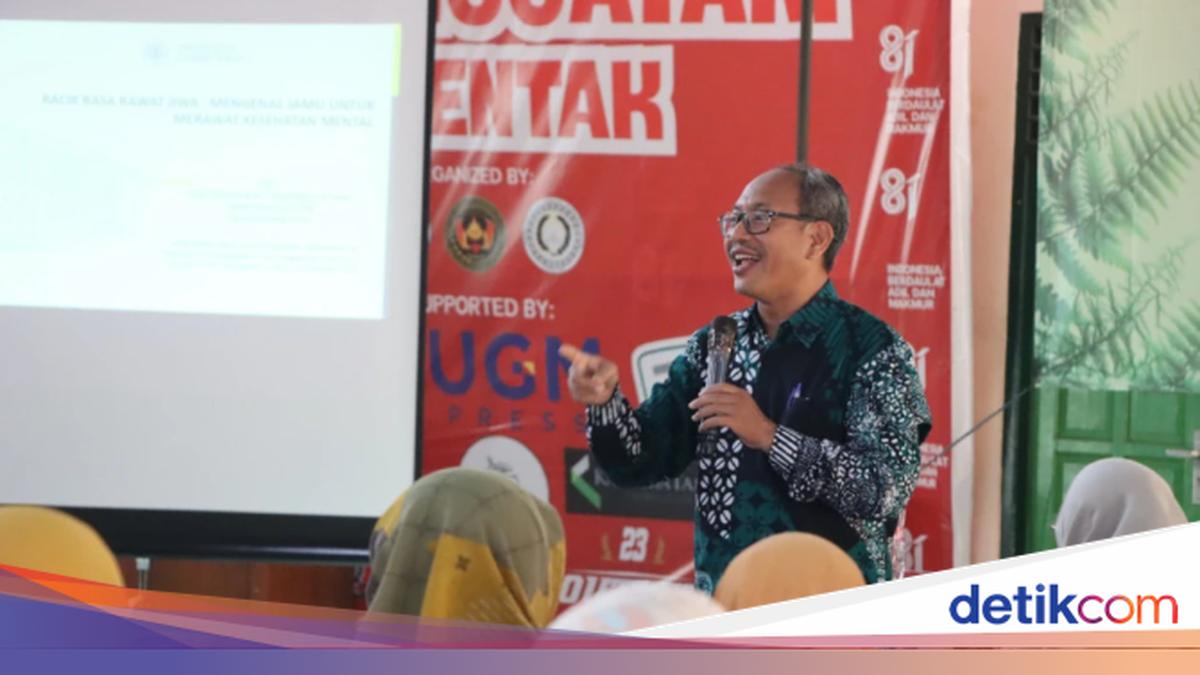
Plants known as traditional medicines are not entirely safe to consume. Dr. Djoko Santosa, an expert in Pharmaceutical Biology at the Faculty of Pharmacy at Universitas Gadjah Mada (UGM), has reminded the public that a number of plants in fact pose health risks if consumed or processed without proper knowledge, one example being bitter jamu (jamu pahitan).
“Not everything called a medicinal plant is necessarily good and safe for us to consume. There are plants whose use we must be careful with because they can pose risks to the body,” said Djoko during a workshop entitled ‘Racik Rasa dan Rawat Jiwa’ (Blend Flavours, Nurture the Mind) with the PKK community group of Karanggayam Hamlet, Sleman, quoted by detikJogja from UGM’s official website on Monday (7/9/2026).
Djoko cited commonly consumed plants such as soursop leaves, rondo noleh leaves — known to the public as ‘insulin leaves’ — mindi leaves, and brotowali (Tinospora cordifolia). These plants, he said, require particular care in their use.
“If the mothers want to buy bitter jamu, ask first whether what is being boiled is brotowali or sambiloto. Sambiloto is fine, but if it’s brotowali, I wouldn’t buy it,” he said.
Another example, he continued, is that continuous consumption of soursop leaves can affect the nerves and kidney health. Meanwhile, rondo noleh leaves and mindi leaves should also be avoided as they carry risks to the kidneys.
Djoko reminded that the term ‘medicinal plant’ does not automatically mean the plant is safe to consume. According to him, the use of certain plants must take into account the type, dosage, method of processing, and the physical condition of the person consuming them.
“Not everything called a medicinal plant is necessarily good and safe for us to consume. There are plants whose use we must be careful with because they can pose risks to the body,” he said.
Nevertheless, Djoko stressed that this does not mean all medicinal plants should be avoided. Their use can still be carried out by paying attention to dosage and one’s physical condition.
He gave the example of turmeric and tamarind (kunyit asam), which can be consumed in reasonable amounts. However, consumption should be stopped if it triggers an allergic reaction.
Djoko also urged the public not to readily believe information about traditional medicine circulating on social media. According to him, information on the benefits of medicinal plants must be assessed based on knowledge and safety of use.
“The public needs to understand how to make use of the medicinal plants found in their own surroundings,” he explained.
The workshop covered not only the use of medicinal plants and jamu, but also mental health. Djoko conveyed the importance of maintaining mental wellbeing through social interaction and involvement in community activities.
According to him, activities such as interacting within a community, attending religious study groups (pengajian) and social gatherings (arisan), and gardening can all be activities that support mental health.
The head of the Karanggayam Hamlet PKK group, Wiwik Dwi Karyawati, welcomed the educational activity. She said UGM’s presence provided additional insight to the community, particularly regarding mental health and the use of jamu, which has become part of local culture.
“This activity is extremely positive because we, the mothers, can gain broader insight. Like this afternoon’s material on mental health and jamu,” said Wiwik.
Wiwik expressed hope that similar activities can continue to be held. According to her, direct guidance from universities is beneficial because the knowledge gained by the community can be applied in daily life.
“For this programme, I hope it will continue because it truly has a real impact. From the campus, it can have a direct impact on residents,” she said.
The Coordinator of Educational and Outreach Community Service Activities at the UGM Faculty of Biology, Dr. Dra. Raden Roro Upiek, said Catur Tunggal was chosen as one of the guidance areas after the local ward office expressed a wish for the area to receive assistance from the UGM Faculty of Biology.
The assistance is carried out in stages through the ‘road to dusun’ concept, moving from one hamlet to another.
Upiek said the Faculty of Biology’s guidance programme in Catur Tunggal will be directed towards other hamlets in future. One previously guided hamlet, Mrican, is said to have been assessed as self-sufficient, allowing assistance to continue in other areas.
“There are 20 hamlets in Catur Tunggal; the road to dusun approach is expected to expand the reach of the guidance programme,” she said.
Through the ‘Racik Rasa dan Rawat Jiwa’ activity held at the Karanggayam Hamlet Hall, Catur Tunggal, Sleman, on Saturday (5/9), the collaboration between UGM’s Faculty of Pharmacy and Faculty of Biology and the Karanggayam community formed part of efforts to bring academic knowledge closer to community needs.
The event also formed part of the development of partner villages through health education, the utilisation of local potential, and sustainable community empowerment.