
UGM Expert Suggests Jogja Government Partner with Cycling Communities to Organise JLFR
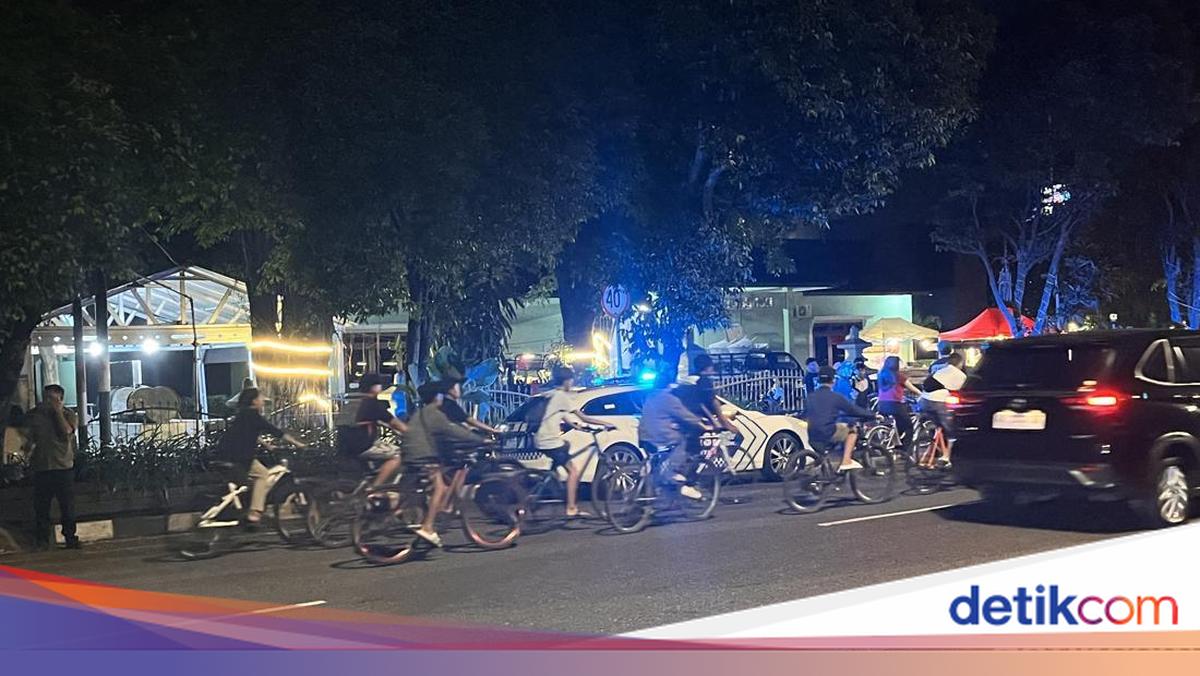
The Yogyakarta City Government plans to restrict the Jogja Last Friday Ride (JLFR) from passing through the Malioboro area. A transport expert from Universitas Gadjah Mada (UGM) has proposed that the city government partner with cycling communities to organise the JLFR.
The Head of the Centre for Transportation and Logistics Studies (Pustral) at UGM, Dr Ir Dewanti, stated that bicycles are fundamentally an environmentally friendly mode of transport and align with the low-emission zone concept implemented in the Malioboro area. However, when the number of cyclists surges simultaneously, this condition can cause various problems.
“If we look at it, cycling is actually good and positive in terms of movement because it is non-polluting. It is suitable for the Malioboro area, which has been designated as a low-emission zone. The bicycle mode supports this concept,” Dewanti said when contacted on Monday (13/7/2026).
Dewanti noted that the number of JLFR participants, which reaches hundreds or even thousands, presents a distinct challenge. According to her, the road capacity in the Malioboro area was not designed to accommodate large groups of cyclists moving simultaneously.
“The problem arises when the numbers become very large. The road space is heavily occupied by the cycling convoy, which can potentially disrupt the smooth flow of other traffic,” she said.
Beyond affecting traffic flow, Dewanti mentioned that the activity could also hinder access to public facilities, such as the community’s access to Tugu Station or the movement of logistics and emergency vehicles like ambulances.
“If people want to go to the station, for instance, they could be obstructed. Similarly, if an ambulance needs to pass, it is certainly not easy to quickly move hundreds or thousands of cyclists aside,” she explained.
Regarding the city government’s plan to restrict JLFR from entering the Malioboro area, Dewanti explained that the plan should be interpreted as a regulatory measure, not a ban on cycling activities. She proposed that JLFR be managed in a more structured manner through time and route scheduling, so that participants do not enter the Malioboro area all at once.
“Perhaps the groups can be regulated in terms of time and space. So not everyone enters Malioboro at the same time. There could be scheduling, for example, certain hours for certain routes, or different routes in the following month,” she said.
Dewanti acknowledged that the main issue is that JLFR lacks a clear organisation or person in charge. This condition makes it difficult for the government and authorities to coordinate or take action if problems arise on the ground.
“The problem, as I see it, is that there is no organiser. So, who do you talk to? I cannot imagine who the transportation agency or the police would coordinate with. If an accident occurs or there is friction with other road users, who is responsible?” she explained.
Dewanti hopes that collaboration can be established between the government and cycling communities so that the JLFR event can be better organised.
“Perhaps the Transportation Agency could work together with local cycling communities. That way, JLFR can be more organised and structured. The routes could also be rotated, so they do not always have to go through Malioboro,” she said.
She stressed that the JLFR initiative is fundamentally a positive campaign to encourage cycling. However, the activity still needs to be managed so that its benefits are not accompanied by negative impacts on public mobility.
“In principle, the problem arises because of the large numbers. The initiative is good for promoting cycling. If more people cycle every day, that is certainly better, but the mass activities need to be regulated so they do not cause problems for other road users,” she explained.
It is known that JLFR, a cycling event held on the last Friday evening of each month, has been restricted from entering Malioboro. The Yogyakarta city government assessed that the large number of cyclists coming to Malioboro disrupted traffic. The absence of a leader for the event has made it difficult for the city government to coordinate.
“In this situation, we are indeed conditioning things. During Saturday night or weekend nights, if we are swarmed by cyclists without rules and without coordination, it is very difficult. So, we end up closing certain routes at that time,” said Yogyakarta Mayor Hasto to reporters on Thursday (9/7).
Source: jawawa.id (https://jawawa.id/newsitem/ugm-expert-suggests-jogja-government-partner-with-cycling-communities-to-organise-jlfr-1783932698)
Originally published by detikJogja (https://www.detik.com/jogja/berita/d-8572118/pakar-ugm-sarankan-pemkot-gandeng-komunitas-sepeda-organisir-jlfr), translated from Indonesian