
UGM Expert: Six Simultaneously Erupting Volcanoes Do Not Belong to a Single System
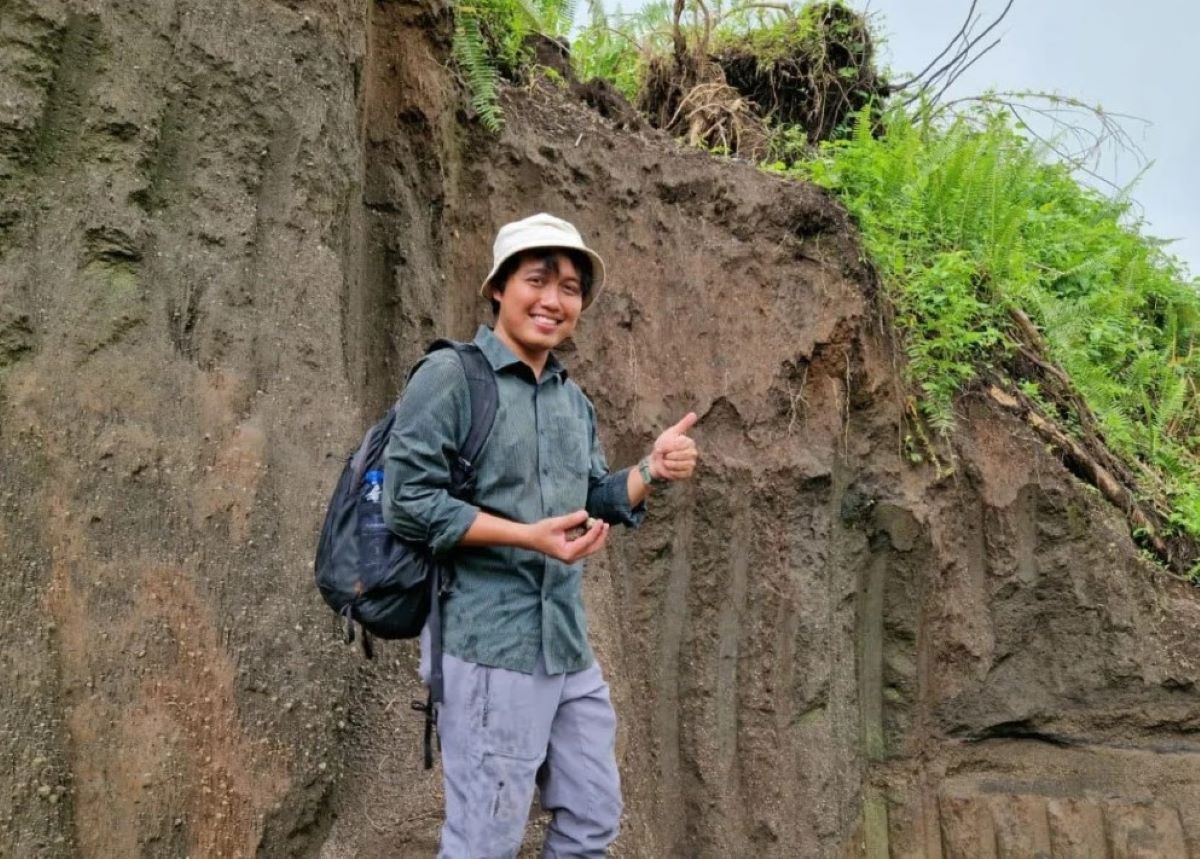
The phenomenon of six volcanoes erupting at almost the same time—Anak Krakatau, Semeru, Ile Lewotolok, Ibu, Lewotobi Laki-laki, and Sinabung—is considered unusual, as similar occurrences have rarely been seen in recent decades.
Eruptive activity across these six volcanoes does not indicate that they all belong to the same volcanic system, according to Dr Indranova Suhendro, a lecturer at the Faculty of Geography, Universitas Gadjah Mada (UGM). He explained that each volcano possesses its own unique characteristics and activity cycles. The similarity in eruption timing, he noted, is more accurately viewed as a convergence of different activity cycles.
Some volcanoes, such as Semeru and Anak Krakatau, naturally have high eruption frequencies, while others have longer periods of dormancy before becoming active again. When these cycles overlap within a single period, several volcanoes may appear to be active simultaneously. “In my view, this is more a matter of timing,” he stated.
He further noted that the shared subduction paths in Indonesia do not automatically imply a direct link between magma systems. Each volcano operates with a local magma system, meaning an eruption at one volcano does not necessarily trigger another. While connections are more likely between volcanoes in close proximity, the six volcanoes currently erupting are widely dispersed across Sumatra, Java, the Sunda Strait, Nusa Tenggara, and Malauk.
“Currently, the volcanoes experiencing eruptions are positioned very far from one another, making it nearly impossible for one to trigger the other,” Indranova explained.
These differing systems are reflected in the eruption mechanisms of each volcano. In the cases of Sinabung, Ibu, and Semeru, Indranova explained a mechanism where heat from underground magma warms water stored within the volcano, increasing pressure and triggering phreatic eruptions without always showing clear signs of increased volcanic seismic activity. This differs from the magmatic eruptions of Anak Krakatau, which involve magma with high gas content.
“Much like a carbonated drink, magmatic eruptions are explosive due to massive gas nucleation caused by intense decompression,” he said.
While much of the activity occurs through internal processes, external factors can play a role in certain conditions. One example provided by Indranova was the increase in volcanic seismic activity at Lewotobi Laki-laki and Ile Lewotolok following an earthquake in Flores, which was subsequently followed by eruptive activity. He linked this possibility to the influence of seismic tremors on gases dissolved in magma, though he emphasised that this mechanism cannot yet be confirmed for all volcanoes.
“The evidence that volcanic seismic activity at Mount Lewotolok and Lewotobi Laki-laki increased drastically post-earthquake is a strong indicator that they were awakened by the Flores seismic activity, similar to the case of the 2024 Mount Ruang eruption, which was triggered by a 6.5 magnitude earthquake near Halmahera,” he revealed.
These conditions show that while volcanic activity is occurring in several regions, the public must assess each volcano individually. The volcano status level is a critical indicator for understanding alert levels, while the eruption character determines the type of hazard to be anticipated. For instance, at Semeru, pyroclastic flows can move down slopes at high temperatures and speeds, whereas volcanoes like Sinabung, Ibu, and Anak Krakatau can produce falling volcanic material whose distribution is influenced by wind.
“Every volcano has its own eruption characteristics,” Indranova noted.
These differing characters mean that the impact of eruptions extends beyond the areas surrounding the craters. Volcanic ash carried by the wind can reach distant areas, affecting air quality and health, while disruptions to aviation can ripple through the tourism sector and other economic activities. Therefore, community preparedness must be built on an understanding of the specific types of hazards that may arise in their region, rather than solely on information that a volcano is erupting.
“We must be very intensive in educating the public to inform them that there are different types of hazards—some involve falling debris, others involve flows—so that the community is more aware and does not panic,” he said.
To support such preparedness, the public can utilise the MAGMA Indonesia platform, which provides information on volcanic activity, including volcano status and disaster-prone area maps. Through this information, the public can monitor status developments and view hazard zones as a basis for determining actions when activity increases.
The provision of information must go hand-in-hand with education and coordination between the government, academics, and the community to ensure that disaster knowledge is translated into appropriate action.
“If we truly want to create effective mitigation, we must be able to combine all these elements: the government, academics, and the community,” he concluded.
Source: jawawa.id (https://jawawa.id/newsitem/ugm-expert-six-simultaneously-erupting-volcanoes-do-not-belong-to-a-single-system-1789008856)
Originally published by Media Indonesia (https://mediaindonesia.com/nusantara/931779/pakar-ugm-enam-gunung-yang-meletus-bersamaan-tidak-dalam-satu-sistem), translated from Indonesian