
UGM Expert: Simultaneous Volcanic Eruptions are Scientifically Possible
A volcanology expert from Gadjable Mada University (UGM), Prof. Agung Harijoko, has provided a scientific explanation regarding the phenomenon of several active volcanoes erupting simultaneously. According to him, such a condition is highly possible given that Indonesia possesses 127 active volcanoes, though he emphasised that each volcano operates with its own distinct magma system.
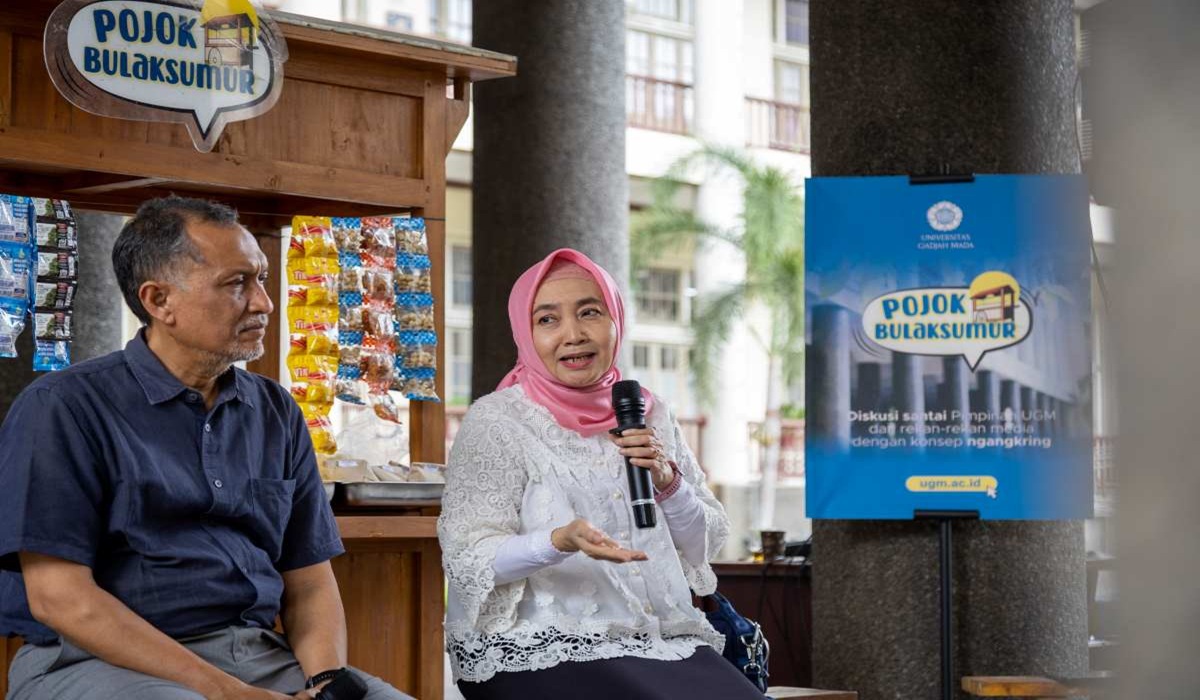
During the ‘Pojok Bulaksumur’ discussion titled ‘Facing a Disaster-Prone Indonesia: Are Our Policies Ready?’ held at the UGM Central Building on Wednesday (9/9), Prof. Agung explained the classification of volcanoes in Indonesia. He noted that the government, through the Centre for Volcanology and Geological Disaster Mitigation (PVMBG), is currently focusing continuous monitoring on Type A volcanoes. While simultaneous eruptions are possible, Prof. Agung stressed that an eruption in one volcano does not automatically trigger another.
“It is possible. It is very possible, because they have their own individual systems,” he explained. He added that eruptions are triggered by increased pressure in the magma chamber, for instance, due to a new magma supply exceeding the strength of the overlying rock.
In addition to volcanic threats, the discussion highlighted the risks of earthquakes and tsunamis. The Head of BMKG for the 2017-2025 period, Dwikorita Karnawati, explained the dynamics of the Indo-Australian Plate subducting beneath the Eurasian Plate. Regarding the megathrust threat, he asserted that while the potential locations of earthquakes can be mapped, the timing cannot be predicted accurately.
“The location of a megathrust can be predicted spatially, but in terms of timing, it is not accurate. Therefore, the timing is what cannot be predicted,” Dwikorita emphasised. He urged the public to remain critical of information claiming specific dates for major earthquakes.
Dwikorita also revealed the challenges facing early detection technology in Indonesia. Although Indonesia has the capacity to develop systems similar to those in Japan or Taiwan, the primary obstacle lies in communication infrastructure. The use of GSM signals for seismograph data is often sub-optimal in certain buildings or isolated regions.
Disaster management policy observer from UGM, Dr Bevaola Kusumasary, highlighted the inequality in disaster budget allocation. According to her, budgets are often more heavily allocated to the response stage because the results are more visually apparent, while the mitigation and preparation stages are frequently neglected.
“It is rare for people to allocate significant funds to the mitigation stage. What is most visible is the response stage,” said Bevaola. She emphasised the importance of implementing Standard Operating Procedures (SOPs) so they do not merely remain documents on paper, but instead produce real protection for the community.
Bevaola also appreciated the emerging cross-agency coordination, such as the use of BMKG data by the Ministry of Transportation in making operational decisions for airports during Anak Krakatau’s activity. However, she reminded that public education remains the key, particularly in shifting the disaster paradigm from being seen merely as ‘fate’ to a risk that can be mitigated through preparedness.