
UGM Expert: Market Certainty Key to Local Soybean Self-Sufficiency
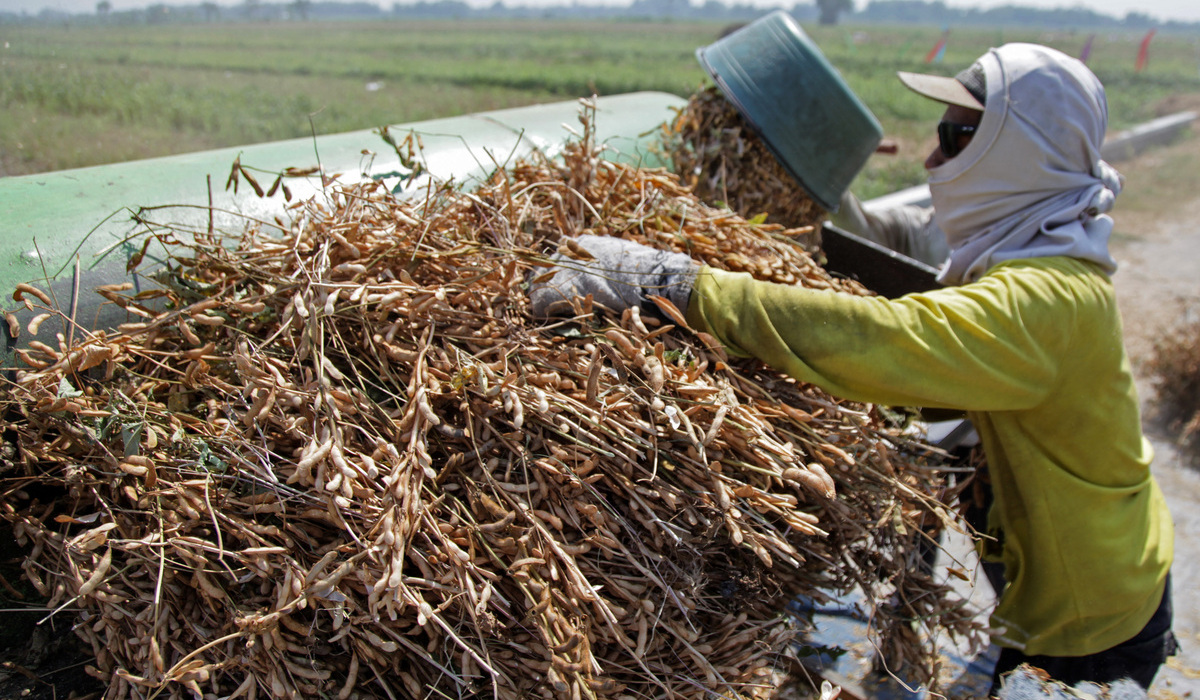
A UGM researcher has stated that market certainty is the key to achieving local soybean self-sufficiency, as Indonesia currently imports nearly 90 per cent of its national requirement of approximately 2.7 million tonnes per year. The UGM research team is working to boost domestic productivity through the Smart Agricultural Enterprise (SAE) Kedelai programme. The initiative has successfully produced soybean seeds that meet the certification standards of the Seed Supervision and Certification Agency (BPSB) of the Special Region of Yogyakarta.
Atris Suyantohadi, a lecturer at the UGM Faculty of Agricultural Technology, explained that improving the quality of local soybeans is highly feasible. “We started gradually through seed breeder groups. Various trials led us to conclude that the productivity, quality, and protein content of local soybeans can be enhanced,” he said in a press release on Thursday (2/7/2026).
According to Atris, research that began in 2012 shows that soybean self-sufficiency cannot be achieved by merely increasing production. The biggest challenge is building a complete ecosystem that connects farmers, industry, and the market to provide economic certainty. “Farmers will certainly not be interested in planting local soybeans if they have not obtained certainty about who will buy their harvest, how the market guarantees work, and what cultivation techniques to use,” he stressed.
To address this, the UGM team has provided assistance in various regions, including Grobogan, Bantul, Kulon Progo, Sukoharjo, and Sragen. This assistance involves a partnership with an industrial off-taker, CV Java Agro Prima, which is responsible for absorbing the harvest and ensuring the products meet food safety standards. By 2026, the soybeans developed under this programme had successfully obtained food safety certification. Atris added that Internet of Things (IoT) technology has also been implemented to monitor and control seed quality in real time.
This initiative aligns with the Ministry of Agriculture’s plans. Minister of Agriculture Amran Sulaiman previously stated the government’s commitment to boosting local soybean production to reduce imports. He highlighted that the UGM-developed soybean variety has a competitive advantage because it is non-genetically modified organism (non-GMO) and has a larger seed size compared to imported soybeans. The government plans to oversee the development trial of soybeans and garlic on 1,000 to 2,000 hectares of land in Central Java as an initial step in this strategic collaboration. Beyond cultivation technology, UGM also emphasises the importance of enhancing farmers’ knowledge and skills to optimise the economic value of the harvest, rather than relying solely on conventional seed and fertiliser aid.