
UGM Expert Explains the Mindanao Earthquake
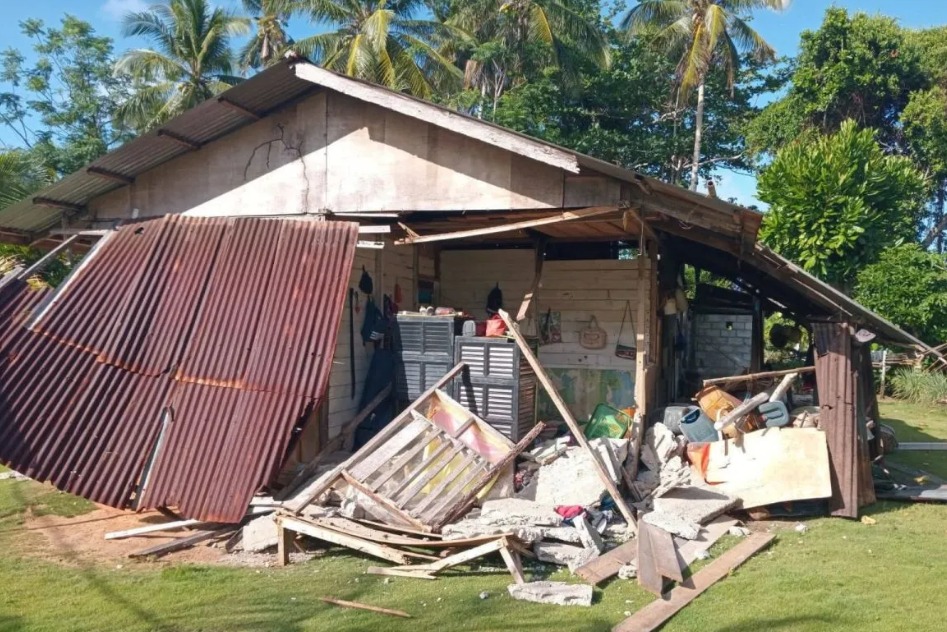
The magnitude 7.7 earthquake that shook the Mindanao Sea, Philippines, on Monday (8/6) serves as a reminder that the Southeast Asian region is situated in a highly active tectonic environment.
Ir. Gayatri Indah Marliyani, Ph.D., a lecturer in Geology at the Faculty of Engineering, UGM, explained that such earthquakes are common in plate convergence zones, similar to those found in the Philippines and Indonesia. In the Mindanao Sea region, there is a subduction zone, where one tectonic plate slides beneath another. “This subduction process occurs very slowly, only a few centimetres per year, but energy continues to accumulate over decades to hundreds of years,” she explained on Thursday (11/6).
According to her, the relationship between stress and earthquakes occurs when the accumulated stress exceeds the strength of the rocks, causing the fault plane to break and move suddenly, resulting in an earthquake. In a thrust fault mechanism, one block of rock is pushed against another due to compressive forces, Gayatri noted.
She noted that if such movement occurs underwater, any sudden uplift or subsidence of the seabed can displace the water column above, potentially triggering a tsunami. “The combination of a large magnitude, an undersea earthquake source, relatively shallow depth, and a thrust fault mechanism are conditions that must be monitored for tsunami potential,” she stated.
Furthermore, she explained that the primary cause of the earthquake was tectonic activity in the Mindanao Sea subduction zone. The earthquake source did not originate from a single land fault extending to Sulawesi, but rather from the movement of tectonic plates that are active in the region. Tremors could be felt as far as Sulawesi because the seismic wave energy from large earthquakes can travel hundreds to thousands of kilometres from the source.
“The larger the magnitude of the earthquake, the wider the area that can feel the tremors,” she said.
She added that the epicentre location and the depth of the earthquake play crucial roles in determining tsunami potential. Earthquakes occurring underwater have a greater chance of generating tsunamis compared to those on land. However, magnitude alone is insufficient to determine the presence of a tsunami, as the fault mechanism and the extent of seabed displacement are also decisive factors.
Gayatri stated that the Mindanao earthquake serves as a reminder for Indonesia, which also lies within the Pacific Ring of Fire. She emphasised that Indonesia possesses many large earthquake sources, originating from subduction zones in Sumatra, Java, Nusa Tenggara, Maluku, and Sulawesi, as well as from active faults on land.
Nevertheless, the Mindanao earthquake does not necessarily mean it will immediately trigger a large earthquake in Indonesia, as every earthquake source has its own characteristics and cycles. “What is more important is to use this event as a momentum to increase preparedness,” she said.
Given Indonesia’s long history with earthquakes and tsunamis, it is vital to understand that these threats are real risks that must be faced collectively. “The most important thing is to build a culture of disaster awareness. Vigilance does not mean living in fear. With good knowledge and appropriate responses, risks can be reduced and more lives can be saved when disasters occur,” she concluded.