
UGM Expert Describes Recurring Fires in Sleman as a Special Case
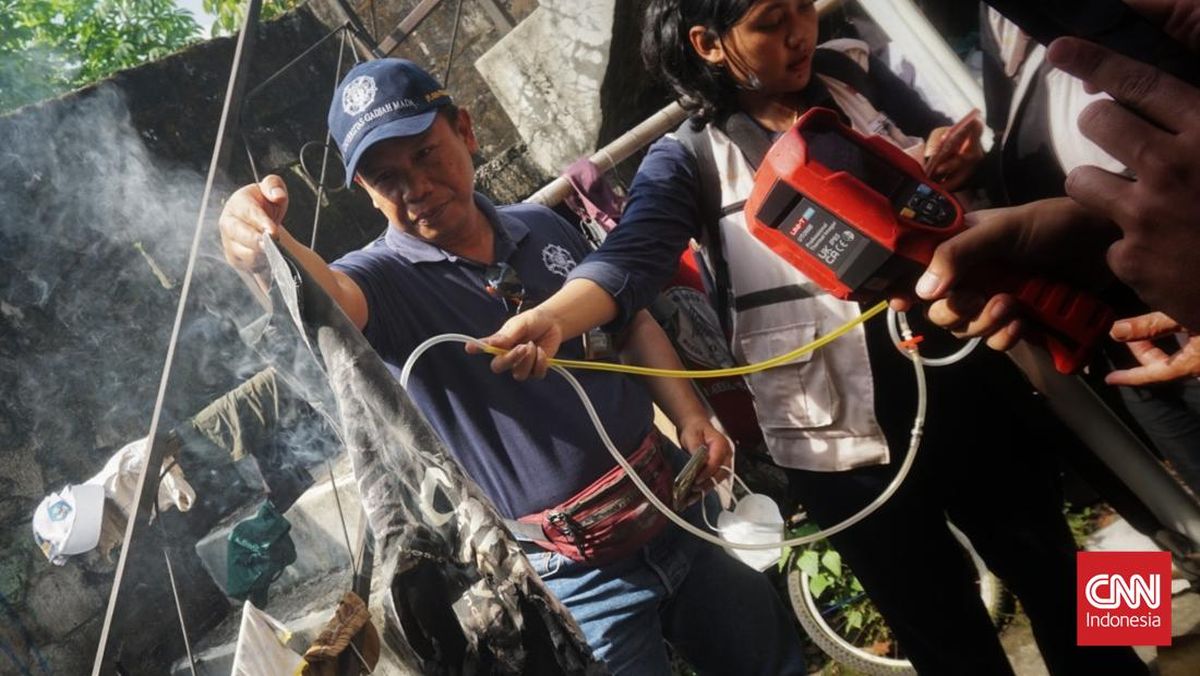
The Centre for Study of Entropy Slowdown (PKPE) at the Faculty of Engineering, Gadjah Mada University (UGM), has stated that the phenomenon of recurring fires at the residence of Mutfiana, also known as Fia, in Seyegan, Sleman, DIY, is a special case. This classification is based on preliminary findings from the UGM expert team, which indicates that the emergence of flames is associated with the discovery of hydrogen (H2) gas at the location.
This hydrogen gas is strongly suspected to originate from the fermentation process of organic waste from poultry slaughtering. The family in question operates a poultry slaughtering business at their home. Sarju Winardi, a lecturer and Assistant Professor at the Department of Geological Engineering, Upson, and a member of PKPE, admitted that his team does not yet have a comprehensive explanation as to why this phenomenon does not occur at other poultry waste sites.
The team’s current assumption is that this hydrogen gas likely arises from organic waste consisting of a mixture of faeces, residual water and blood, and chicken feathers, which also indicates the presence of another more flammable compound at room temperature: phosphine (PH3) gas. Notably, the organic waste containment area has been in use for 16 years and is reportedly cleaned occasionally.
“In terms of comparison, we have not found similar cases in other waste management models. Our findings show that it does not occur elsewhere, which reinforces our view that this is a special case,” said Sarju during an interview at the Seyegan District Office, Sleman, on Thursday.
However, Sarju noted that similar phenomena can scientifically be found in former landfill sites containing high amounts of organic material, such as dead animals and bones, or even graveyards. The phenomenon of phosphine gas triggering hydrogen combustion can occur in such configurations. “That serves as our reference. However, we have not found such cases in poultry slaughterhouses in Indonesia. While there are many cases involving methane (CH4) in septic tanks, and the bomb squad (Gegana) previously measured methane, the fact that the flames persist even after the septic tanks were cleaned strengthens our suspicion that hydrogen is the confirmed culprit,” he explained.
Regarding why this is happening only now, Sarju explained that the formation of hydrogen from organic waste depends on the activity of anaerobic microbacteria, specifically Clostridium. The higher the population of these bacteria, the faster the production rate. “The formation does not take a very long time, especially since the waste containment has existed for 16 years, providing ample time,” he said.
Sarju assumes that the hydrogen gas is only emerging now because the microorganism activity has reached an optimal level. The hydrogen gas capacity is believed to have peaked, causing it to leak and float into the air. “It has reached its peak, so there is enough gas to escape. We believe the release is not sporadic in one single spot but continuous, indicating peak bacterial activity.”
Consequently, the PKPE UGM team has proposed several recommendations to minimise the risk of fire at Fia’s house. One such measure involves the UGM team assisting in the saturation of the soil and house floors with an alkaline solution (lime water) to suppress the Clostridium bacteria responsible for hydrogen production.
The mysterious fire terror at Fia’s residence has lasted for nearly two weeks. As of today, sudden flames have ignited objects inside the house 97 times. Furthermore, since two days ago, the fire spread has extended to the commercial shop area (ruko) used by Fia’s family as a temporary refuge. The family has mapped at least 65 fire points since the incidents began.