
UGM Expert Criticises Giant Sea Wall Project in Northern Coast, Here Are the Reasons
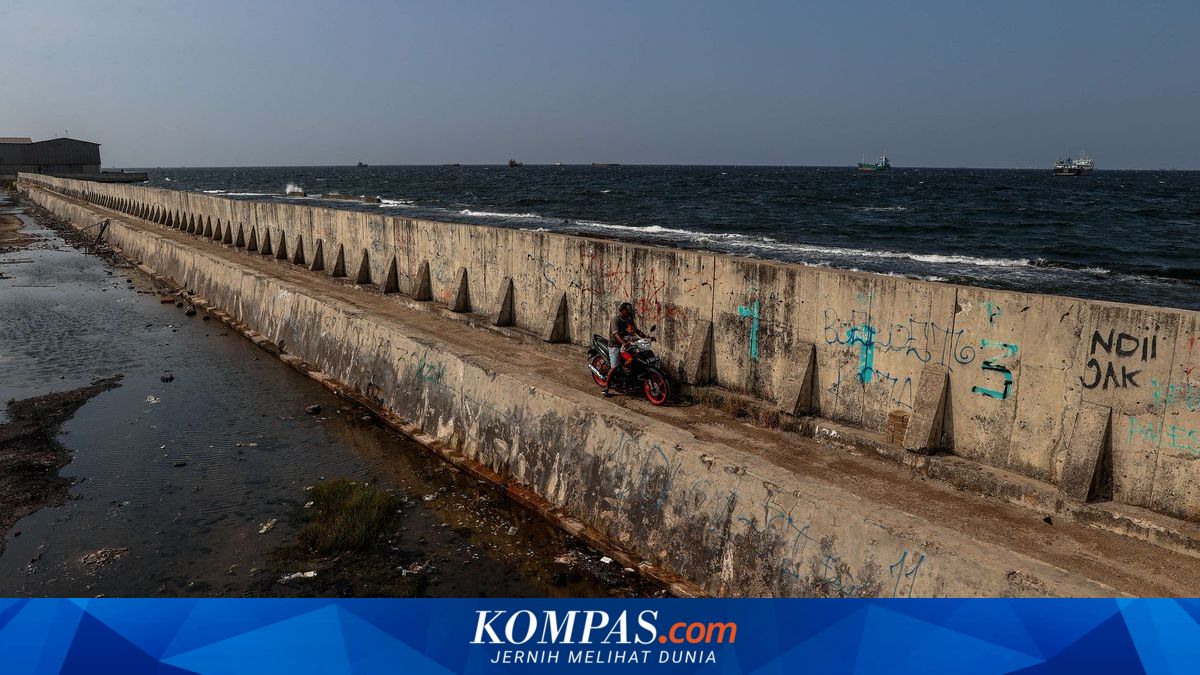
The government is finalising the Giant Sea Wall megaproject along the northern coast, an initiative that has existed since 1995 and was revisited by President Prabowo in June 2025. This step is taken to secure the coastline from rising sea levels. However, Dr. Bachtiar Wahyu Mutaqin, a lecturer at the Faculty of Geography at UGM, assesses that the construction of the sea wall is not of an emergency nature. Considering the geographical characteristics of the northern coast, dominated by flat alluvial plains that are protected, he states there are other more reasonable options. Bachtiar expresses his concern that this project is merely a “placebo effect”—a belief that significant improvements are being made, though it may not solve the root problems. “Such options are indeed tended to be chosen because they provide a placebo effect. As if there is already a tangible form, even though it may not solve the problem,” he stated. Instead of building a massive wall, Bachtiar emphasises that the main issue in the northern coast is land subsidence. He states that the root problem is not in the sea, but on land, namely regional spatial planning and the massive use of groundwater by large industries on the coast. Large and heavy structures like sea walls actually risk pressing down on the alluvial surface that is still “young” and not yet compacted. “This is exacerbated by the massive use of groundwater by large industries, which of course accelerates land subsidence,” he added. This large-scale construction is predicted to drastically alter coastal dynamics, from sediment distribution patterns to sea currents. Changes in these oceanographic factors can cause important ecosystems like mangroves, seagrass, and coral reefs to lose their habitats. “Changes in oceanographic factors and sediments can affect the reduction of substrates where mangroves grow,” explained Bachtiar. Damage to these ecosystems will automatically disrupt the marine food chain, ultimately impacting the most vulnerable groups in society. “Traditional fishermen who lack capital will find it increasingly difficult to catch fish,” he said. “No. We must look at the local context and geographical conditions,” Bachtiar concluded. Bachtiar assesses that rather than spending a large budget on concrete structures that risk damaging the natural balance, the government should focus more on improving industrial spatial planning and restoring natural ecosystems as a more sustainable coastal defence.
Source: jawawa.id (https://jawawa.id/newsitem/ugm-expert-criticises-giant-sea-wall-project-in-northern-coast-here-are-the-reasons-1777009995)
Originally published by Kompas (https://www.kompas.com/sains/read/2026/04/23/191400323/pakar-ugm-kritik-proyek-giant-sea-wall-di-pantura-ini-alasannya?utm_source=ABC&utm_medium=rss), translated from Indonesian