
UGM Conclusion on Fire Terror Source in Seyegan, Sleman: Chicken Waste
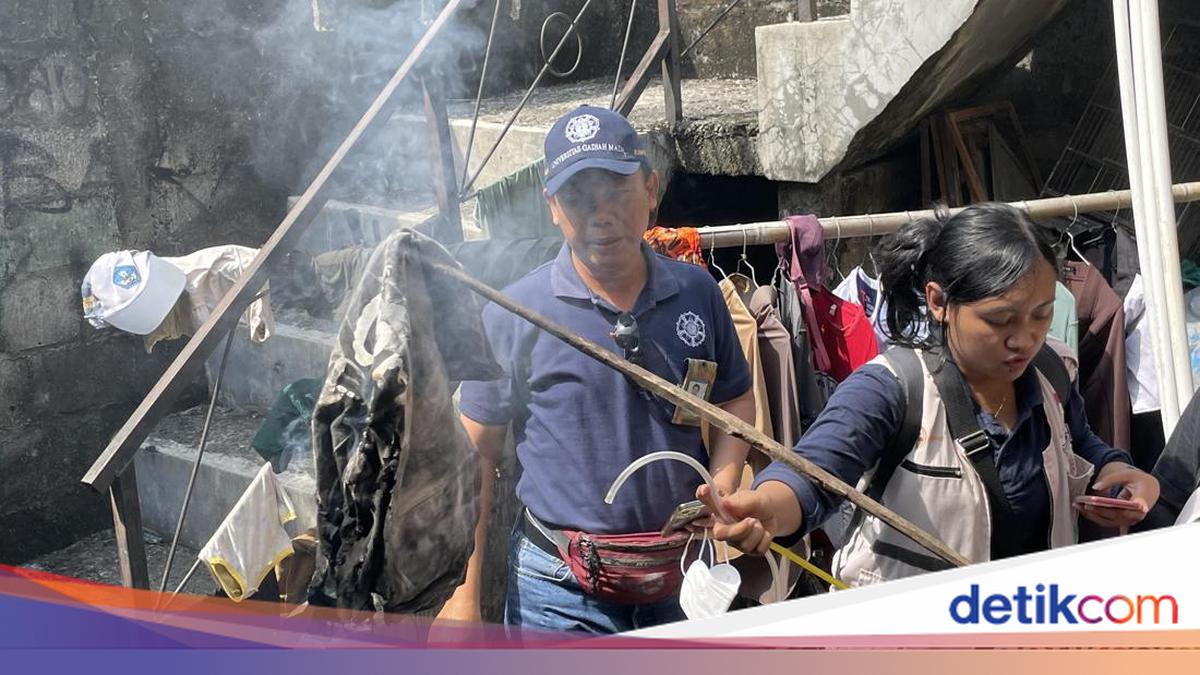
A research team from the Centre for Entropy Expansion Studies (PKPE) at the Faculty of Engineering, UGM, has revealed preliminary findings regarding the phenomenon of ‘fire terror’ in a residential area in Seyegan, Sleman. Based on a series of observations, the team concluded that the emergence of flames is strongly linked to the presence of hydrogen gas.
The head of the PKPE team, Professor Alva Edy Tontowi, explained that investigations suggest the hydrogen gas likely originates from chicken slaughtering waste. The affected family operates a poultry slaughtering business attached to the residence where the mysterious fires occurred. “The hydrogen gas is believed to stem from the fermentation process of organic waste from chicken slaughtering,” he stated in a written statement.
Furthermore, the team suspects that phosphine gas (PH3), which is highly flammable at room temperature, may also be present. This gas is thought to form from phosphate-rich materials such as bones and hard parts of chicken feathers. “Phosphine gas is unfortunately difficult to detect and burns away upon contact with oxygen. It is highly possible that phosphine triggered the combustion of the hydrogen gas released simultaneously. However, this requires deeper investigation,” Alva added.
During initial observations on Saturday (30/5), the multidisciplinary team received information from the DIY Regional Police’s Gegana unit that methane (CH4) had been detected at the fire’s origin. However, thermal camera measurements did not show significant temperature anomalies, with temperatures remaining within the ambient range.
Subsequent gas detection led by Professor Agung Harijoko on Monday (1/6) revealed high levels of hydrogen (H2). In the bathroom where flames had previously appeared, levels reached 0.11, while near a fire point in one of the bedrooms, levels reached as high as 0.40. Further observations on Wednesday (3/6) by a team led by Professor Sarto and Professor Chandra from the Chemical Engineering department found no other flammable gases besides hydrogen.
The researchers believe the key to resolving the issue is identifying the exact source of the gas, with two candidates identified: liquid waste or soil gas. The team is currently conducting shallow excavations to test for soil gas, while liquid waste is undergoing laboratory analysis.
As a recommendation, the UGM team advises residents to maximise air circulation within the house, using blowers or fans to prevent gas accumulation. They also suggest removing flammable items from the premises. Additionally, the team will assist in applying a basic solution (lime water) to the soil and house floors to suppress the activity of Clostridium bacteria, which are responsible for producing hydrogen gas. The mysterious fires in the Seyegan residence have occurred up to nine times a day recently, prompting intervention from both the police and academics.