
UGM: Closure of some study programmes deemed irrelevant ignores future dynamics
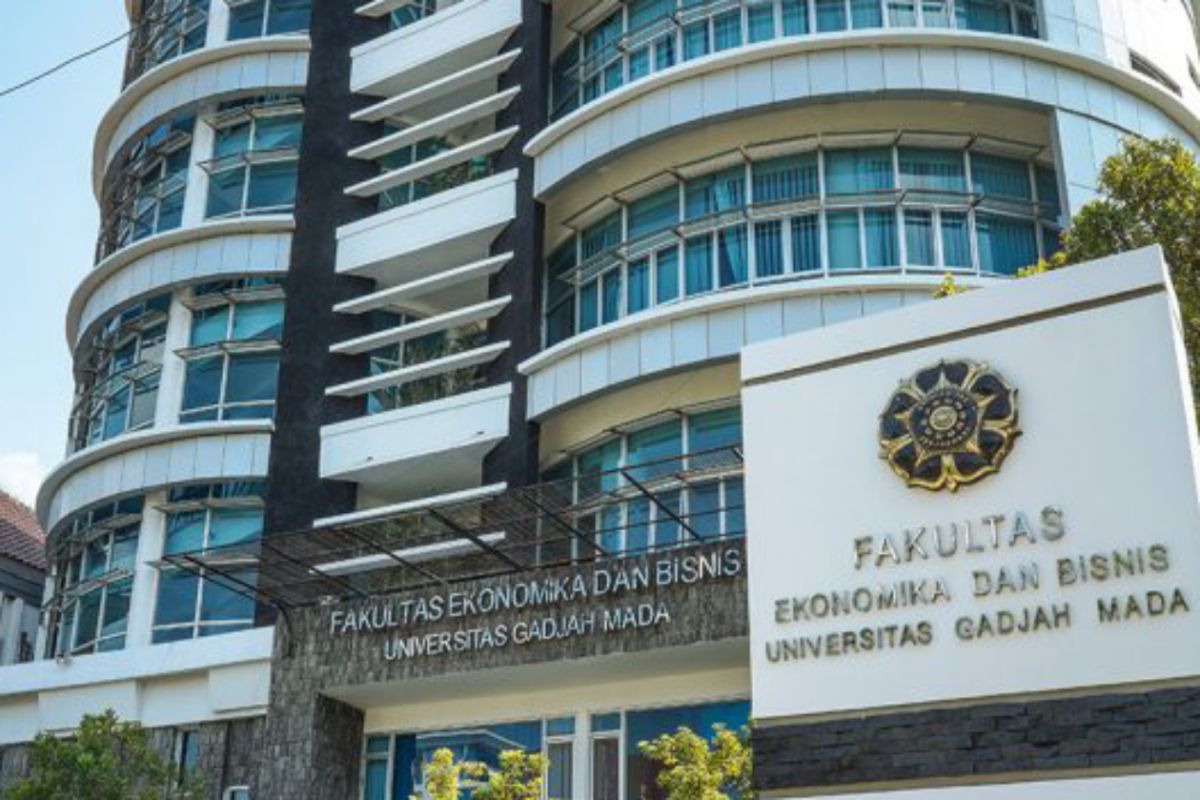
Universities are spaces for the production of knowledge, critique, and reflection. When this function is weakened, society loses the capacity to understand change, let alone correct it. Yogyakarta (ANTARA) - Wisnu Setiadi Nugroho, economist at the Faculty of Economics and Business, Universitas Gadjah Mada (FEB UGM), stated that the government’s plan to close a number of study programmes that are not relevant to economic needs is a decision that ignores the dynamics of the future.
“Higher education is not a workshop for training workers for industry. Closing study programmes simply because they do not align with today’s market tastes is a myopic decision that ignores the dynamics of the future,” Wisnu said in a statement in Yogyakarta, on Friday.
According to Wisnu, universities should not function as a factory producing labour to order, but as an institution that shapes people with the ability to think, adapt, and create.
Higher education, he said, should be a compass that guides civilisation, not merely a weather vane turning with the direction of the economy.
“If we continue to impose the market logic as the sole measure of relevance, what will be produced is not a generation prepared to face the future, but a generation trained for the past,” he said.
Wisnu said that policies to close prodi with few takers or not relevant to industry do not stop at economic aspects. Entrusting the direction of higher education entirely to the market means ignoring the social and political functions of the campus.
“Higher education is a space for the production of knowledge, critique, and reflection. When this function is weakened, society loses the capacity to understand change, let alone correct it,” he said.
He noted that if success is determined only by short-term job absorption, fields contributing to long-term development, including culture, critical thinking, and basic research, will be increasingly marginalised.
In fact, a country able to endure disruption is one that has the capacity for reflection and innovation, not merely a supplier of compliant labour.
Wisnu cited a McKinsey & Company report predicting that up to 30 per cent of global work activity could be automated by 2030. If universities focus only on technical skills that are in vogue, the graduates produced risk becoming quickly irrelevant.
Conversely, the skills that endure across ages are fundamental skills such as critical thinking, analytical ability, communication, and social understanding.
Data from the National Association of Colleges and Employers (NACE) consistently show that competencies such as problem solving, communication, and teamwork are always at the top of employers’ needs, surpassing specific technical skills.
“Indeed, these fundamental skills are precisely what are honed systematically in the basic sciences, humanities, and social sciences—fields often positioned as unmarketable study programmes,” said the Secretary of the Department of Economics at FEB UGM.