
UGM Anti-Corruption Centre: Anti-Corruption Commitment Must Be Proven
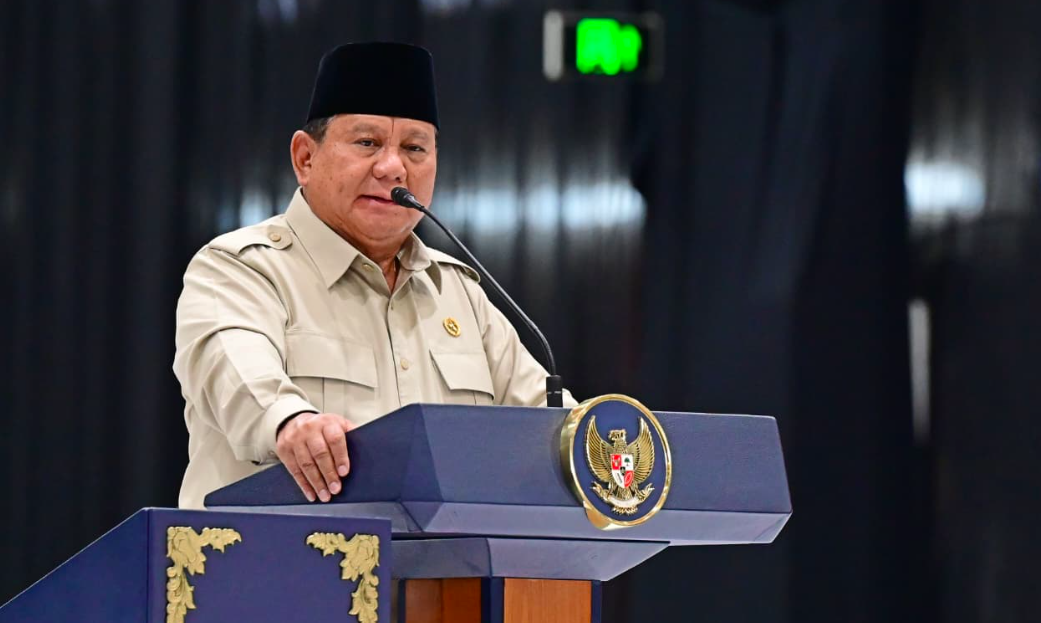
Zaenur Rohman, a researcher at the Anti-Corruption Study Centre (Pukat) of Gadjable Mada University, believes that President Prabowo Subianto’s commitment to eradicating corruption must be proven through concrete policies. According to him, the President’s statements regarding the war on corruption are insufficient if not accompanied by improvements to the legal system and law enforcement institutions.
Zaenur expressed this view in response to alleged corruption cases in the land sector currently being investigated by the Corruption Eradication Commission (KPK). He believes that the involvement of individuals close to government officials in corruption cases should serve as a momentum for the President to strengthen the anti-corruption agenda in a planned manner.
“We see the President delivering speeches repeatedly, but they are never implemented in the form of policy,” Zaenur said when contacted on Wednesday (16/9).
He mentioned several officials previously embroiled in legal matters, including Emmanuel Ebenezer and Silmy Karim. Now, according to Zaenur, cases have emerged involving individuals close to the Minister of Agrarian Affairs and Spatial Planning/Head of the National Land Agency (ATR/BPN), Nusron Wahid.
In this matter, Zaenur urged the KPK not to stop at the parties who have been named as suspects. The anti-graft agency, he said, needs to delve into the possible links of Nusron to the case based on the evidence held.
“The KPK must focus on ensnaring Nusron. They must seek evidence as to whether Nuslan had knowledge, approval, or issued orders related to the case,” he stated.
According to Zaenur, investigators need to prove whether the money flow in the case is related to Nusron or originates from other parties. He emphasised that the legal process must be based on evidence to determine the extent of the involvement of the parties being examined.
Beyond case handling, Zaenur stated that the President needs to build an anti-corruption strategy that touches the entire system. He utilised Lawrence M. Friedman’s framework, which divides the legal system into three elements: legal substance, legal structure, and legal culture.
Regarding legal substance, Zaenur assessed that anti-corruption regulations still need to be strengthened, one way being through the revision of the Corruption Crime Law (Tipikor). He also encouraged the criminalisation of illicit enrichment. According to him, such a regulation could be used to require officials experiencing unnatural wealth increases to explain the source of their assets.
Furthermore, Zaenur mentioned the need to strengthen asset forfeiture mechanisms, especially for assets related to perpetrators who flee, die, or whose whereabouts are unknown. He also proposed limiting cash transactions as part of an anti-corruption prevention strategy.
“There needs to be a change to the Tipikor Law. There needs to be the criminalisation of illicit enrichment, which can be done within the Tipikor Law. There needs to be asset forfeiture for assets where the perpetrators have fled, died, or are unknown,” he said.
Regarding the legal structure aspect, Zaenur assessed that the government’s seriousness must also be visible through the reform of law enforcement institutions. He noted that this improvement should cover the KPK, the National Police (Polri), and the Attorney General’s Office.
According to Zaenur, the President needs to restore the independence of the KPK while simultaneously conducting reforms in other law enforcement institutions. He believes the anti-corruption agenda will be difficult to execute if the institutions tasked with enforcing the law are not reformed. “If the President is serious, the legal structure must be improved, namely the reform of law enforcement institutions,” he said.
Zaenuring then linked this issue to broader impacts. He assessed that if corruption eradication is not strengthened, the situation could potentially affect corruption perceptions, the investment climate, the quality of economic growth, and public services.
He stated that uncertainty regarding corruption eradication could make investors reluctant to enter the country. At the same time, he noted that the public is the party disadvantaged when corruption practices occur within public services. “There is no certainty. And the people are the ones disadvantaged. The people are always squeezed when dealing with public services,” said Zaunur.
Therefore, he reiterated two agendas that he believes are vital if the President wishes to strengthen anti-corruption efforts: restoring the independence of the KPK and revising the Tipikor Law. He mentioned illicit enrichment as one of the materials that needs to be considered in the revision.
Zaenur also highlighted the process of filling cabinet positions. In his view, since the beginning of the administration, President Prabowo has been seen as too accommodative in organising the cabinet and forming a large-scale cabinet. He believes that integrity should be a key consideration in filling strategic positions.
He assessed that this issue must be followed by stronger supervision of state officials. According to Zaenur, when supervision does not function meaningfully, the risk of corruption cases involving officials or those close to power will become an increasing public concern. “Even forming a jumbo cabinet, without paying attention to the factor of integrity as an important factor in filling important positions in the cabinet,” he concluded.