
UGM and BRIN develop free-range chicken and maggot farming concept
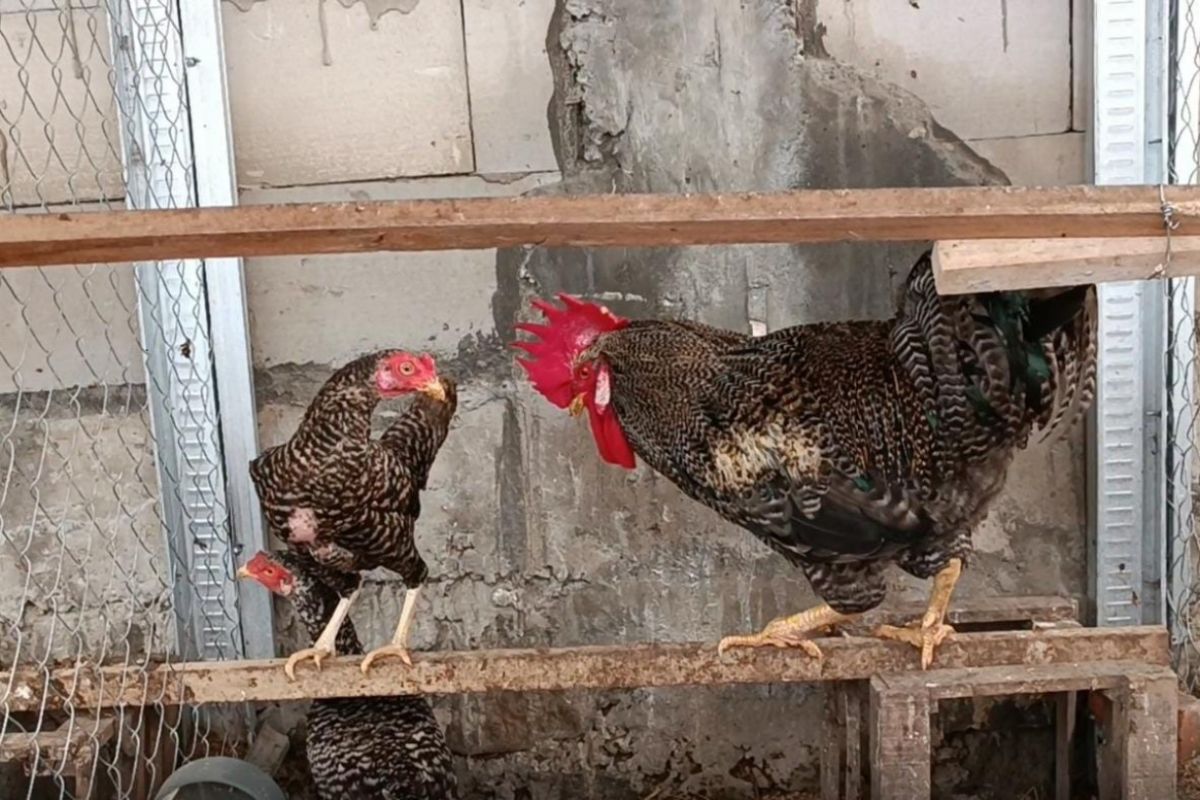
Yogyakarta (ANTARA) - A team from the Faculty of Animal Science at Universitas Gadjah Mada (UGM), in collaboration with the National Research and Innovation Agency (BRIN), is developing a concept that integrates the cultivation of superior egg-laying native chickens and maggots using environmentally friendly technology.
“This concept integrates the cultivation of superior egg-laying native chickens with bioconversion technology using Black Soldier Fly (BSF) larvae within an environmentally friendly circular economy system,” said the innovation team leader, Ikhwan Hadianto, in Yogyakarta on Thursday.
According to him, various research results show that BSF technology is capable of significantly reducing organic waste while simultaneously producing an alternative protein source that can be utilised as livestock feed.
“Therefore, this concept is being developed as a solution to the challenges facing community-based livestock farming, particularly high feed costs and organic waste management,” he said.
The concept, part of the 2026 Micro-Credential Module Development Assistance Programme, has been packaged into a Massive Open Online Course (MOOC) titled “Eco-Farming: Synergy of Superior Egg-Laying Native Chicken Farming and BSF Maggot.”
“The hope is that participants will be able to understand the basic concepts of eco-farming, manage a chicken farming system integrated with BSB maggots, and apply zero-waste principles in livestock enterprises,” he added.
The learning material is comprehensively organised into seven sub-modules: Eco-Farming and Circular Economy Concepts, Integrated Cage Architecture, Maggot-Based Feed Management, Bioconversion and Zero Waste Technology, Health and Biosecurity Management, Production and Post-Harvest Management, and Circular Business Feasibility Analysis.
The production process for the instructional videos was conducted independently, filming at private farms and within the UGM Faculty of Animal Science environment.
The teaching approach combines talking head methods, narration, and practical demonstrations to provide a more applicative and easily understood learning experience for participants.
He expressed hope that the development of the MOOC would serve as a medium for disseminating appropriate technology to support feed independence, waste management, and the enhancement of community livestock productivity.
“This module is also expected to strengthen UGM’s role in supporting lifelong learning and accelerating digital transformation in the sustainable agriculture and livestock sectors,” he said.