
UGM Academic Assesses Asset Forfeiture Bill: Non-Conviction Based Forfeiture Cannot Be Applied Without Criminal Proceedings
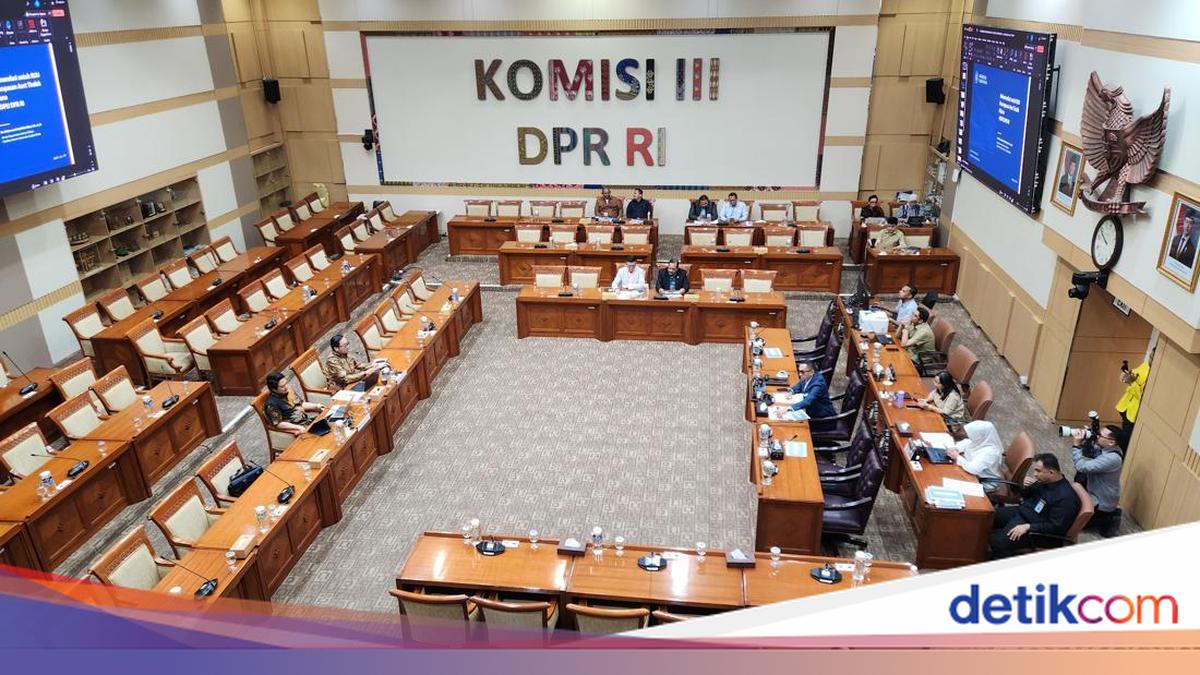
Commission III of the House of Representatives (DPR) held a Public Hearing (RDPU) with academics to discuss the Asset Forfeiture Bill. One of the key topics discussed was non-conviction based asset forfeiture, or the seizure of assets without a criminal conviction.
he meeting took place in the Commission III room of the DPR parliamentary complex in Senayan on Monday (5/10/2026). Muhammad Fatahillah Akbar, an academic from the Faculty of Law at Gadjah Mada University (UGM), explained that the mechanism for asset forfeiture without criminal conviction should not replace the criminal legal process against the perpetrator.“Therefore, non-conviction based forfeiture cannot be sought without a criminal process. This is something that requires caution. If there is no criminal process at all, there will be no limits,” said Fataullilah.
Fatahillah noted that the mechanism for non-conviction based asset forfeiture can be seen in the United Nations Convention Against Corruption (UNCAC). Asset forfeiture without conviction should only be carried out if the perpetrator has died or cannot be located.
“This serves as a complement. According to Article 54, paragraph (1) of the UNCAC, which we have ratified through Law Number 7 of 2006, this applies when the perpetrator has died, has fled, or is absent and can no longer be found,” he said.
“For instance, if they are seriously ill, or if the process is extremely complex and other such factors are left to the interpretation of law enforcement at that time, only then can non-conviction based forfeiture be used,” he added.
In the same meeting, Taufik Rahman, an academic from the Faculty of Law at Airlangga University (Unair), stated that the Asset Forfeiture Bill must ensure that non-conviction based forfeiture does not lead to an abuse of authority. He emphasised that the rights of suspects must not be violated.
“The regulation of non-conviction based forfeitures in the Asset Forfeiture Bill must be able to address this to ensure there is no abuse of power,” said Taufik.
Taufik also suggested that the burden of proof for seized assets must remain the responsibility of the prosecutors. He argued that there must be a clear link between the seized assets and the criminal act.
“The burden of proof I am referring to must remain with the law enforcement agencies. Personally, I do not agree with the implementation of reversed burden of proof,” he stated.