
Udayana University Urges Students to Develop Property Innovations Rooted in Balinese Culture
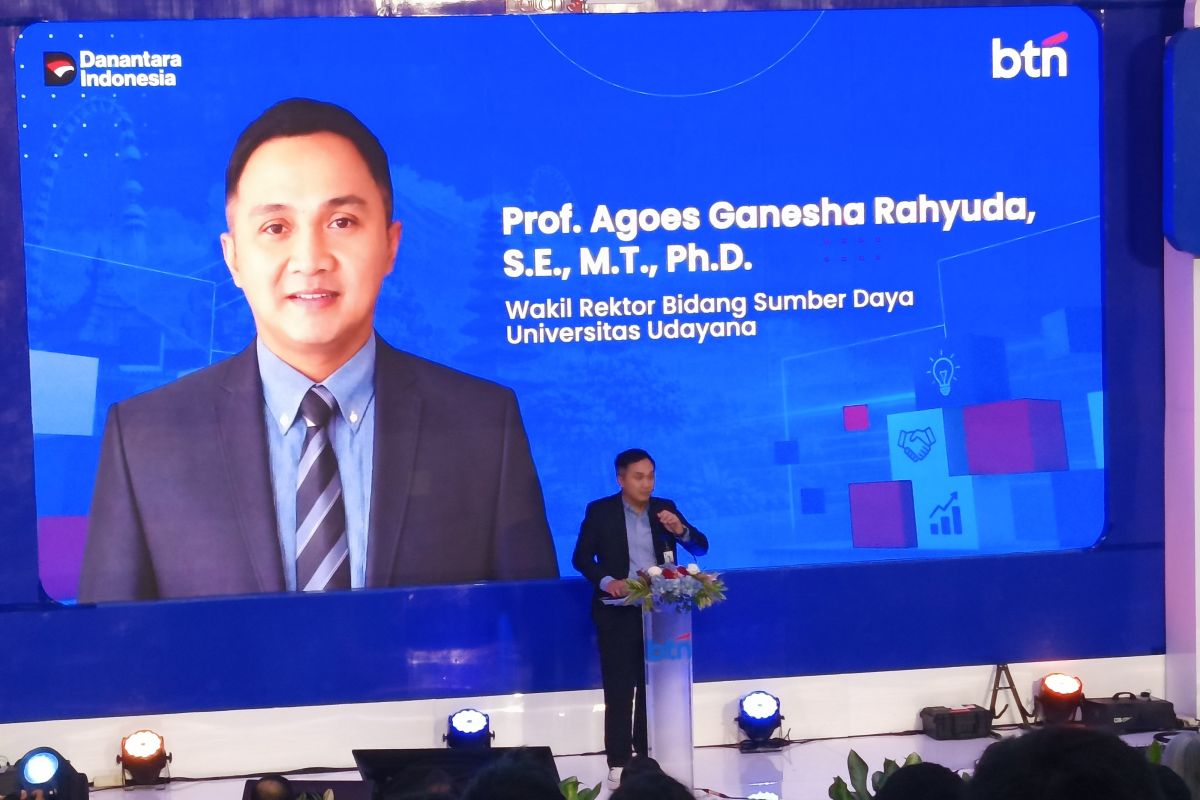
Badung, Bali (ANTARA) - Udayana University (Unud) is encouraging students to develop innovations in the property industry while remaining grounded in Balinese cultural values and local identity.
The university’s Vice-Rector for Resources, Prof Agoes Ganesha Rahyuda, said in Badung, Bali, on Thursday that property-sector development should not focus solely on technological and economic progress, but also take account of regional character, environmental balance and community needs.
He said universities and industry play complementary roles in preparing human resources to face change.
“Universities are responsible for developing knowledge and fostering students’ critical thinking. Industry, meanwhile, has practical experience and a direct understanding of community needs and developments in various business sectors,” he said at the BTN Housing Preneur Batch 3 event at Udayana University.
He said interaction between the two settings gives students the opportunity to understand issues more fully, linking knowledge gained in lectures with challenges and needs in the field.
Agoes said the event’s theme, which draws on the concept of the Balinese Banjar house and the principles of being rooted, adaptive and relevant, carries significance for the future of Bali’s property and housing industry.
For Balinese people, he said, a home is not merely a place to live, but is also part of the social environment, customary traditions and community values.
The development of Bali’s property industry must therefore take account of the cultural character and traditions that have shaped the region’s identity.
“Being rooted means ensuring development remains guided by local values and identity. Being adaptive means embracing relevant technological advances, changing needs and the challenges faced by society,” he said.
He added that every idea and innovation developed must also be relevant to community issues and needs.
The three principles — rooted, adaptive and relevant — must go hand in hand. Development should not come at the expense of local identity, while efforts to preserve tradition should not mean closing the door to change.
Agoes stressed that the property industry is not limited to physical construction, but involves a range of disciplines, from architecture, engineering, economics and management to social and environmental studies.
Students from different academic backgrounds have opportunities to contribute through ideas, innovation, research and entrepreneurship.
He hoped Udayana University students would use the event to broaden their perspectives and explore opportunities in the property industry more widely.
Students were also encouraged not to limit themselves to knowledge acquired in lectures, but to put forward ideas, test their thinking and understand issues emerging in society.
“Udayana University continues to encourage students to connect their knowledge and potential with the real world — or, in today’s language, to make an impact,” he said.
He said direct engagement with industry was an important way to strengthen the connection between higher education and the needs of the workplace.
Agoes also expressed his appreciation to PT Bank Tabungan Negara (Persero) Tbk, the speakers and everyone involved in organising BTN Housing Preneur Batch 3 at Udayana University.
He hoped the event would benefit students and strengthen ties between universities and industry.
Source: jawawa.id (https://jawawa.id/newsitem/udayana-university-urges-students-to-develop-property-innovations-rooted-in-balinese-culture-1794484624)
Originally published by Antara (Indonesian) (https://www.antaranews.com/berita/5849715/unud-ajak-mahasiswa-kembangkan-inovasi-properti-berakar-budaya-bali), translated from Indonesian