
UD Trucks Launches Quester Model Year 2026 at GIIAS 2026
Jakarta (ANTARA) - At the Gaikindo Indonesia International Auto Show (GIIAS) 2026, UD Trucks Indonesia launched the Quester Model Year 2026, which is claimed to boost fleet productivity while reducing operating costs.
The move aligns with rising demands from the logistics, distribution, construction, and mining sectors, which require vehicles with high uptime and more efficient total cost of ownership.
President Director of UD Trucks Indonesia Johan Kleinsteuber said the improvements to the Quester Model Year 2026 were made in response to customers’ evolving needs.
According to a statement released, updates to the commercial vehicle include the ESCOT automatic transmission technology with a choice of GH8 and GH11 engines, a Fuel Coach feature to help improve fuel efficiency, Cruise Control, and an Engine Management System.
In terms of safety, the vehicle is equipped with Electronic Stability Control (ESC), an Electronic Braking System (EBS), and SRS Airbags to enhance driver protection during operation.
Beyond vehicle updates, UD Trucks is also strengthening fleet management through its My UD Fleet digital platform.
The system enables operators to monitor vehicle conditions in real time, allowing maintenance to be planned more effectively and minimising potential operational disruptions.
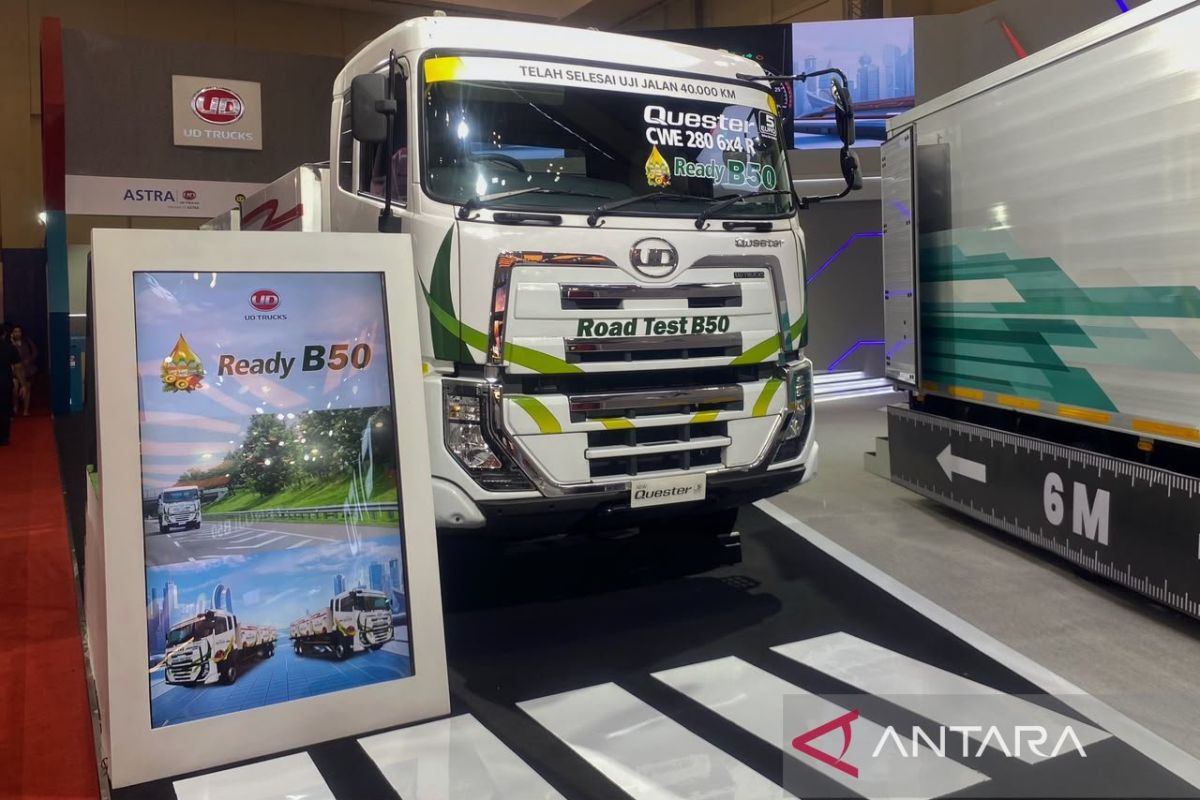
One of the highlights of the Quester Model Year 2026 is its readiness to use B50 biodiesel in accordance with the specifications applicable in Indonesia.
This readiness is viewed as an anticipatory step amid government efforts to expand the use of biofuels to reduce dependence on fossil fuels.
The launch of the Quester Model Year 2026 was also marked by a symbolic handover of units to PT Cakraindo Mitra International, a company operating in the transport of chemicals and hazardous goods.
The company considers fleets with high safety standards to be a primary requirement in supporting complex logistics operations.
At GIIAS 2026, UD Trucks also showcased the Quester CWE 280, which is compatible with B50 biodiesel, as well as the New Kuzer Box.
The presence of both models demonstrates the direction of commercial vehicle development that prioritises not only performance, but also operational efficiency, digitalised fleet management, and readiness to face national energy policies.