
UBSI Strengthens Governance of Vida Taman Apel Waste Bank with SOP and Financial Training
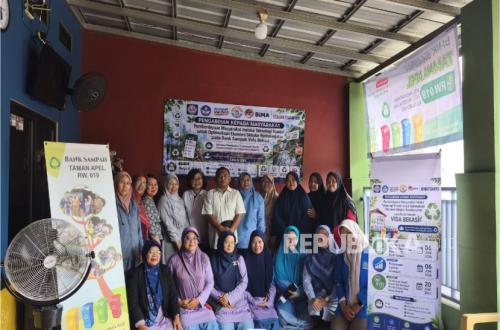
Universitas Bina Sarana Informatika (UBSI) has participated in efforts to strengthen the governance of community-based waste banks. One such initiative was a training session on Workflow and Standard Operating Procedures (SOP) for Waste Banks and Financial Report Preparation held at Bank Sampah Vida Taman Apel RW.019, Bekasi, on Friday (6/6/2026). The activity represents a step towards professionalising waste management while reinforcing financial transparency to support the circular economy at the neighbourhood level. The training, part of a community service programme, targeted the administrators and members of Bank Sampah Vida Taman Apel RW.019. The event was divided into two interconnected main sessions: a presentation on the operational workflow of the waste bank along with the preparation of standardised SOPs, and training on recording and compiling financial reports based on accountability principles. The training material was delivered by resource person Elmira Siska, who provided a systematic and applicable understanding to ensure it could be easily implemented by participants in their daily operational activities. During the session, participants were equipped with an understanding of the importance of an organised work system and tidy financial reporting as the foundation for the waste bank’s sustainability. The activity coordinator, Haryani, explained that the training was designed to address the real needs of waste bank managers in building a more effective and accountable work system. ‘Through this training, we hope the administrators of Bank Sampah Vida Taman Apel RW.019 will have clear work guidelines through the SOP and be able to prepare transparent and measurable financial reports,’ said Haryani. The activity also received full support from the Head of Bank Sampah Vida Taman Apel RW.019, Nia Kurniasih, who facilitated the active involvement of the members. Meanwhile, the Head of RW.019, Bambang Sulistio, appreciated the event, assessing that it could have a positive impact on strengthening the community-based environmental management system. ‘Capacity building for waste bank management is very important, not only to keep the environment clean but also to open economic opportunities for the community,’ said Bambang Sulistio. Participants’ enthusiasm was evident throughout the activity. In addition to listening to the material, participants actively discussed and raised various issues they had faced, ranging from the mechanism for recording waste deposits to the preparation of end-of-period financial reports. This discussion served as a collective reflection space to identify structural challenges that have hindered the optimisation of waste bank management. For UBSI, as a Creative Digital Campus, involvement in community service activities like this is a tangible form of higher education’s contribution to improving managerial literacy and organisational governance. The presence of this programme is expected to strengthen the community’s capacity to build a more modern, orderly, and sustainable waste management system.