
UBSI Prepares Adaptive Generation to Meet Future Challenges
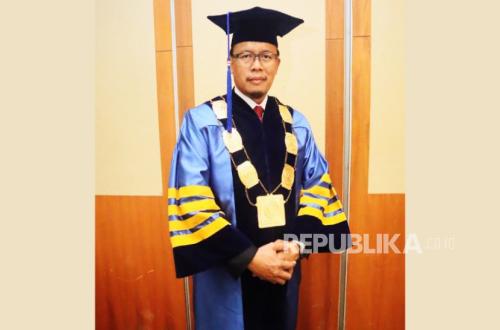
Universitas Bina Sarana Informatika (UBSI), known as a Creative Digital Campus, has reaffirmed its commitment to preparing a young generation that is adaptive to technological advancements, globally competitive, and capable of becoming job creators. Through the strengthening of digital-based education, industry collaboration, and entrepreneurship development, UBSI aims to produce graduates who are academically excellent and ready to face future challenges.
The Rector of UBSI, Prof. Dr. Ir. Mochamad Wahyudi, stated that changes in the workforce due to technological disruption require universities to move more quickly and innovatively. “The world is changing very rapidly. Technology is advancing quickly, work patterns are shifting, and global challenges are becoming increasingly complex. Therefore, universities must be able to prepare an adaptive and creative generation that possesses critical and innovative thinking skills,” Prof. Wahyudi said in a statement on Wednesday (3/6/2026).
He noted that UBSI, which has achieved ‘Unggul’ (Excellent) accreditation, continues to strengthen an educational ecosystem integrated with industry needs. One such initiative is the development of the BSI Career Center, which bridges the gap between students and the professional world. Through this institution, UBSI collaborates with various strategic partners, including national companies, State-Owned Enterprises (BUMN), and government institutions, for internship programmes, independent studies, and professional competency development.
“We want students to gain real-world experience before graduating, so that when they enter the workforce, they already possess professional competence and mental readiness,” Prof. Wahyudi emphasised.
UBSI also actively encourages students to participate in the Certified Internship and Independent Study (MSIB) programme, PMMB-MAGENTA, and various other industry programmes. Beyond focusing on professional careers, UBSI places significant emphasis on developing student entrepreneurship through the BSI Entrepreneur Center and Incubator Center. Through these programmes, students are mentored to develop business ideas based on technology and digital innovation.
“We want UBSI graduates to not only be job seekers but also to be able to become independent and innovative job creators,” said Prof. Wahyudi. This commitment is evidenced by the success of UBSI students in the Student Entrepreneurship Mentoring Programme (P2MW) and their active participation in the Indonesian Student Entrepreneurship (KMI) Expo.
According to Prof. Wahyudi, strengthening entrepreneurship is a vital part of addressing the challenges of the digital economy and increasing the competitiveness of the younger generation in the face of global competition. On this occasion, Prof. Wahyudi also addressed graduates, urging them to continue learning and maintain integrity amidst changing times. “An academic degree is not the end of the journey, but the beginning of a greater responsibility. Be graduates who are adaptive to technological changes, possess integrity, and are lifelong learners,” he said.
Looking ahead, UBSI aims to strengthen digital learning, increase international collaboration, develop student startups, and expand research based on societal needs. “We believe the future of the nation lies in the hands of a superior and characterised younger generation. UBSI will continue to be part of the process of producing Indonesian human resources that are competitive on a global level,” said Prof. Wahyudi.
He added that UBSI aspires to be a campus known not only for technology but also for its contribution to building society and Indonesia’s future. “Our hope is that UBSI graduates can become agents of change, bringing innovation and providing a positive impact for the nation in the era of digital transformation,” concluded Prof. Wahyudi.