
UBSI Lecturers Support Bogor’s 3G Waste Bank, Turning Household Waste into Valuable Products
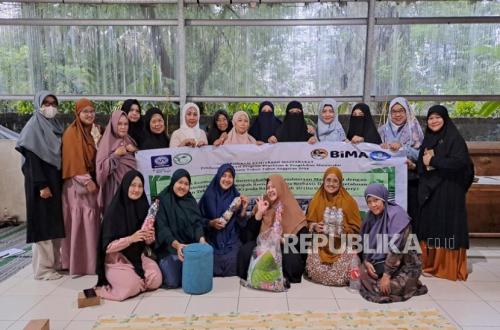
Household waste does not always have to end up in landfill. With knowledge, guidance and appropriate technology, organic waste can be turned into compost, used cooking oil into candles and soap, and plastic waste into craft materials. This is the approach developed by a team of lecturers from Bina Sarana Informatika University (UBSI), known as the Creative Digital Campus, in partnership with the 3G (Go Green Greenery) Waste Bank in Greenery Permai housing estate, Bojonggede, Bogor.
Through a Community Service programme entitled “Green Economy to Improve Community Welfare through Science- and Technology-Based Household Waste Management at the 3G (Go Green Greenery) Waste Bank”, the UBSI lecturers provided training and support in waste processing and introduced an information system to assist with the waste bank’s administration.
The programme was part of a 2024 grant for vocational lecturers’ research and community service, funded through the Higher Education Operational Assistance (BOPTN) scheme by the Ministry of Education, Culture, Research and Technology. The application was submitted through BIMA (the Information Base for Research and Community Service).
The community service team was led by Siti Masripah, with Indah Purwandani and Ety Nurhayaty as members, and involved four UBSI students. The programme was developed in response to the partner’s need to reduce household waste while improving record-keeping and waste bank management.
Four training sessions to turn waste into value
Before the programme began, the 3G Waste Bank focused mainly on accepting deposits of used cooking oil and non-organic waste. Organic waste from the surrounding area was not being processed effectively and was still discarded with other household rubbish.
This situation prompted the UBSI lecturers to organise activities that would provide both knowledge and practical skills to the managers and community. Following a meeting with the partner on 30 April 2024, the programme delivered four main activities: compost-making, processing used cooking oil into useful products, making ecobricks, and introducing a waste bank information system application.
“Compost-making training was held on 18 May 2024. Participants were shown how to process organic waste using the composters provided. The compost is expected to be ready for harvesting in around four to six weeks and could then be used by the community for everyday needs,” Masripah said in a press release received on Tuesday (27 October 2026).
She said the programme then moved on to processing used cooking oil. On 15 June 2024, residents took part in a workshop on making candles from used cooking oil. The following day, 16 June, they attended a workshop on making soap from the same material.
Indah said the training was intended to turn previously unused waste into products with practical value and economic potential for the community, particularly homemakers.
“The next activity took place on 13 July 2024, with an introduction to the waste bank information system application. It addressed the partner’s administrative difficulties, as customer deposits and finances had previously been recorded manually,” Indah said in a press release received on Tuesday (27 October 2026).
The ecobrick-making workshop was held on 10 August 2024. Household plastic waste was used to make products, including ecobrick chairs. The approach is intended to help reduce plastic waste while creating opportunities to turn discarded materials into useful items.
Digitalisation to support waste bank management
Alongside waste processing, the community service programme highlighted the importance of orderly and efficient waste bank management. Manually recording customer deposits and financial transactions can increase the administrative burden on managers, particularly as the volume of data grows.
The UBSI lecturers introduced a waste bank information system application to support more structured record-keeping. The application is expected to help managers and staff handle waste savings data and financial records more efficiently.
Ety stressed that stronger management is essential to the sustainability of a waste bank. Effective waste processing needs to be accompanied by an administrative system that supports orderly day-to-day operations.
“With this approach, the programme focuses not only on waste-processing skills but also on strengthening organisational management capacity. Together, these elements are expected to help the 3G Waste Bank develop its activities in a more focused and sustainable way,” Ety said.
Understanding score rises from 40 to 95
As team leader, Masripah oversaw the programme’s activities. According to partner questionnaire results reported by the team, participants’ understanding of science and technology improved after the training.
“The average pre-test score was 40, while the post-test score reached 95. This represents an increase of 55 points on the understanding indicator measured by the programme,” she said.
She said the improvement was one indication that the training and support had helped participants understand the material. However, the lasting benefits of the programme will also depend on applying the skills in everyday activities and maintaining consistent waste bank management after the support ends.
“By turning organic waste into compost, using waste cooking oil to make candles and soap, making products from plastic, and introducing a record-keeping application, the programme presents a waste management approach that brings together environmental concerns, community skills and technology,” she said.
The experience of the 3G Waste Bank shows that waste management can go beyond simply sorting and collecting rubbish. With support tailored to their needs, communities can reduce waste while making use of some of the products created from it.
For the UBSI team, the community service programme is an application of science and technology to help address issues in the community. It is intended to support more orderly waste bank management, improve residents’ skills and strengthen green economy practices at household level.
Source: jawawa.id (https://jawawa.id/newsitem/ubsi-lecturers-support-bogors-3g-waste-bank-turning-household-waste-into-valuable-products-1793094776)
Originally published by Republika (https://news.republika.co.id/berita/tnk727430/dosen-ubsi-dampingi-bank-sampah-3g-bogor-olah-limbah-rumah-tangga-jadi-produk-bernilai), translated from Indonesian