
UBSI and BRIN Promote Technology-Based Sheep Farming in Garut
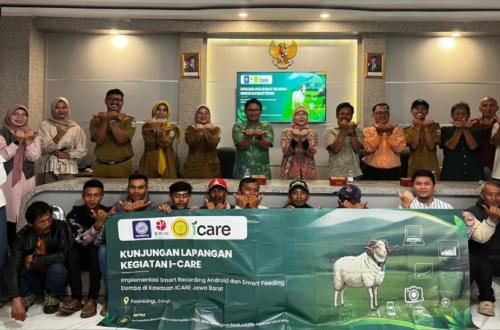
Universitas Bina Sarana Informatika (UBSI), acting as a Creative Digital Campus, alongside the National Research and Innovation Agency (BRIN) and West Java’s BBRMP, held a socialisation session on Smart Feeding and Smart Recording technologies. The event took place in Karyamekar Village, Pasirwangi District, Garut Regency, on Monday (31/8/202<0xC2>6). This step is part of the Integrated Farming Business (Bintara) programme to encourage sustainable sheep farming within the West Java ICARE region.
The session provided a comprehensive understanding of the transition towards modern livestock management. The UBSI team introduced intelligent applications for feed management and record-keeping. Meanwhile, several BRIN researchers presented materials on sheep cultivation, forage, organic fertiliser processing, and the strengthening of cooperative institutions.
The Head of the Bintara Activity from UBSI, Dr Diah Puspitasati, explained that this socialisation is a crucial stage before the technology is widely implemented. “Understanding the developed system needs to be built together so that its use can be adjusted to the needs of farmers and field conditions,” said Dr Diah.
She added that through the application, farmers will eventually be able to record identities, weight, health, and livestock feed in a structured manner.
Meanwhile, the presence of this digital innovation was welcomed positively by the local village government. The Secretary of Karyamekar Village, Irfan Nurdiansyah, hoped that the programme would provide a practical and real solution. “The presence of technology in livestock management is expected to help increase business efficiency and provide a positive impact on community welfare,” said Irfan.
In addition to data digitalisation, this programme is also focused on livestock feed independence. BRIN researcher, Dr Iwan Herdiawan, emphasised the importance of providing high-quality feed throughout the year by utilising local resources. This approach aims to reduce farmers’ dependence on high-cost commercial concentrates.
“Through year-round high-quality feed independence, the cooperative aims to reduce the use of commercial concentrates to zero per cent,” said Dr Iwan.
He added that this target is expected to establish the Cikal Maju Cooperative as a pioneer in eco-friendly (zero waste) farming. This concept also integrates sheep manure to be processed into useful organic fertiliser.
This cross-institutional collaboration is expected to build an efficient, measurable, and independent livestock agribusiness model. Moving forward, the integration of digital technology, feed independence, and the active role of cooperatives is targeted to increase productivity and community income. This management model in Garut also has the potential to serve as a strategic pilot project for development in other regions.