
UBSI and BRIN Finalise Digital Technology and Check Fertiliser Sterilisation in Garut
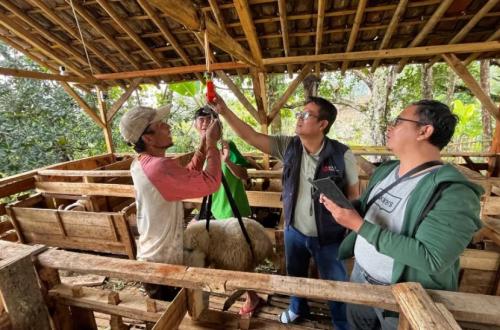
GARUT — A research team from Universitas Bina Sarana Informatika (UBSI), known as the Creative Digital Campus, and the National Research and Innovation Agency (BRIN) finalised the integration of a digital system and checked the readiness of organic fertiliser sterilisation equipment in the ICARE West Java area of Garut Regency on 25–26 October 2026.
The work forms part of efforts to strengthen the Integrated Farming Business (BINTARA) programme, which focuses on integrating agriculture and livestock farming through appropriate technology.
During the two-day programme, the team completed the installation of Internet of Things (IoT) and geolocation systems. The technology is designed to monitor integrated agricultural and livestock activities in real time and with precision.
UBSI research team representative Kresna Ramanda said the digital technology was intended to help farmers and livestock breeders map and manage resources in the field more efficiently.
“We designed the IoT and geolocation systems to enable real-time, accurate field monitoring. Integrating the data makes it easier to record the distribution of potential livestock pens and land, significantly improving operational efficiency for livestock breeders in the BINTARA programme,” Kresna said in a press release on Saturday (31 October 2026).
In a separate interview, Dr Diah Puspitasari, head of UBSI’s BINTARA programme team, said the programme’s development required cooperation between universities and research institutions, particularly to ensure that technology was integrated with the needs of partners in the field.
“Through the collaboration between UBSI and BRIN, we are seeking to ensure that the technology developed is not merely an innovation, but can also be applied and bring tangible benefits to partners. Finalising the IoT and geolocation systems and developing ‘Teh Kohe’ processing are part of efforts to build an integrated agriculture and livestock ecosystem supported by digital technology and appropriate innovation,” Dr Diah said.
As well as digitising farmland, the team inspected the reliability of the “Teh Kohe” sterilisation equipment. The product is a liquid organic fertiliser made primarily from local sheep manure.
BRIN research team representative Ir Hanudin explained that sterilisation was essential to the quality of the biofertiliser. Controlling the temperature and maintaining the equipment’s hygiene ensure that the final product is safe from harmful pathogens.
“In making Teh Kohe, there are two important stages that need to be controlled: sterilising the carrier material, a mixture of manure, and fermenting the active microbial ingredients with added nutrients,” Hanudin said.
He added that sterilisation was intended to kill harmful contaminant microbes, while controlling fermentation optimised the activity of the microbes in the active ingredients to produce high-quality organic fertiliser.
The collaboration was also attended by Dr Rantan Krisnan of BRIN and UBSI lecturers represented by Kresna Ramanda, Endang Wahyudi, Sulaeman Hadi Sukmana, Qudsiah Nur Azizah and Erma Delima Sikumbang.
Turning sheep manure into a value-added fertiliser is expected to reduce operating costs for local farmers’ groups. The circular system is also intended to minimise livestock waste, which has so far not been managed optimally.
UBSI and BRIN will next expand technical assistance for livestock breeders and farmers in the ICARE West Java area. The collaboration aims to build a more self-reliant, efficient and sustainable agribusiness ecosystem spanning the upstream and downstream sectors.
Source: jawawa.id (https://jawawa.id/newsitem/ubsi-and-brin-finalise-digital-technology-and-check-fertiliser-sterilisation-in-garut-1793422241)
Originally published by Republika (https://news.republika.co.id/berita/tnr4jz423/ubsi-dan-brin-finalisasi-teknologi-digital-dan-cek-sterilisasi-pupuk-di-garut), translated from Indonesian