
UBSI and BRIN Empower Garut Sheep Farmers Through Digitalisation and Self-Sufficient Feed
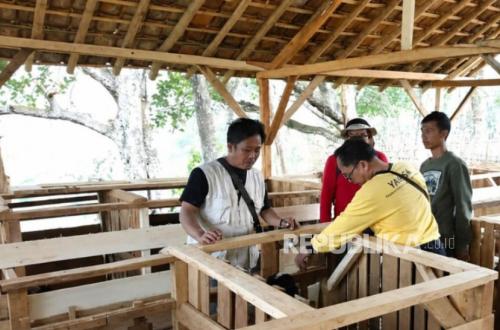
Universitas Bina Saruna Informatika (UBSI), as a Creative Digital Campus, and the National Research and Innovation Agency (BRIN) are continuously driving the independence of sheep farmers in Garut who are members of the Cikal Maju Cooperative. Both institutions provided follow-up assistance for the Integrated Farming Business (BINTARA) programme for the Cikal Maju Cooperative in Karyamekar Village, Pasirwangi, Garut Regency, on 25-26 September 2024.
The focus of this assistance included the implementation of digital technology, feed self-sufficiency, and waste utilisation. From a technological perspective, the UBSI team implemented the Smart Recording application directly in the field. This application encourages cooperative members to begin recording their livestock data digitally. Through this data collection, sheep management is expected to become more measurable and neatly documented.
The BINTARA team leader from UBSI, Dr Diah Puspitasari, M.Kom, emphasised that these technologies and innovations are designed to be mutually supportive. “We want to ensure that the knowledge and technology introduced do not stop at the socialisation stage, but can be applied directly by cooperative members,” she stated in a press release on Thursday (1/10).
She added that this integrated innovation has been well-received by the local community as it provides a direct economic impact. In addition to digitalisation, farmers were also trained to produce independent forage feed through an intercropping system. The BRIN team introduced Biogas, Odot, and Benggala grasses, combined with legume plants such as Stylosanthes and Sesmidium. This planting system is expected to reduce farmers’ dependence on external feed sources.
Recognising the significant economic potential of waste, farmers were also assisted in optimally producing “teh kohe” (liquid manure). Through this practice, sheep manure is processed into liquid fertiliser. This product has the potential to support local agricultural activities while serving as a new source of income for the cooperative.
A representative of the Cikal Maju Cooperative, H. Aceng, noted that this programme provides real solutions for farmers. “The process of making teh kohe is needed by the cooperative as additional income alongside sheep sales,” he said.
Nevertheless, according to Aceng, the implementation of this programme in the field still faces several challenges. Farmers require continuous assistance to become accustomed to consistently recording data in the application. The feed planting system and the production of teh kohe also require regular monitoring to ensure the quality of the results is maintained.
Moving forward, the joint UBSI and BRIN team will continue to conduct regular evaluations and assistance. “This synergy is expected to strengthen the ecosystem of the Cikal Maju Cooperative to become increasingly independent. Ultimately, this innovation will not only increase sheep production but also provide a guarantee of welfare for cooperative members,” concluded Dr Diah.
Source: jawawa.id (https://jawawa.id/newsitem/ubsi-and-brin-empower-garut-sheep-farmers-through-digitalisation-and-self-sufficient-feed-1790931390)
Originally published by Republika (https://news.republika.co.id/berita/tm9rzd370/ubsi-dan-brin-berdayakan-peternak-domba-garut-lewat-digitalisasi-dan-pakan-mandiri), translated from Indonesian