
UBSI and BRIN Develop Technology-Based Potato Seed Research in Garut
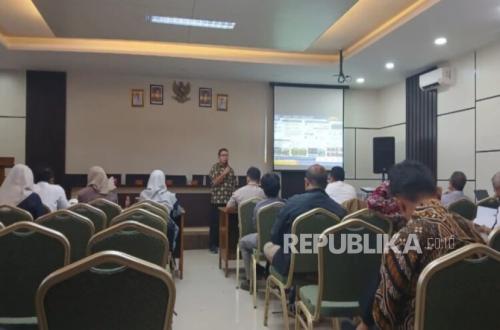
A research team from Universitas Bina Sarana Informatika (UBSI), working alongside the National Research and Innovation Agency (BRIN) and the Agricultural Assembly and Modernisation Agency (BRMP), is developing potato seed research in Garut Regency, West Java. The progress of this programme, funded by the Integrated Corporation of Agricultural Resources Empowerment (ICARE) grant, was presented during a Monitoring and Evaluation session at the Garut Regency Agriculture Office on 26-27 August 2026.
Located in the Sukaresmi District of Garut, this integrated research aims to build a potato seed system that is more efficient, healthy, competitive, and sustainable. The programme integrates seed technology, institutional strengthening, and partnerships, involving PT Horti Agro Makro (CHAMP) as an off-taker partner and the Sukaresmi Mulus Rahayu Producer Cooperative as the manager.
During the presentation, the research team revealed several achievements, including planning documents, partnership agreements, and the readiness of a 2,000-square-metre demonstration plot. The UBSI research team leader, Dr Taufik Baidawi, M.Kom., explained that the research focuses on the assembly of the TIS Bioreactor, preparation of the demonstration plots, and the development of a Smart Agrologistics Dashboard.
“This research is directed towards building a potato seed system that is more efficient, healthy, competitive, and sustainable through the integration of technology with institutional strengthening and partnerships,” said Dr Taufik, representing the UBSI research team, in a press release on Thursday (3/9/2026).
To anticipate challenges such as pest attacks and heat within the screenhouses, the team is utilising Internet of Things (IoT) technology for real-time environmental monitoring. This measure is complemented by netting supervision, regular spraying, and periodic sanitation.
The research targets the production of over 6,000 ready-to-plant Ex-Vitro cutting seedlings and approximately 3,000 certified G1 seed tubers by the end of 2026. The programme also aims for an acclimatisation success rate of 85 per cent and a reduction in seed costs of up to 25 per cent for partner farmers.
Beyond seed production, a Smart Agrologistics system is being developed to assist in farm management and increase the bargaining power of farmers within the supply chain. The series of activities will continue with the planting of demonstration plots, farmer training, and a business meeting scheduled for November 202ങ്ങള്.
Through this cross-institutional collaboration, technology is not only aimed at producing laboratory innovations but also at delivering real-world impact in the field. As a Creative Digital Campus, UBSI is committed to driving technology-based research that addresses community needs.
“We hope the results of this research can continue to evolve into a modern, technology-based potato seed model that provides tangible benefits for farmers and the agricultural ecosystem,” said Dr Taufik.