
Ubaidillah Amin: Indonesia’s Capital Market Must Be Independent and Not Rely on Foreign Ratings
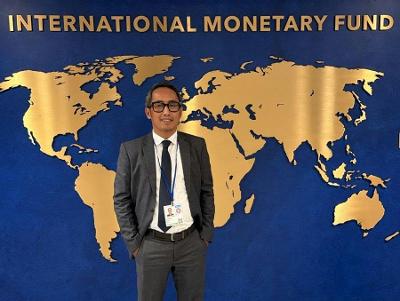
Surabaya (beritajatim.com) – Nahdlatul Ulama (NU) youth figure Ubaidillah Amin believes Indonesia’s capital market must continue to strengthen its independence and competitiveness to become a resilient investment magnet. One necessary step, he said, is to build national capacity to assess the quality and prospects of Indonesia’s capital market.
According to Ubaidillah, Indonesia’s substantial economic potential needs to be matched by confidence in the capabilities of its domestic capital market. This would ensure that Indonesia’s market does not continue to depend on assessments by foreign rating agencies.
“Together, we will establish and determine our own ratings in our stock exchange or capital market, without having to rely on foreign rating agencies,” Ubaidillah said on Sunday (25 October 2026).
He stressed that an independent capital market did not mean closing itself off from international standards. Rather, Indonesia needs to strengthen its own capacity and confidence in its capital market so it can play a stronger role in determining its development.
Ubaidillah said improving the stock exchange was an important step in making it more attractive to investors. A healthy, transparent and credible exchange with sound governance would inspire greater confidence among both domestic and foreign investors.
“We must improve our exchange and make it more attractive, so that investors are drawn to it,” he said.
He said the appeal of a capital market was determined not only by share-index movements or the size of its market capitalisation. The quality of listed companies, disclosure, investor protection and legal certainty were also important factors in building confidence.
In his view, capital-market improvements must be pursued consistently. Transparency needs to be strengthened, market manipulation prevented and investor protection prioritised to ensure the market provides a fair environment for all participants.
Alongside governance, Ubaidillah emphasised the importance of developing a competent and professional workforce. Human-resource quality, he said, was one of the factors determining the resilience of Indonesia’s capital market amid global economic shifts.
“Competent human resources in the stock exchange will build a resilient capital market,” he said.
He explained that workforce development should be ongoing, including through greater financial literacy and education for the public. With a sound understanding, people would be better equipped to make rational investment decisions and understand the risks involved.
Ubaidillah also highlighted the need for targeted and measurable policies to strengthen the foundations of the national capital market. Such policies, he said, should have clear objectives, measurable indicators of success and continuous evaluation mechanisms.
Adaptive regulation, effective supervision and coordination between institutions also need to work together to ensure Indonesia’s capital market grows in a healthy and sustainable way.
He further called on all capital-market stakeholders to strengthen collaboration. The government, regulators, the Indonesia Stock Exchange, listed companies, financial-services industry participants, investors, academics and the public should share a commitment to developing the national capital market.
“Capital-market stakeholders must work hand in hand and remain united so that Indonesia’s capital market becomes a resilient investment magnet,” he said.
Ubaidillah believes that unity among stakeholders is an important asset in meeting global competition. Each party must fulfil its role and responsibilities to help create an independent, trusted and competitive Indonesian capital market.
He stressed that developing the capital market was part of the effort to strengthen the national economy. With competent human resources, measurable policies, sound governance and a spirit of cooperation, Indonesia could make the most of its economic potential.