
UB Develops Children's Sunscreen Industry from Corn Silk
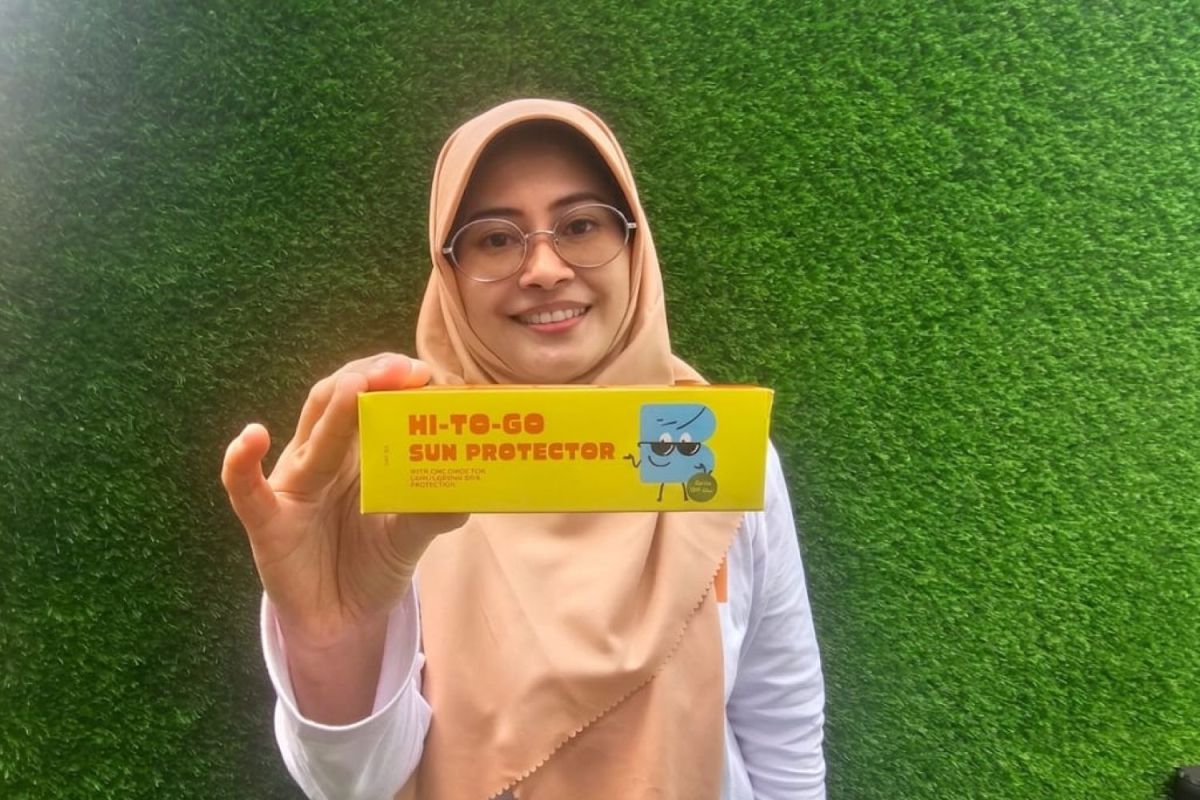
Universitas Brawijaya (UB) is developing an innovative research-based product through Hi-To-Go Sun Protector on an industrial scale, a sunscreen for children made from natural raw materials, specifically extracts from corn silk waste.
This product is part of the BOUMI line, a personal care brand for children aged 4–14 years, resulting from a collaboration between UB and PT Cedefindo, which is under the Martha Tilaar Group. This innovation represents a breakthrough in utilising agricultural waste to create high-value, environmentally friendly products.
“This innovation stems from the potential of waste that has not yet been optimally utilised. We have studied the active ingredient value in a product that was initially considered waste, such as corn silk, so it can provide added value while being more environmentally friendly,” said the researcher and lecturer from the Faculty of Agricultural Technology (FTP) at UB, Dr Rosalina Ariesta Laeliocattleya, in Malang, East Java, on Wednesday.
She explained that in terms of formulation, Hi-To-Go Sun Protector combines corn silk extract (Zea mays silk extract) with other natural ingredients, such as essential oils and Lavandula hybrida oil. The product has an SPF 50 PA++ content that effectively protects children’s skin from UVA and UVB exposure.
In addition, this sunscreen also functions to maintain skin moisture, provide a comfortable sensation through a natural lavender aroma, and is safe for use on sensitive and active children’s skin.
“We designed this product to be practical, so it comes in a spray form and is easy for children to use,” she said.
Furthermore, Oca, her nickname, stated that research on local active ingredients does not stop at sunscreen products alone. Various local food components have the potential to be developed as UV protection agents.
“Basically, many local food active ingredients that we study have anti-UV potential, so in the future, they can be developed more broadly, including combined with other ingredients to enhance their effectiveness,” she said.
“We are collaborating with farmers to utilise corn silk waste, but it does not rule out the possibility of collaborating with other industries that also produce corn silk waste,” she added.
Another advantage of this product lies in production cost efficiency and environmental sustainability. By using waste as the main ingredient, the product can reduce costs while presenting an innovation based on local resources.
“Our strength is in elevating materials that previously had no value into products with high economic value, as well as opening up collaboration opportunities with industries based on local Indonesian ingredients,” said Oca.
In the future, product development based on corn silk is also directed towards other innovations, such as herbal drinks and potential anti-cancer applications. This is currently still in the research stage.
“We are also studying the possibility of using corn silk directly, for example, for herbal tea, but this is still in the further research stage,” she said.
Through the Hi-To-Go Sun Protector innovation in the BOUMI line, UB not only strengthens the downstream of research results but also demonstrates the active role of universities in creating innovative products that impact society, the environment, and industries based on local potential.