
UAE Said to Be Seeking to Bypass Strait of Hormuz Entirely
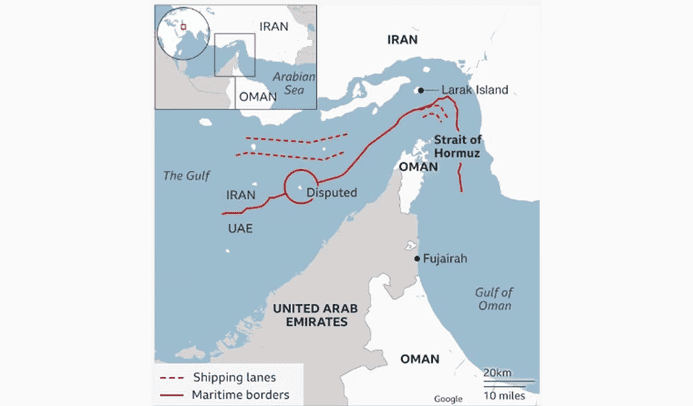
The Government of the United Arab Emirates (UAE) is working on a major plan to eliminate its dependence on the Strait of Hormuz after the recent closure of this vital waterway revealed vulnerabilities in trade and energy flows in the Gulf.
UAE Minister of State for Foreign Trade, Thani Al Zeyoudi, stated that the nation is moving towards “zero dependence on Hormuz,” according to a Bloomberg report on Wednesday (17/6).
The plan emerges as global markets await the full reopening of the strait following a temporary peace agreement between Iran and the US. The Strait of Hormuz, which handles approximately one-fifth of global crude oil and liquefied natural gas shipments before the conflict, has faced disruptions since US and Israeli attacks on Iran began in late February.
The core of the UAE’s plan involves a massive expansion of the eastern ports of Dibba, Fujairah, and Khor Fakkan, located outside the strait on the coast of the Gulf of Oman, according to the report. The nation also plans to build at least one new port on the same coastline, alongside a network of new pipelines, railways, and highways to connect the eastern ports with oil and gas fields and petroleum facilities.
The UAE is already utilising existing pipelines with a capacity of 1.5 million barrels per day to transport crude oil to Fujairah, allowing them to partially bypass the Strait of Hormuz. In mid-May, they announced they would accelerate the construction of a second pipeline to double crude oil export capacity through Fujairah by 2027. The nation is also studying a third petroleum pipeline and other options to support the export of petrochemicals, LNG, and other energy products.
Al Zeyoudi did not provide specific costs or timelines, stating that these projects are still in the feasibility study stage, although infrastructure expansion is expected to require billions of dollars in investment.
Reducing dependence on the Strait of Hormuz remains a challenge, as diverting LNG, aluminium, and other commodities from Gulf ports is more complex than diverting crude oil and refined products. The UAE also relies heavily on Gulf ports, particularly Jebel Ali in Dubai—one of the world’s largest container hubs—for imports and redistribution.
The UAE has repeatedly called for uninterrupted traffic through the Strait of Hormuz, asserting that the waterway is vital for regional and global economic security, stability, and prosperity. The plan marks a broader strategic shift towards reducing exposure to geopolitical risks in the Gulf and strengthening alternative trade and energy routes outside the strait.
Source: jawawa.id (https://jawawa.id/newsitem/uae-said-to-be-seeking-to-bypass-strait-of-hormuz-entirely-1781704241)
Originally published by Media Indonesia (https://mediaindonesia.com/internasional/901547/uea-disebut-berupaya-tak-lewati-selat-hormuz-lagi), translated from Indonesian