
UAE Political Analyst Faces Saudi Prince's Rebuke Over Criticism of Makkah Agreement
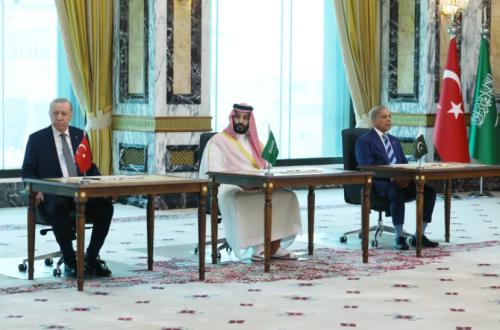
A new defence agreement between Saudi Arabia, Turkey, and Pakistan has reignited tensions between Riyadh and Abu Dhabi.
Several prominent figures from the UAE and Saudi Arabia have openly disagreed over the kingdom’s decision to forge a regional security partnership outside the framework of the Gulf Cooperation Council (GCC).
The “Makkah Joint Defence Agreement”, signed on 7 August, binds the three countries together. One of its clauses states that an armed attack against any one party shall be considered an attack against them all.
The agreement has drawn sharp criticism from a number of prominent UAE commentators who question whether Riyadh is shifting towards a regional security framework outside the GCC.
The GCC is a regional bloc comprising energy-rich monarchies, namely Bahrain, Kuwait, Oman, Qatar, Saudi Arabia, and the United Arab Emirates.
Abdulkhaleq Abdulla, a political analyst and former adviser to UAE President Mohammed bin Zayed, has been the most vocal critic. He has repeatedly questioned the logic behind the new agreement.
“Congratulations on the formation of this alliance, but strengthening Gulf military and political cooperation and unifying the Gulf internally is far more important than investing in regional military and political cooperation involving countries whose credibility and capability in confronting the Iranian-Israeli threat are not taken seriously,” Abdulla wrote in one of several posts on the matter, as reported by MEE.
“One of the conditions for the success of any alliance is identifying a common enemy. So, who is the enemy for the countries in this alliance?”
The post prompted a swift rebuttal from Saudi Prince Abdulrahman bin Musaid. He stated that the agreement is a matter of national sovereignty and questioned why UAE academics appeared so troubled by Riyadh’s strategic choices.
“What is the problem, whether it is called an alliance, a treaty, an agreement, or by any other name?” the prince wrote on platform X.
“How can this conflict with efforts to unify the Gulf region? Does not every country have the right to enter into agreements with any country it deems capable of serving its interests?”