
Types of Vehicles Beginning Trials with New B50 Fuel
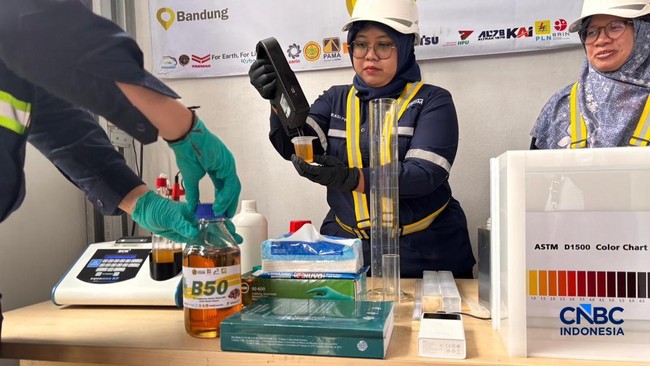
Lembang, CNBC Indonesia - The Ministry of Energy and Mineral Resources (ESDM) is intensifying trials of 50% biodiesel (B50) fuel on various modes of transport and industrial machinery. This is to ensure the technical readiness of engines before the mandatory B50 policy is implemented nationally on 1 July 2026.
Director General of New, Renewable Energy, and Energy Conservation (EBTKE) of the Ministry of ESDM, Eniya Listiani Dewi, explained that the testing is being conducted across six main sectors, from automotive to power generation. She noted that the scope of vehicles involved this time is broader than during the previous B40 trials.
“We have indeed kicked off and are conducting simultaneous trials in six sectors. So automotive, mining, agricultural equipment, maritime, power generation, and one more is railways. This is being done simultaneously starting from 9 December,” she said at the B50 Road Test Fuel Blending and Filling Station in Lembang on Tuesday (21/4/2026).
In detail, there are nine vehicle units consisting of four passenger vehicles under 3.5 tons and five vehicles over 3.5 tons. In addition to Japanese manufacturers, the B50 trials also involve European brands for large buses and trucks such as Mercedes-Benz and UD Trucks.
“Buses and large trucks, yes, UD Trucks, that’s Mercedes. So this time Europe is also participating, and unlike the previous B40, more vehicles are involved. Earlier, 9 units for the automotive sector,” Eniya explained.
Besides road vehicles, the trials target the agricultural sector with various types of two-wheeled tractors, hand tractors, and four-wheeled tractors. The maritime sector is also starting direct sailing trials using ship engines, while the mining sector involves two major companies in Samarinda.
“Then the mining one, mining involves two companies, yes. The one I inspected is at PT HPU Samarinda, and the other is still ongoing. Then next, we go to maritime ships, these sea vessels are also the first direct trial on the ships themselves,” she added.
Additionally, the railway sector will follow with trials on long-distance inter-provincial routes using the Yogyakarta to Jakarta route, while generator set trials are being conducted for the power generation sector.
The government projects that the final results of this entire series of trials will provide an overview of engine durability against high-level vegetable-based fuel.
“The trains next week, next week we will run them using the route from Yogyakarta to Pasar Senen from Lempuyangan Station to Pasar Senen, continuously. Then the generator sets, the generator sets are there too. One more locomotive from Gambir to Pasar Turi,” she concluded.
Based on data from the Ministry of ESDM, the B50 implementation planned from July 2026 is projected to save state foreign exchange up to Rp157.28 trillion. The programme is also estimated to absorb more than 2.2 million workers and reduce greenhouse gas emissions by 46.72 million tons of CO2 this year.
As of mid-April 2026, the national biodiesel distribution realisation has reached 3.90 million kilolitres out of the annual allocation of 15.65 million kilolitres. The government targets the completion of all automotive sector trials by June 2026, while other sectors such as railways and maritime will be completed gradually until the end of the year.