
Types of Personal Data Most Targeted by Fraudsters
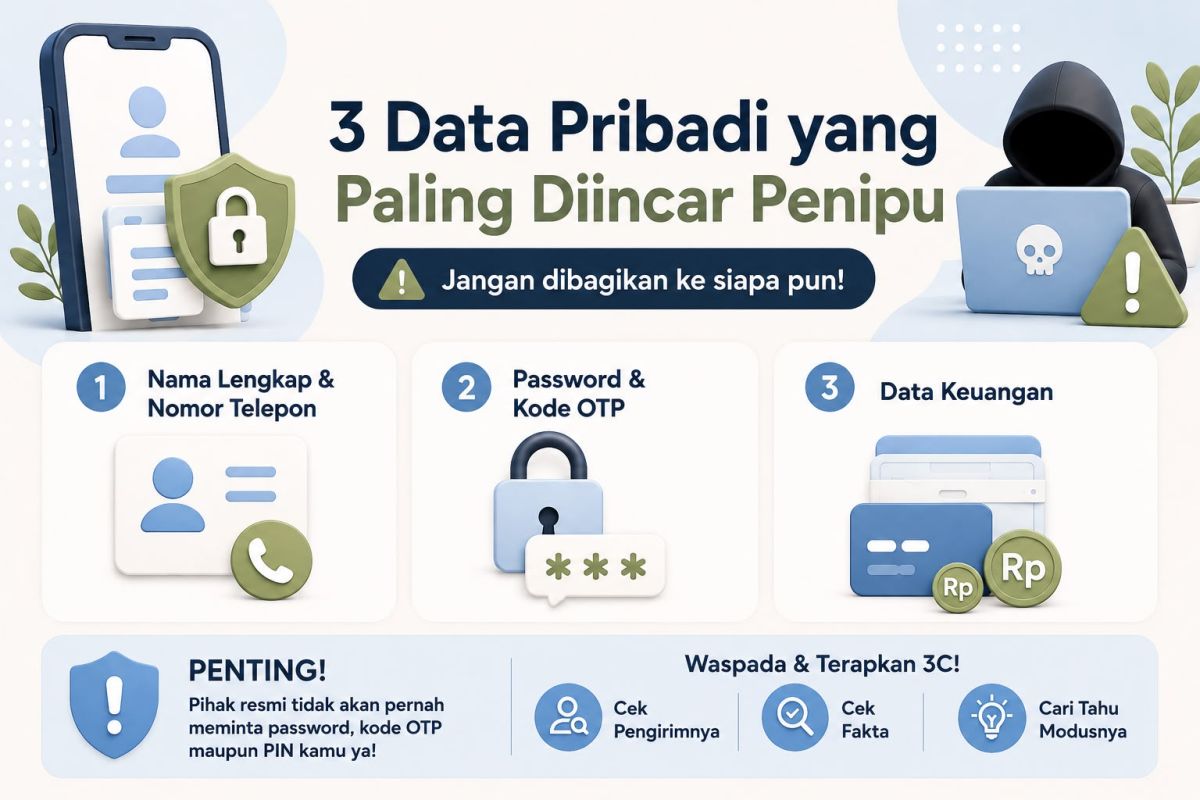
Behind the convenience of digital transactions, fraud schemes impersonating official parties continue to evolve to steal victims’ personal data for the perpetrators’ gain. To make potential victims more trusting, fraudsters typically pose as official Customer Service teams from various services such as e-commerce, shipping companies, banks, and even government institutions. They deliberately try to deceive victims by frightening them, causing panic, and even offering tempting deals. Once the victim’s guard is down, the fraudsters begin their action. For instance, they direct victims to click on suspicious links that lead to account and personal data theft, ask victims to transfer money, request victims to open loan accounts, and much more. Therefore, it is crucial to always be cautious and maintain the confidentiality of personal data. What personal data is most frequently targeted by fraudsters and must be safeguarded? The first type of data is full name and phone number. Although seemingly trivial and not sensitive data, names and phone numbers often serve as the entry point for fraudsters to contact potential victims. With just that information, fraudsters can impersonate official parties to obtain other sensitive data. Always be wary of calls or messages from unknown numbers asking you to share personal data or specific account information. Passwords and OTP codes are also personal data frequently targeted by fraudsters. These two pieces of information are the most important for keeping your account secure. If this information falls into the hands of fraudsters, they can easily take over your account and misuse it for their own purposes. Currently, fraudsters are becoming increasingly creative in stealing passwords and OTP codes from their potential victims’ accounts. One method that is currently rampant is inviting victims to join an online meeting and asking them to share their screen. While the victim is sharing their screen, they are asked to open a banking application or a specific app and enter their account password, PIN, or OTP code. Therefore, ensure you do not carelessly share password or OTP information, even with people claiming to be official representatives. Financial data such as account numbers, debit/credit card numbers, and other payment information are also personal data that must be protected. Fraudsters often try to obtain this information through various means, from posing as bank officers or Customer Service to offering certain prizes or assistance. If this information is given, the perpetrator can access the victim’s account or conduct unauthorised transactions. Hence, never share payment information with anyone, including parties claiming to be official institutions. To obtain this personal data, fraudsters usually do not ask for it outright. As one of the e-commerce services in Indonesia, Shopee is also actively encouraging its users to apply the 3Cs to avoid being easily deceived by fraudsters, namely: 1. Check the Sender: official information from Shopee is only sent through the application, Shopee’s WhatsApp account with a blue tick, Shopee’s verified official social media, and the Shopee Customer Service phone number 1500702. 2. Check the Facts: verify any information claiming to be from Shopee by using the ‘Check Facts’ feature in the ‘Me’ > ‘Customer Service’ section of the Shopee application. 3. Find Out the Modus Operandi: fraud schemes can constantly change; follow the @shopeecare_id account on Instagram to stay updated on fraud under the guise of Shopee. In today’s digital era, fraud schemes will continue to evolve alongside increasing digital activity. Therefore, it is important to always protect your personal data and remain vigilant in all situations so that your digital activities remain safe and comfortable.