
Two Years of Prabowo’s Government and Regional Development Productivity
For that reason, the government needs to continue strengthening the legal framework and broadening development-financing alternatives, including by simplifying the process for issuing regional bonds.
Jakarta (ANTARA) – As President Prabowo Subianto and Vice-President Gibran Rakabuming Raka approach two years in office, the State Budget (APBN) should be viewed not only as an instrument for managing state finances, but also as a determinant of the direction and sustainability of development.
Through state expenditure allocations, the government seeks to maintain economic stability, improve the quality of human resources, expand access to basic services and promote sustainable economic growth.
This agenda requires policy coordination between the central and regional governments.
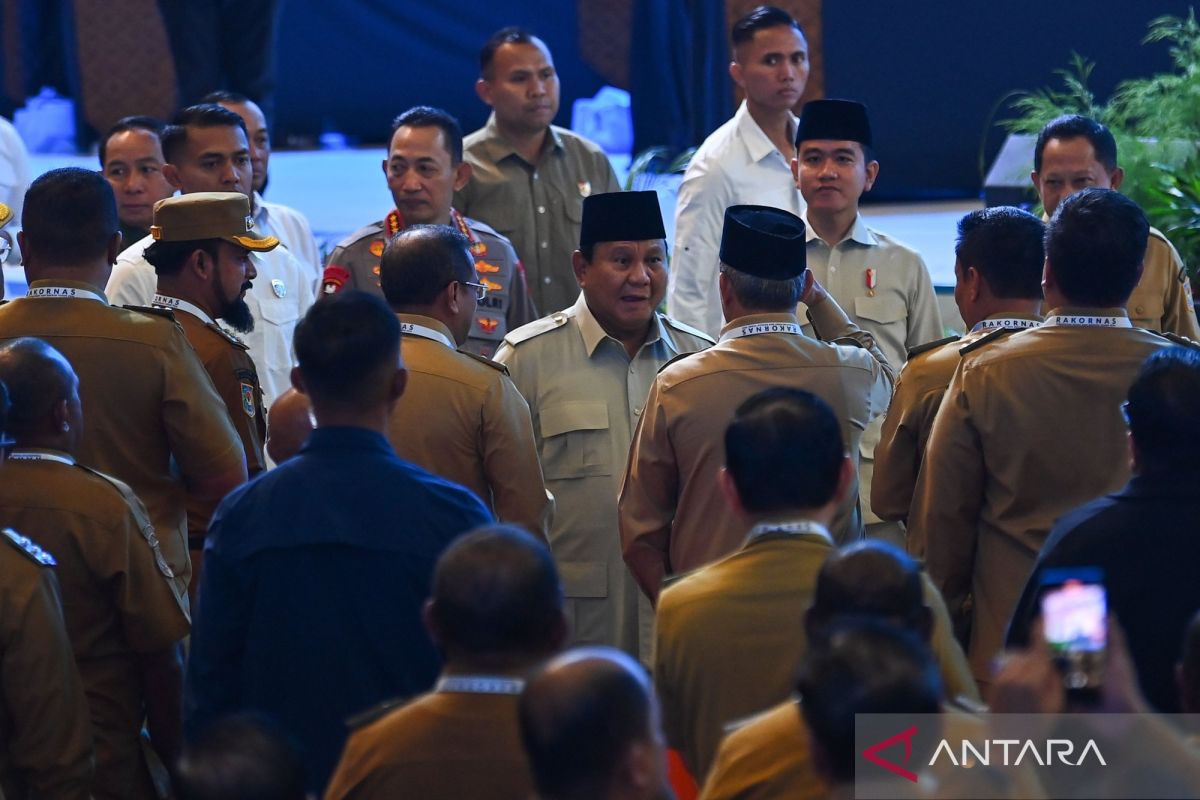
Since the beginning of the administration, harmonising governance has been a key concern, as reflected in the National Coordination Meeting of Central and Regional Governments held on 7 November 2024 at the Sentul International Convention Centre in Bogor Regency. The forum formed part of efforts to align the implementation of national priorities with regional development policies.
However, the success of the national development agenda cannot be measured solely by the size of budget allocations or the achievements of central government programmes. An equally important measure is the extent to which fiscal policy strengthens regional governments’ capacity to provide public services, meet people’s needs and sustain development. Under decentralisation, the APBN and regional budgets (APBD) should support one another so that national priorities translate into tangible benefits for local communities.
Nearly two years after the implementation of spending-efficiency policies under Presidential Instruction No. 1/2025, various experiences in the field offer important lessons for improving policy in the future.
In some regions, adjustments to government spending have also affected economic activity that has traditionally depended on public expenditure, including the hotel sector, services supporting government activities and other local businesses. This shows that efficiency measures need to be accompanied by adequate mitigation strategies, so fiscal adjustment remains consistent with efforts to sustain regional economic growth and local businesses.
There are also challenges in maintaining the quality of public services while budgets are being rationalised. Some regional governments still face difficulties in adjusting programme priorities and allocating resources more effectively, which in certain cases has slowed the implementation of programmes and services.
This means the efficiency agenda must involve more than spending cuts. It should also encompass bureaucratic transformation, the digitalisation of public services, simpler business processes, and stronger planning and budgeting capacity, so that efficiency can be achieved without reducing the quality of services provided to the public.
Budget efficiency does not necessarily close off opportunities for regional leaders to innovate. On the contrary, fiscal constraints test their technical capacity to set priorities, make the most of available resources and develop alternative ways to finance development. In this context, fiscal innovation is important to ensure that budget limitations do not lead to stalled development or a decline in the quality of public services.
Source: jawawa.id (https://jawawa.id/newsitem/two-years-of-prabowos-government-and-regional-development-productivity-1791795234)
Originally published by Antara (Indonesian) (https://www.antaranews.com/berita/5781805/dua-tahun-pemerintahan-prabowo-dan-produktivitas-pembangunan-daerah), translated from Indonesian