
Two Years of Prabowo’s Government: Advancing Energy Self-Sufficiency
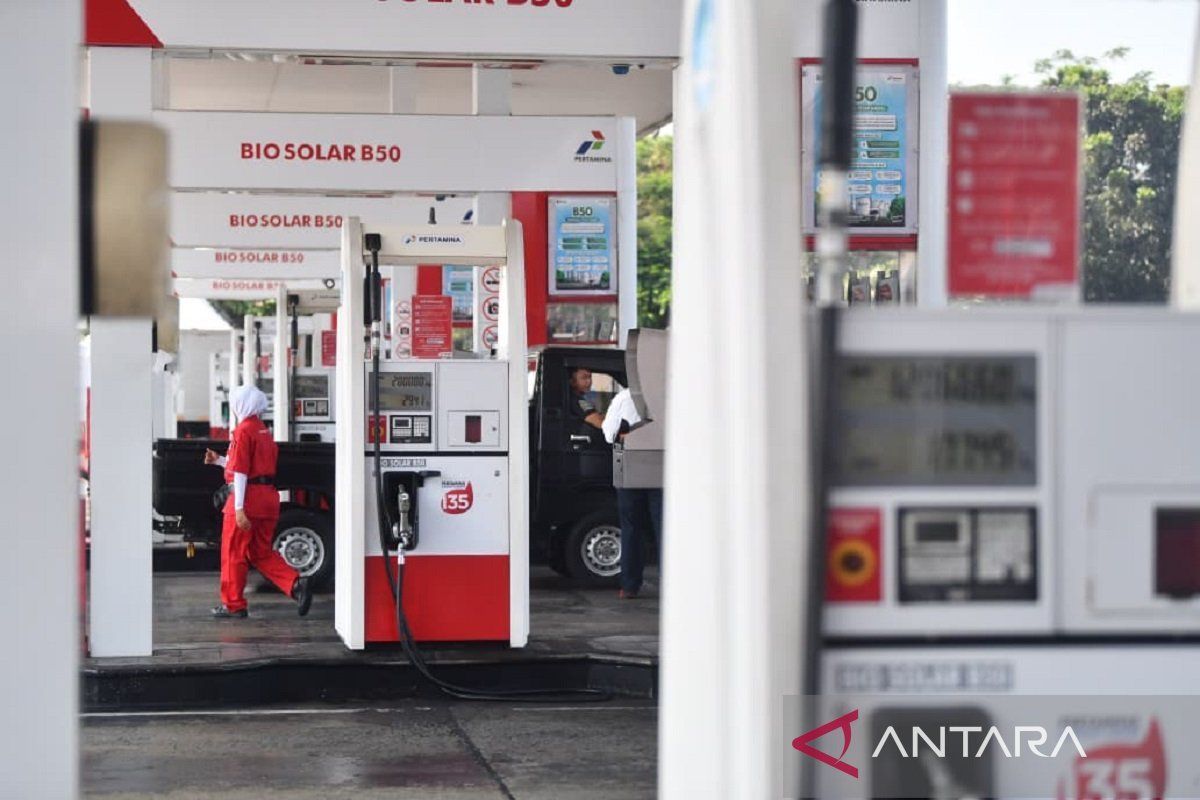
Jakarta (ANTARA) – When launching the 50 per cent biodiesel mandate (B50) in mid-July 2026, President Prabowo Subianto said its implementation was not merely a technological achievement, but tangible proof of the nation’s sovereignty in the energy sector.
The initiative showed that Indonesia could make the most of its natural resources for the greatest prosperity of its people.
Prabowo also said a nation’s sovereignty was determined by its ability to meet strategic needs independently, including its energy needs. On an earlier occasion, he said Indonesia could achieve energy self-sufficiency within the next five years.
Prabowo believes energy is crucial to eradicating poverty in Indonesia and transforming the country into a modern, developed nation.
He said a country’s sovereignty was largely determined by its ability to meet strategic needs independently, particularly its energy supply, and expressed confidence that national energy self-sufficiency could be achieved within five years.
Such self-sufficiency is seen as a vital foundation for eradicating poverty and transforming Indonesia into a developed, modern country.
Prabowo has therefore set an ambitious target for Indonesia to achieve energy self-sufficiency soon, guided by a measurable roadmap.
He has also stressed that achieving energy self-sufficiency has been a priority since the beginning of his administration.
This optimism is based on Indonesia’s abundant domestic energy resources, from geothermal power and coal to natural gas reserves across the archipelago.
State-owned enterprise commitment
The President has said that, alongside food, energy is one of the most strategic sectors for a country’s continued existence. Indonesia must therefore become self-sufficient to remain strong and sovereign amid global change.
“A country as large as ours, if it wants to remain independent and survive, has no choice but to become self-sufficient. Energy is one of the areas that is decisive,” he said.
To fulfil this goal, state-owned energy company PT Pertamina (Persero) has pledged its full support for the vision of national energy sovereignty and security. Together with its subsidiaries, including PT Pertamina Hulu Energi (PHE), Pertamina continues to optimise the management of the oil and gas sector for public welfare, in accordance with the constitutional mandate.
Pertamina President Director Simon Aloysius Mantiri reiterated this commitment while leading a Pancasila Sanctity Day ceremony at Pertamina Group on Monday (1 October).
In his message, he urged Pertamina employees to use the occasion as motivation to uphold the state’s mandate: safeguarding national energy security by providing affordable energy to all communities.
The Pertamina chief also called on employees to make the values of Pancasila their guide in their work and service to the public. This spirit of unity is expected to drive the company as it fulfils its mandate to protect national energy security and sovereignty.
Pertamina’s efforts are considered to be on the right track, particularly as its corporate performance aligns with the Asta Cita vision.
In his annual address to the House of Representatives in mid-August 2026, Prabowo again stressed the importance of strengthening energy security and self-sufficiency, including by increasing oil and gas production.
Under the Asta Cita framework, energy is positioned not merely as a requirement for infrastructure, but as a strategic instrument to drive national industry, strengthen economic resilience and shield the country from dependence on foreign sources.
In line with the President’s emphasis, energy is key to sovereignty, a foundation for justice and a pillar of development. Without an equitable and sustainable energy supply, it is difficult to envisage a prosperous society, strong industries or equal access to education across the country.
Amid an uncertain global geopolitical landscape, energy self-sufficiency has become an absolute necessity. Nations that fail to secure their energy sources will remain under the shadow of crises.
The world is entering a new era in which energy and strategic minerals are shaping the direction of the global economy. The shift from oil and gas towards electricity, batteries, renewable energy and critical minerals is intensifying geopolitical competition.
Indonesia is endowed with abundant energy and mineral reserves. But this potential will become real strength only if all parts of the nation work in concert towards a common goal. A country’s strength is no longer measured solely by the size of its oil reserves; the measure is increasingly its ability to master technology and produce environmentally friendly green energy.
To respond to this changing global landscape, Indonesia needs a master plan for energy sovereignty that provides a strategic framework across successive administrations. It should cover an energy transition roadmap, mineral downstreaming strategies, the direction of international energy diplomacy, the strengthening of domestic industry, technological mastery and sustainable financing mechanisms.
Energy sovereignty is about more than meeting demand for electricity and fuel; it is also about the nation’s bargaining position on the world stage.
History shows that energy self-sufficiency gives a country room to make strategic decisions without the shadow of external pressure. When Indonesia can independently manage and control its energy potential, the nation will have full control over its own future.
Danantara’s support
Indonesia has set an ambitious target of achieving net-zero emissions (NZE) by 2060 through an energy transition towards low-carbon development. In this process, sustainable financing is vital, not only in terms of economic capacity but also the legal framework underpinning it.
The establishment of Daya Anagata Nusantara (Danantara) as a sovereign wealth fund (SWF) presents a strategic opportunity to strengthen green investment, particularly in geothermal and solar energy, as well as decarbonised nickel downstreaming.
Danantara Indonesia’s leadership has also stated its commitment to supporting a just energy transition towards the 2060 NZE target.
Danantara’s investment mandate is divided into three categories: improving the performance of state-owned enterprises; direct investment in strategic sectors such as energy security, the low-carbon economy and industrial downstreaming; and global investment to create added value for the public.
All investment portfolios are rigorously assessed from a sustainability perspective, including climate transition and adaptation, economic viability and social impact.
The need for action is pressing: Indonesia has up to 3,700 gigawatts (GW) of new and renewable energy potential, but its installed capacity is still below 20 GW. To harness this vast potential, investment should focus on energy storage technology and the modernisation of smart electricity grids.
Danantara Chief Operating Officer Dony Oskaria said its commitment to energy security had been demonstrated by the success of the B50 programme, which has significantly reduced diesel imports. In this context, Danantara plays a central role in facilitating financing, including through state-owned enterprises in the energy sector.
After supporting the success of B50, Danantara is preparing to direct its investment towards developing sugarcane-based bioethanol to reduce Indonesia’s dependence on petrol imports.
Danantara says investment in bioethanol production will be directed towards strengthening the foundations of national energy security. Plans to build processing facilities have been included among its priority investment portfolios.
To ensure sufficient supplies of feedstock, primarily sugarcane molasses, the government is preparing to accelerate the expansion of sugarcane plantations as an integral part of the national energy transition. Up to two million hectares of land are planned to support bioethanol production, which is expected to be used as a petrol blend, with targets ranging from E20 to E50.
Deputy Finance Minister Suahasil Nazara has also voiced full support for this strategic initiative. He said dividends from state-owned enterprises managed by the Danantara Investment Management Agency (BPI) would not be allocated to the 2026 or 2027 state budgets, but would instead be reinvested in sustainable projects.
Under this reorientation, all capital accumulated from state-owned enterprise dividends will remain within Danantara for reinvestment in sustainable projects and future energy infrastructure. Meanwhile, the state budget can be focused on public services, basic infrastructure development and social protection programmes.
With independent and efficient fund management, Danantara is expected to multiply the investment’s impact, including by attracting capital from domestic and global private investors.
The public and government have high hopes that Danantara, as both a sovereign wealth fund and an investment fund, will be a key catalyst in achieving Indonesia’s energy self-sufficiency and sovereignty, as outlined by President Prabowo Subianto.
Source: jawawa.id (https://jawawa.id/newsitem/two-years-of-prabowos-government-advancing-energy-self-sufficiency-1791528871)
Originally published by Antara (Indonesian) (https://www.antaranews.com/berita/5778182/dua-tahun-pemerintahan-prabowo-dalam-mewujudkan-kemandirian-energi), translated from Indonesian