
Two Years of Prabowo: KMHDI Claims Government Remains Committed to Public Welfare
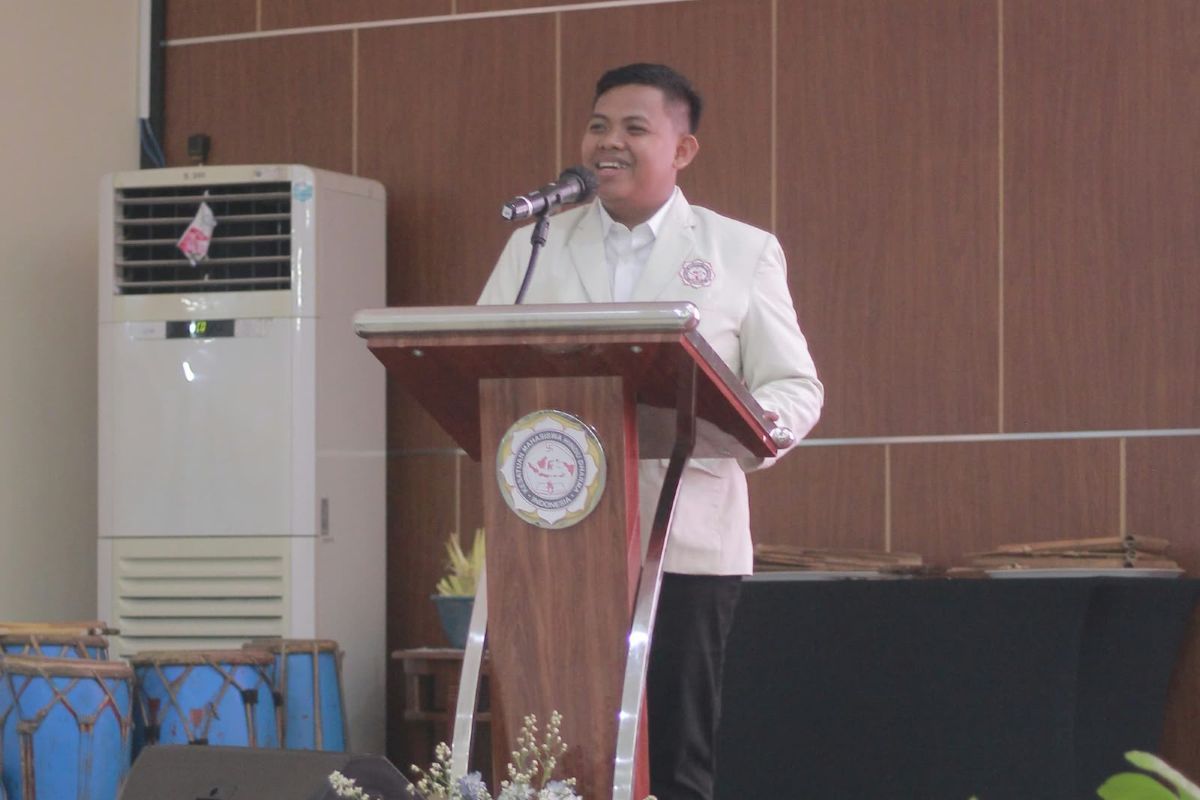
Jakarta (ANTARA) - The Central Leadership of the Indonesian Hindu Dharma Student Union (PP KMHDI) believes that during the two years of President Prabowo Subianto and Vice President Gibran Rakabuming Raka’s administration, the government has continued its commitment to improving public welfare through various programmes.
In a statement in Jakarta on Thursday, the General Chairman of PP KMHDI, Wayan Ardi Adnyana, stated that KMHDI views the evaluation of the government as a test of policy outcomes rather than a mere political assessment.
KMHDI, he said, does not judge the two years of government by the length of its programme list. Instead, it looks at which problems have truly decreased, who has benefited, and who is still bearing the costs of development.
“The government has a mandate to work, but the people have the right to test the results. Astacita must not stop as a planning document; its tracks must be traceable in the lives of the people,” said Ariment.
“Poverty in March 2026 fell to 8.07 per cent, or 22.93 million people. However, the Gini ratio during the same period was recorded at 0.368, up from 0.363 in September 2025. These figures are important, but they must not remain merely a list of achievements,” he added.
According to him, growth must be read alongside the quality of jobs and the distribution of benefits. A reduction in poverty must be viewed in conjunction with purchasing power and inequality.
“Because the success of development is not just about whether the economy grows, but who benefits and who still bears the burden,” said Ardi.
Furthermore, he noted that the government’s commitment to expanding free education to state universities (PTN) is a significant policy.
“However, free education is not complete simply because tuition fees are abolished. The metric must include access, quality, study sustainability, and the costs still borne by families. Transport, accommodation, books, learning tools, and the cost of living can still act as barriers for students from low-income families,” he said.
Article 31 of the 1945 Constitution guarantees the right of citizens to obtain education and mandates that the education budget priority be at least 20 per cent of the State Budget (APBN) and Regional Budget (APBD).
“Free education must be measured by what Indonesian children receive, not just by what they no longer pay. If access is opened but quality is uneven and the cost of living remains a barrier, then the state’s work is not yet finished,” said Ardi.
He also stated that the agendas of downstreaming, industrialisation, investment, and food and energy self-sufficiency will determine Indonesia’s economic structure in the long term.
The same applies to food, Ardi noted. Food policy must strengthen the position of farmers within the value chain while simultaneously protecting consumer purchasing power.
He stated that Article 33 of the 1945 Constitution places the economy on the principle of togetherness and affirms that the management of natural resources is directed towards the greatest prosperity of the people.
“Therefore, economic development must be assessed not only by the scale of economic activity, but by the distribution of benefits, social protection, and sustainability,” he concluded.
Source: jawawa.id (https://jawawa.id/newsitem/two-years-of-prabowo-kmhdi-claims-government-remains-committed-to-public-welfare-1790838284)
Originally published by Antara (Indonesian) (https://www.antaranews.com/berita/5766237/dua-tahun-prabowo-kmhdi-pemerintah-terus-komitmen-sejahterakan-warga), translated from Indonesian