
Two Years of Prabowo-Gibran: The Progress of Downstream Mining
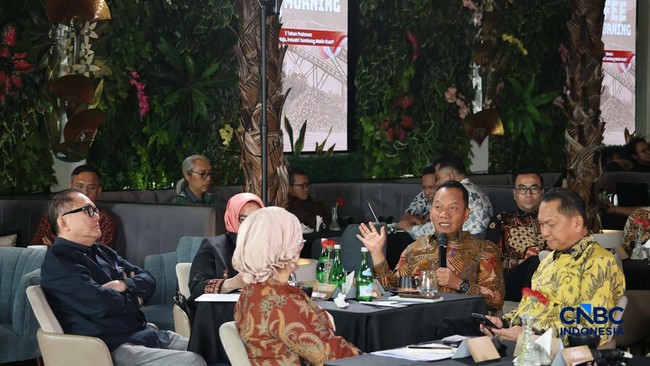
Jakarta, CNBC Indonesia — President Prabowo Subianto and Vice-President Gibran Rakabuming have been in office for two years, during which a range of flagship programmes have been pursued. Under their administration, downstream processing of natural resources, particularly minerals, has been a focus, with the aim of building self-sufficiency and creating added value.
Bambang Patijaya, a member of Commission XII of the House of Representatives (DPR), said downstreaming had been fairly successful over the past two years and had generated added value for Indonesia. He pointed to economic growth at both regional and national levels, as well as rapid development upstream. Bambang gave the Director-General of Minerals and Coal at the Ministry of Energy and Mineral Resources (ESDM) a score of nine for actively supporting the programme.
“The first stage of downstreaming in the mining sector is going well; smelters based on mining business permits (IUPs) are beginning to operate. The Director-General of Minerals and Coal gets nine out of 10, because no minerals are simply sold as they are; at the very least, their grade is increased,” Bambang said at the Coffee Morning – Special: Two Years of Prabowo event, themed “Two Years of Prabowo: Downstreaming Advances, Mining Industry Grows Stronger?”, on Thursday, 29 October 2026.
Bambang said the supportive conditions and commitment upstream provided a strong foundation for downstreaming. Indonesia’s natural wealth should not simply be sold or exported, he said, but should generate added value for the public. In his view, downstreaming has succeeded not only in minerals and mining, but also in energy and agriculture.
At the same event, ESDM Director-General of Minerals and Coal Tri Winarno said downstreaming was a necessary step to create added value and was one of the government’s main priorities. Developed countries had long used industrialisation and downstream processing to advance their economies, he said, adding that no developed country had failed to make use of both.
“My first point is that, in relation to industrialisation, downstreaming should also be encouraged to make our country more industrialised,” he said.
The mining sector’s resources are finite, and therefore its lifespan is limited, Tri said. That made it essential not to waste them, but to create added value through comprehensive downstream processing.
“We need to start thinking again about how this industry can move further downstream, all the way to the end product and its other derivatives. These end products can generate multiplier effects that will strengthen the demographic dividend expected in Indonesia in 2030,” Tri said.
Indonesia Mining Institute chairman Irwandy Arif said downstreaming should be assessed across the entire process, from upstream to downstream, rather than by looking only at finished products. He stressed the importance of data on demand, requirements and supply to ensure the programme is properly targeted and meets industry needs. He said Indonesia should aim to go beyond intermediate products and produce finished goods.
“But no single institution currently has complete supply-and-demand data. All parties in Indonesia need to study this,” Irwandy said.
He added that domestic supporting industries needed to be strengthened, including suppliers of machinery, components, auxiliary materials and equipment, as well as industrial gases that could not yet be supplied competitively from within Indonesia.
Investment in Downstreaming Rises
Popy Rufaidah, acting Deputy II Chief of Staff to the President, said investment flows and the removal of obstacles facing investors were inseparable from discussions about downstreaming.
“Over President Prabowo’s two years in office, the effort to move Indonesia forward has been extraordinary. We cannot speak of it only in qualitative terms: Rp3,923 trillion in investment has gone into downstreaming in Indonesia, with more than five million jobs created,” Popy said.
She added that 31 per cent of investment was in downstreaming, which she said reflected confidence in and expectations for the programme in Indonesia.
Tubagus Nugraha, executive director of the National Economic Council, said that because downstreaming was important and attracted investment, the necessary ecosystem had to be established and made to work, with the aim of producing finished goods that were in demand.
“Geopolitical tensions are also rising. That is why downstreaming and economic transformation need to be developed. We have to optimise our reserves; Indonesia could potentially become a price-maker in mining,” Tubagus said.
Evvy Kartini, a principal researcher at the National Research and Innovation Agency (BRIN) and founder of NBRI, reiterated that one goal of downstreaming was to reduce carbon footprints, particularly as more countries were focusing on the environmental impact of mining.
“The government should therefore introduce regulations that support the circular economy. Battery use is part of the circular economy. As electric cars become more common in Indonesia, the government should also start considering how recycling can be carried out here,” she said.
Evvy said downstreaming should not focus solely on attracting investment, but should also be supported by strong research to ensure the resulting added value was sustainable.
Meidy Katrin Lengkey, secretary-general of the Indonesian Nickel Miners Association (APNI), said the government should also support upstream operations, not just downstream industries.
“From upstream to downstream, what about the mining industry itself? Upstream cannot stand or advance without downstream advancing too. Our slogan is ‘value addition’, but it must go hand in hand with shared prosperity. The benefits should not go only to downstream,” she said.
Source: jawawa.id (https://jawawa.id/newsitem/two-years-of-prabowo-gibran-the-progress-of-downstream-mining-1793267527)
Originally published by CNBC Indonesia (https://www.cnbcindonesia.com/news/20261029161235-4-780651/dua-tahun-prabowo-gibran-begini-perjalanan-hilirisasi-pertambangan), translated from Indonesian