
Two Years of Prabowo-Gibran: Investment Reaches Rp1,010.6 Trillion, with Downstreaming and B50 as Key Drivers
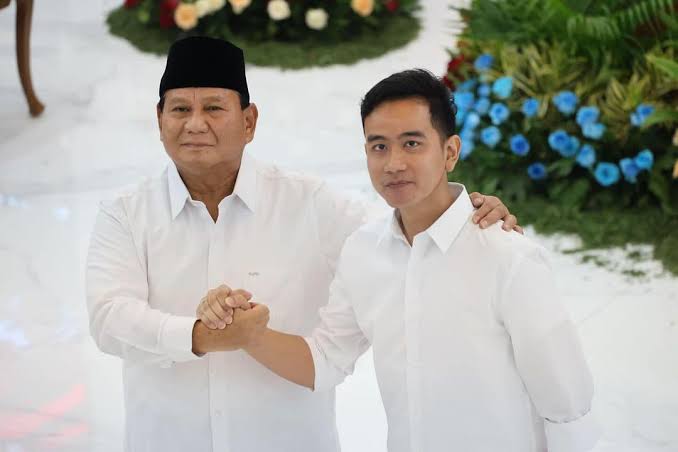
The administration of President Prabowo Subianto and Vice-President Gibran Rakabuming Raka continues to rely on industrial downstreaming, increased investment and energy self-sufficiency to drive the national economic transformation. In the first half of 2026, investment realisation in Indonesia reached Rp1,010.6 trillion, up 7.2% on the same period a year earlier, and generated more than 1.4 million jobs.
Deputy Minister of Investment and Downstreaming and Deputy Head of the Investment Coordinating Board (BKPM), Todotua Pasaribu, said downstreaming was playing an increasingly important role in driving national investment growth ahead of the administration’s second anniversary. The government is also strengthening links between the programme, industrialisation and domestic energy development to improve Indonesia’s economic competitiveness.
“As the Prabowo Subianto administration enters its second year, the downstreaming programme has made significant progress and is contributing more to national investment,” Todotua said in Jakarta on Saturday (17 October 2026).
Investment performance is one indicator of progress in the government’s economic development agenda. The Ministry of Investment and Downstreaming/BKPM, led by Minister of Investment and Downstreaming and BKPM Head Rosan Roeslani, continues to encourage capital inflows while expanding domestic processing industries.
The government sees downstreaming not only as a way to increase the value of commodities, but also as a means of strengthening the national economic structure and improving public welfare.
Downstreaming aimed at widening economic benefits
Todotua said the development of processing industries should deliver benefits beyond higher investment and production capacity. The programme is expected to create jobs, increase the participation of local workers and open up business opportunities for regional economic players.
He said this policy direction was in line with Article 33, paragraph 3, of the 1945 Constitution, which states that the state controls the land, water and natural resources for the greatest prosperity of the people.
The success of downstreaming should therefore be measured by its contribution to people’s livelihoods, not solely by industrial growth or higher exports. The government has also stressed the importance of protecting the environment as natural-resource processing industries develop.
This approach forms part of efforts to strengthen the links between investment, industrialisation and the equitable distribution of development benefits. The government hopes that industries based on domestic resources will have a wider economic impact in commodity-producing regions.
Todotua also referred to economist Soemitro Djojohadikusumo’s ideas on industrialisation and to efforts initiated by Margono Djojohadikusumo to strengthen the national financial system. He said the drive to build national industries and strengthen domestic investment remained relevant to Indonesia’s economic transformation.
North Maluku develops as a processing-industry hub
Downstreaming is evident in North Maluku, which is increasingly emerging as a national processing-industry hub. The region has recorded a diversification of export products, including ferronickel, nickel matte, mixed hydroxide precipitate (MHP), nickel sulphate and cobalt.
This development builds on the transformation of processing industries that previously took place in Morowali, Central Sulawesi. Both regions form part of the expansion of mineral-based industries intended to produce higher-value goods.
The wider range of export products reflects the growing diversity of minerals processed domestically. Under the downstreaming policy, such industrial development is intended to strengthen Indonesia’s position in the production and trade of processed goods.
Todotua nevertheless stressed that downstreaming must be accompanied by efforts to extend its benefits to surrounding communities. Building local workforce capacity, involving regional businesses and protecting the environment must go hand in hand with investment growth.
The government also considers coordination between investment, industrial development and stronger regional economic capacity important to ensuring that growth in processing industries has a sustainable impact.
B50 biodiesel part of energy self-sufficiency strategy
Alongside downstreaming, the government regards energy security as a foundation of national industrial development. A reliable and competitively priced energy supply is considered important both to sustain processing industries and to improve the competitiveness of Indonesian products.
One programme highlighted ahead of the Prabowo-Gibran administration’s second anniversary is the B50 biodiesel launch by President Prabowo in July 2026. The programme is described as a step towards making better use of domestic resources to support national energy self-sufficiency.
B50 is diesel fuel blended with 50% biodiesel. Its development is part of efforts to increase the use of domestic feedstocks to meet energy needs.
The government is also linking energy self-sufficiency with the transition to cleaner energy. Through coordination by the Ministry of Investment and Downstreaming/BKPM, Indonesia is encouraging domestic and global investors to take part in developing new and renewable energy (EBT).
Investment priorities include solar, hydropower and geothermal energy. The government is also seeking to maximise the potential of critical minerals needed to develop green technologies.
Development in these sectors is intended to strengthen energy supplies for industry while creating new investment opportunities. Adequate energy availability is considered essential to the sustainable expansion of national industrial capacity.
Legal certainty and infrastructure key to renewable-energy investment
Todotua said attracting investment in renewable energy requires policies that give businesses certainty. Legal certainty, simpler regulations, infrastructure development and cooperation with the private sector are among the factors considered important.
He said support for renewable-energy investment should go hand in hand with industrial development and the use of domestic resources. With this approach, the energy transition is expected not merely to change energy sources, but also to strengthen the national economy.
The government hopes that downstreaming and renewable-energy development will improve industrial efficiency, expand employment opportunities and strengthen the competitiveness of Indonesian products in international markets.
“These strategic steps are expected to improve industrial efficiency, create millions of new jobs and strengthen the competitiveness of Indonesian products in international markets,” Todotua said.
This goal positions investment as a means of connecting industrial development with job creation and greater competitiveness. Achieving these benefits, however, depends on investment and downstreaming programmes delivering tangible results for businesses and communities.
Energy transition intended to bolster national competitiveness
Ahead of the Prabowo-Gibran administration’s second anniversary, the Ministry of Investment and Downstreaming/BKPM said it was committed to continuing the development of downstreaming and the energy transition as part of the national development agenda.
The two priorities are seen as interconnected. Downstreaming increases the value of natural resources through domestic processing, while stronger energy security is expected to ensure supplies for industrial activity.
Meanwhile, renewable-energy development offers investment opportunities in the energy and green-technology sectors. The government has also underscored the need for regulatory support, infrastructure and cooperation with the private sector to accelerate investment.
Todotua said the energy transition should be viewed as an opportunity to strengthen the foundations of the economy, rather than simply an additional development burden. This approach is expected to bring together energy security, industrial development and improved public welfare.
“The energy transition should not be a burden on development. Instead, it should open a window to energy security, greater industrial competitiveness and national prosperity,” Todotua said.
With investment realisation reaching Rp1,010.6 trillion in the first half of 2026, the government has made downstreaming, industrialisation and energy self-sufficiency central to its national economic strategy. The next challenge is to ensure that investment growth goes hand in hand with job creation, stronger regional businesses, greater industrial competitiveness and environmental sustainability.
Source: jawawa.id (https://jawawa.id/newsitem/two-years-of-prabowo-gibran-investment-reaches-rp1-010-6-trillion-with-downstreaming-and-b50-as-key-drivers-1792252223)
Originally published by acehtimes.co.id (https://www.acehtimes.co.id/dua-tahun-prabowo-gibran-investasi-tembus-rp1-0106-triliun-hilirisasi-dan-b50-jadi-andalan/), translated from Indonesian